
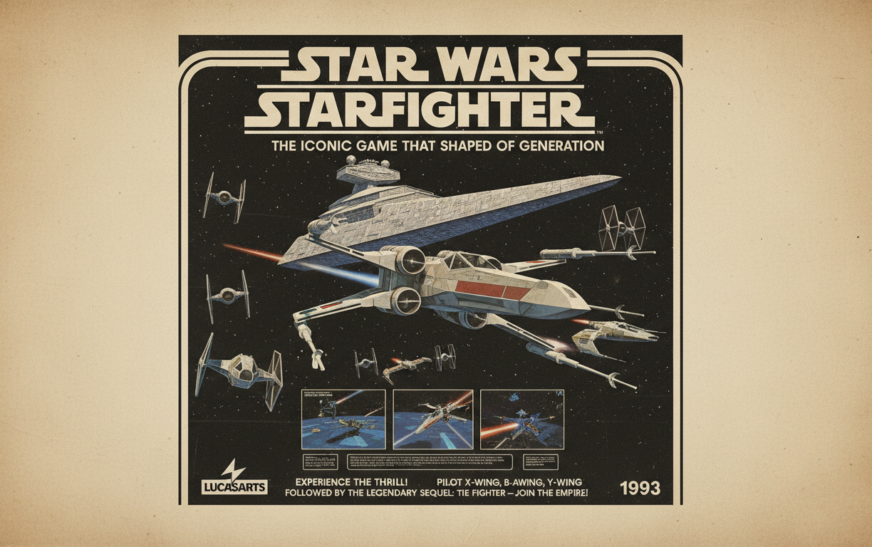
The core answer: Star Wars Starfighter soared beyond being just another licensed title—it introduced cinematic space combat, memorable characters, and varied missions that resonated deeply with fans, setting a tone for what Star Wars video games could be. It wasn’t perfect, but it resonated by blending storytelling, accessible gameplay, and sheer scale in an era when few games dared to dream so big.
Here’s how it shaped a generation.
Early Impact: More Than a Tie-In
This wasn’t your average movie tie-in rushed to shelves.
Back in the days of the early 2000s, licensed games often felt slapped-on. Starfighter changed that. It offered:
- Immersive story missions set during pivotal moments in the prequel era
- Playable characters with distinct arcs: Ja-green pilot Rhys Dallows and lean, enigmatic Juno Eclipse
- A soundtrack and voice acting that pulled you into the battle, not just the brand
That blend made it stand out and, honestly, showed the potential of narrative-first space sims.
Gameplay Variety That Held Players’ Attention
Many games lock you into one system; Starfighter mixed it up:
- Dogfighting in X-wings, interceptors, and support craft
- Escort missions one moment, bombing runs the next
- Occasional stealth segments flying cargo-priced shuttles to avoid sensors
This variety wasn’t just window dressing. It kept things fresh mission to mission, preventing fatigue and pushing players to stay curious.
A solid example: one chapter shifts from being a starfighter back-seat gunner to piloting a dart-like defense ship in a tight corridor. Those contrasts excited players and made each mission feel memorable.
Characters That Stuck
It may sound odd for a game from two decades ago, but Starfighter had emotional arcs and relatable flaws.
Take Juno Eclipse—she’s not a Mary Sue; she’s ambitious, haunted, vulnerable. Her chemistry with Rhys, voiced with subtle frustration and warmth, helped the missions land beyond “blow up enemies.”
That kind of nuance was rare in licensed fare. It gave fans someone to root for and made the games feel like more than empty dogfights.
A Visual Leap for Its Time
Let’s be honest—graphics from 2001 aren’t jaw-dropping today. But back then, stepping into hyperspace, seeing the glow of TIE fighters against a richly detailed space station, that had impact.
Early adopters of the original Xbox and high-end PCs remember how smooth the framerate felt, compared with earlier Star Wars games that chugged under larger battles. Cinematic camera sweeps during takeoffs, detailed explosions—you didn’t just play it, you felt it. And that stuck with players.
Industry Influence That Echoed Forward
Today’s space-action games owe something to Starfighter. You can trace its DNA in:
- The narrative-heavy missions of modern space sims
- The blend of cockpit action and character storytelling in titles like Rebel Galaxy Outlaw
- The idea that a game built on a license can—and should—feel as rich as original IP
It quietly set a standard: if you’re going to do a Star Wars game, do it with heart, not just templates.
Mixed Moments and Enduring Charm
Sure, not everything worked. Some missions felt repetitive toward the end. Difficulty spikes sometimes felt unfair. And the AI occasionally glitching out—letting rebels fly backward or get stuck in space—prompt laughter among fans to this day.
But those quirks became part of the charm. They reminded players that this was a handcrafted experience, not scripted perfection. That imperfect feeling? It builds memories.
“Star Wars Starfighter proved that a licensed game could deliver emotional payoff, not just branded visuals. It raised expectations—and it did so by telling a damn good story.”
— veteran game designer and series fan
That quote rings true even decades later. It wasn’t marketing that carried the game, but connection.
Narrative and Tech: A Balanced Approach
The game struck a rare balance: storytelling without bogging down performance, visuals without sacrificing narrative beats.
Comparing that to earlier Star Wars games, which either focused solely on spectacle or tried (and often drained) to layer in deep lore; Starfighter found a middle ground.
That balance made it accessible to new fans, while still satisfying seasoned players.
Why It Still Matters
Think of Star Wars Starfighter like a bridge. It pulled older fans from the NES days into the PC/console war-torn 2000s. It seduced casual players with visuals and missions that brought the movies to life.
Then it whispered, “Games can be more than shooting targets.” That whisper grew into the richly narrative, cinematic titles we see today.
Summary and Takeaways
Star Wars Starfighter wasn’t perfect. But it injected:
- Memorable characters and arcs
- Varied, cinematic gameplay
- Tech that pushed consoles to perform
- A template for how licensed games could raise the bar
Modern developers still borrow from that playbook—sometimes with more polished tools, sometimes with even grander scope. But they owe a nod to the flight path Starfighter cleared.
It’s a classic not because it’s the best in every way—but because it dared to be more.
FAQs
What makes Star Wars Starfighter stand out among Star Wars games?
It earned its place by blending story, character, and gameplay smoothly. Many licensed games of that time leaned on branding, but Starfighter delivered narrative arcs, atmosphere, and mission variety that felt substantial.
Who are the main characters in the game?
You pilot Rhys Dallows, an Imperial defector, and join forces with Juno Eclipse, a rebellious operative. Their evolving relationship adds emotional weight to familiar space battles.
Did this game influence future titles?
Yes—its success showed that narrative-focused space combat could work. Developers today build on its approach, integrating cinematic storytelling with action-intensive gameplay in both Star Wars and other space genres.
Are the graphics still impressive by today’s standards?
Not in terms of raw detail. But for its era, it delivered smooth performance, immersive space vistas, and effects that felt alive—especially during intense battle sequences and hyperspace transitions.
Did the game have notable flaws?
A few. Mission repetition and sudden difficulty jumps frustrated some players. And quirky AI behavior led to memorable, if unintentional, glitches. But those quirks often endear the game to fans rather than repel them.
Is it still worth playing today?
Absolutely—for fans of Star Wars, space sims, or gaming history. It’s a brilliant snapshot of design ambition and storytelling in the early 2000s—and it still offers fun, cinematic dogfights.