
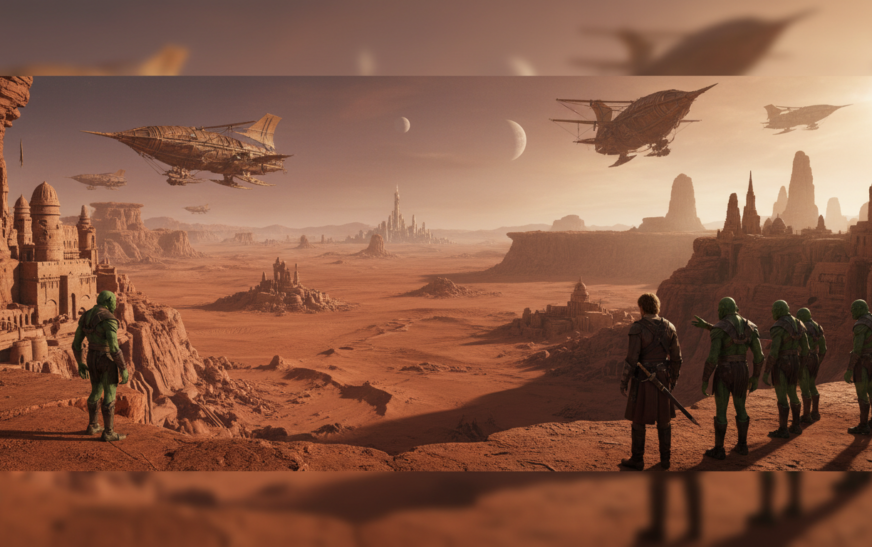
as an Underrated Sci‑Fi Epic
If you’re wondering whether it’s worth giving John Carter another chance—yes, it is. Beneath its notorious box-office failure lies a richly imagined world, passionate performances, and creative ambition that’s worth revisiting. While flaws exist, this sci-fi adventure has cinematic merits that continue to spark discussions—and a growing appreciation among fans.
What Went Wrong—And Why It Still Matters
1. A Titan of a Production—Too Big to Succeed?
John Carter was wild on the budget front. Its production cost reached around $263 million, while total costs soared near $350 million. Despite grossing about $284 million, these expenses resulted in a staggering $200 million writedown for Disney—one of the biggest losses in movie history.
That outcome overshadowed the film’s creative elements but doesn’t erase them.
2. Marketing Missteps—The Identity Crisis
Marketing is where John Carter lost the audience. The film’s original title, John Carter of Mars, was dropped—leading many viewers to ask, “Who the heck is John Carter?” Trailers lacked clarity, failed to highlight the story’s scope, and even the music (a cover of Led Zeppelin’s Kashmir) missed the mark, making it feel outdated. Critics called it “one of the worst marketing campaigns in movie history.” Without a clear hook, the film never grabbed mainstream attention.
3. Critical Reception Was Mixed—Not Merely Bad
Reviews were lukewarm. Rotten Tomatoes scored it 52%, and Metacritic landed it in the “mixed or average” range, with a score of 51. Audiences, however, gave it a decent B+ at CinemaScore, indicating some viewers enjoyed it despite the critics.
Roger Ebert saw it as a “rousing boy’s adventure story,” but noted that the sci-fi elements sometimes leaned more toward Western tropes than futuristic fireworks. That blend of homage and genre mix baffled some critics but intrigued others.
Hidden Strengths That Deserve Spotlight
Stunning World-Building and Visual Splendor
The film shines with its visual ambition. Mars—or Barsoom—feels richly textured. Cinematographer Dan Mindel shot in Panavision anamorphic format on 35mm, giving the film an “organic” and cinematic quality that contrasts with more sterile CGI-heavy blockbusters. The creatures, cities, and extended gravity-defying action sequences bring the pulp visuals vividly to life.
A Tale of Rediscovery—not Just Another Space War
John Carter isn’t star-powered sci-fi—Taylor Kitsch wasn’t a marquee name, which may have hurt initial interest. But that enabled the story to focus on rediscovery and wonder. A Civil War vet catapulted to another planet, grappling with its politics and falling for a Martian princess—this is heartfelt escapism. Some of the characters, like Lynn Collins’s Dejah Thoris and Willem Dafoe’s Tars Tarkas, leave lasting impressions, even if the lead feels underwritten to some eyes.
Cult Potential and Fan Appreciation
In the years since release, the film’s reputation has softened among fandom. One viewer called it “an entertaining and ambitious sci‑fi adventure,” arguing it’s “way better than Star Wars” in some ways. Others on forums lament the lack of a sequel, saying the rich world deserved more development.
What’s Next: An Animated Rebirth on the Horizon
Here’s where things get fresh: An animated series adaptation of the Barsoom novels is in development.◾ The creator sees a perfect moment for this vision to come alive in animation, drawing on the success of story-driven fantasy-action series like Castlevania.
It’s exciting because animation may capture the pulp spirit cleaner than live-action—and breathe new life into a concept that’s only now getting its due.
Lessons from John Carter: Framing, Courage, Patience
- Even ambitious storytelling needs sharp marketing to land. Without clear messaging, the most visually-striking film can go unnoticed.
- Big budgets don’t guarantee success. Grounded characters and clear arcs matter.
- Some stories aren’t for everyone—imperfect but imaginative films can find their audience later.
- The medium matters. Perhaps animation is a more fitting canvas for Barsoom’s surreal landscapes and larger-than-life characters.
“John Carter’s spectacular visuals and deep world‑building shine when viewed on their own terms—even if the story surplus and marketing missteps got in the way of its initial reception.”
Conclusion
John Carter could’ve been a disaster, and by many metrics it was. Yet, it’s also a film rich in invention and sheer passion. The visuals still pop. The world still feels strange and big. The adaptation may be flawed—but there’s art in that ambition. An upcoming animated series offers a hopeful second act for the source material. In the meantime, the film stands as a curious relic: a box-office bomb that, for some, became a cult classic to be revisited, reappraised, and maybe even loved.
FAQs
Is John Carter worth watching despite its failure?
Yes. If you love bold visual worlds, pulp adventure, and sci‑fi that doesn’t play it safe, this one rewards revisits—even if you’re forgiving of pacing or character flaws.
Why did John Carter flop so badly?
Mainly due to confusing marketing, a generic title that didn’t communicate the epic scope, and a massive budget that demanded blockbuster-level returns it never achieved.
What should viewers look for in John Carter?
Focus on the landscape of Barsoom, the creature and world designs, and the sheer spectacle. Actors like Lynn Collins and Willem Dafoe add memorable depth.
Will there be more John Carter content?
Yes. A new animated series is currently in development and aims to bring the Barsoom stories to life in ways live-action couldn’t fully capture.
Is the animated series happening soon?
There’s no release date yet, but it was previewed at San Diego Comic‑Con. Keep an eye out for official updates and announcements.234 words.