
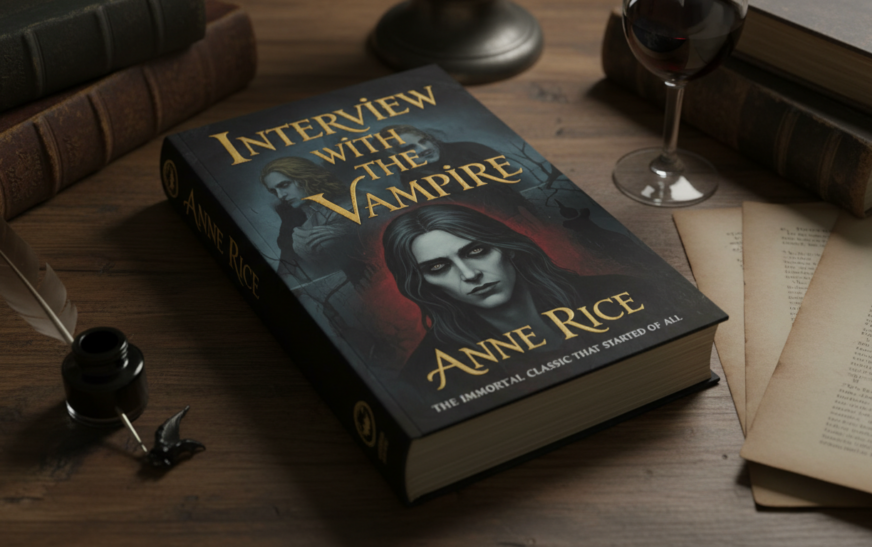
Interview with a Vampire is a timeless, genre-defining novel that reimagined vampire lore with emotional depth, moral complexity, and lyrical prose. Anne Rice’s 1976 debut not only launched the celebrated Vampire Chronicles series but also forever changed how we perceive immortality, identity, and the vampire mythos. Its enduring appeal stems from an intimate narrative voice, complex relationships, and philosophical resonance—a combination that still captivates readers decades later.
The Birth of a Dark Classic
Anne Rice’s Interview with the Vampire hit bookshelves in 1976. It wasn’t just another gothic horror—it felt alive, thoughtful, and surprising. Instead of blood-soaked thrills, readers got introspection, grief, longing, and the burden of endless life.
In practice, Rice turned classic vampire tropes upside down. Her protagonist, Louis, isn’t a charismatic predator but a conflicted soul. He wrestles with guilt, memory, and existential dread. That emotional complexity grounded the supernatural in human truth, giving the novel fresh power.
What Made It Stand Out?
- Intimate first-person narrative – You’re inside Louis’s mind, feeling every regret, doubt, and craving.
- Complex character dynamics – The twisted bond between Louis and Lestat, plus young Claudia’s tragic maturity, feels raw and real.
- Elegant prose – Rice wrote with poetic cadence, introspection, and a touch of Southern decadence.
- Philosophical undercurrents – Death, morality, loneliness—Rice treated these not as trappings but as core themes.
All that combined to make Interview with the Vampire feel like new blood in a genre that had grown dusty.
Unpacking Its Seeds of Influence
Over the decades, Rice’s debut reshaped the vampire genre both in literature and pop culture. And that influence is still there—like a faint heartbeat that echoes in new stories.
Literature and Genre Evolution
Before Rice, vampires were mostly mythic villains or gothic set pieces: monsters to be slayed. She turned them into people—people with thoughts, memories, pain. That shift inspired generations of writers, from urban fantasy to paranormal romance. Think of characters like Edward Cullen, who melt on emotional agony, or sympathetic vampires in shows like True Blood and The Vampire Diaries.
Film, TV, and Wider Media
The novel’s 1994 film adaptation, directed by Neil Jordan and starring Tom Cruise and Brad Pitt, brought Rice’s vampire universe to a broader audience. It didn’t just deliver chills—it brought soul. The film captured the melancholy and beauty of the story, and it helped launch a wave of vampire media that embraced introspection alongside horror.
Beyond that, the novel played a big part in the mainstreaming of “dark fantasy with depth”—stories where supernatural beings wrestle with identity, ethics, and love. This tone rippled into comics, tabletop RPGs, and even music.
Why Readers Still Return to Rice’s Debut
Why is Interview with the Vampire still a beloved read 50 years later? Let’s walk through what keeps it alive.
Emotional Resonance
The characters feel painfully real—even when they’re centuries old. Louis’s existential loneliness, Claudia’s frozen childhood, Lestat’s absence of conscience… these relationships carry emotional weight. Readers don’t just observe them; we ache with them.
Moreover, the novel’s exploration of immortality remains provocative. What happens when you outlive everyone you love? When life outlasts meaning? That question keeps pulling readers back in.
Literary Craft
Rice’s prose style—lush, flowing, haunted—is rare in genre fiction. It feels more literary, and that matters. Her sensory detail, Southern-laced voice, and lyrical pacing create an immersive experience. You breathe in her world, and it lingers long after the last page.
Cultural Relevance
As cultural fascination with morality, identity, and outsider narratives grows, Interview with the Vampire remains eerily relevant. Its themes echo today’s conversations around alienation, belonging, and human nature. Something about its darkness shines in modern light.
The Novel’s Structure: Voices and Fractures
Rice framed her story as an interview—an unusual narrative choice that adds immediacy and layering.
Layers of Narrative
- The Interviewer – A curious, unnamed voice attempts to document Louis’s story.
- Louis’s Testimony – His recollections span centuries—the transformation, Claudia’s childhood, Lestat’s tyranny, the search for purpose.
- Implied Frames – We glimpse clues about the wider world: other vampires’ existence, society’s obliviousness, and hinted possible sequels.
That structure is clever—it makes the vampiric confessions feel urgent, sincere, and oddly tender. You’re listening to a tortured soul, not reading a fairy-tale.
Human Stakes Wrapped in the Supernatural
At its core, Interview with the Vampire is human—not just supernatural. Louis’s tragedy isn’t in becoming a vampire; it’s in becoming something that resists definition, that isolates him, that forces him to confront what it means to suffer.
Young Claudia’s character cuts sharply here—her eternal childhood is horror. She remains a child in body but ages mentally; that distortion combines innocence and cruelty. She’s not the villain, exactly. But she’s broken. And readers sense how profound that brokenness is.
We sense Lestat less as a monster and more as a dangerous person—enchanting, egotistical, often cruel. His relationship with Louis isn’t simple allegiance or malice—it’s a codependent, complicated bond. That emotional tension is the novel’s beating heart.
Real-World Influence: Echoes in Modern Storytelling
Moving into modern examples, Rice’s shadow stretches far.
Urban Fantasy and Beyond
Rice’s sympathetic vampire paved the way for Buffy, True Blood, Twilight, and more. Those shows gave vampires depth, backstories, moral complexity—following in her footsteps. They mixed introspection with action, romance with horror. Rice came first, and many have since traced their roots back to her.
Gothic Romance Meets Realism
Rice blurred romance and horror in a way that felt authentic. You can see that in today’s dark romance, where emotional intensity meets disturbing themes. Interview with the Vampire foreshadowed that blend—not titillating, but piercing.
Literary Genre Crossover
More broadly, Rice helped vault gothic storytelling into literary consciousness. Her fans weren’t just horror readers—they came from romance, literary fiction, and mainstream culture. She bridged gaps. Today’s genre fiction thrives on crossover appeal—and Rice helped begin that.
Expert Reflection on Rice’s Legacy
Anne Rice’s impact isn’t imaginary—it’s documented. Critics and authors often point to her as a defining voice in modern fantasy.
“Rice took the vampire myth and made it breath, ache, and reckon with sorrow and longing.”
—A noted literary critic on what sets Interview with the Vampire apart.
That statement echoes widely in critical circles. Her prose invited empathy for the inhuman. That empathy changed how vampire stories could be told.
How the Novel Changed Genre Publishing
Let’s not forget the publishing ripples. Rice’s success in the ’70s showed publishers that adult, emotionally complex fantasy could sell. That helped greenlight more risk-taking narratives. Authors found space to explore queer themes, outsider perspectives, and brooding protagonists—tropes that populate today’s bestseller arena.
A Dive into Key Themes
Immortality and Alienation
Rice examined eternal life not as fantasy, but as fate that isolates. Naomi, Louis, Claudia—they all carry solitude. That loneliness feels realer than many horror tropes.
Moral Ambiguity
In this world, there’s almost no clear right or wrong. Louis tries to retain his conscience; Lestat rejects it. Claudia craves agency. That tension undercuts simple moral binaries and makes you think about choice, influence, and identity.
Identity and Transformation
Vampires in Rice’s world change not just physically, but psychologically. Louis is never the same after becoming a vampire. Claudia becomes a child trapped between worlds. Their identities fracture and reassemble—or don’t.
Narrative Techniques That Resonate Today
Rice’s style isn’t flashy; it’s quietly pervasive.
- First-person reflection – It invites intimate connection.
- Shifting time – Memories bleed across centuries, creating nostalgia, longing, and disorientation.
- Sensory richness – Smells, sounds, moods—Rice writes in emotion as much as plot.
- Minimal framing – The interviewer fades. The focus stays on Louis’s voice. That restraint keeps the story focused and poignant.
Summary of Its Immortal Appeal
To wrap this section: Interview with the Vampire remains a touchstone because it:
- Gleans deep, conflicting emotion from an unearthly premise.
- Uses graceful, immersive prose.
- Reshaped how vampires—and genre fiction—could be human, philosophical, and compelling.
- Continues to inspire storytelling across media.
Conclusion
Interview with the Vampire isn’t just a vampire novel—it’s a meditation on memory, loss, moral choice, and the cost of living forever. Rice’s debut remains fresh, surprising, and deeply felt. It proved that genre fiction can be literary, and that supernatural stories can be honest to the human heart. Fifty years on, it still pulses with life—blood-red, beautifully haunted, and irrevocably classic.
FAQs
What makes Interview with the Vampire distinct from other vampire stories?
It centers on emotional depth rather than horror. Readers get a vampire’s internal struggle, moral conflict, and grief—not just victims and villains.
How did Anne Rice’s book influence modern vampire media?
It shifted focus to sympathetic, psychologically rich vampires. That tone appears in contemporary TV shows, novels, and films that explore identity, romance, and ethics.
Is Interview with the Vampire still relevant today?
Absolutely. Its themes—alienation, immortality, moral ambiguity—resonate with contemporary concerns around identity, belonging, and purpose.
Did the novel launch a series?
Yes. Interview with the Vampire launched The Vampire Chronicles, a multi-volume saga exploring varied vampire characters, eras, and moral landscapes.
Can readers new to vampire fiction start here?
Certainly. It’s both accessible and profound. Its pace and style make it a strong entry point into Anne Rice’s world and thoughtful genre fiction.