
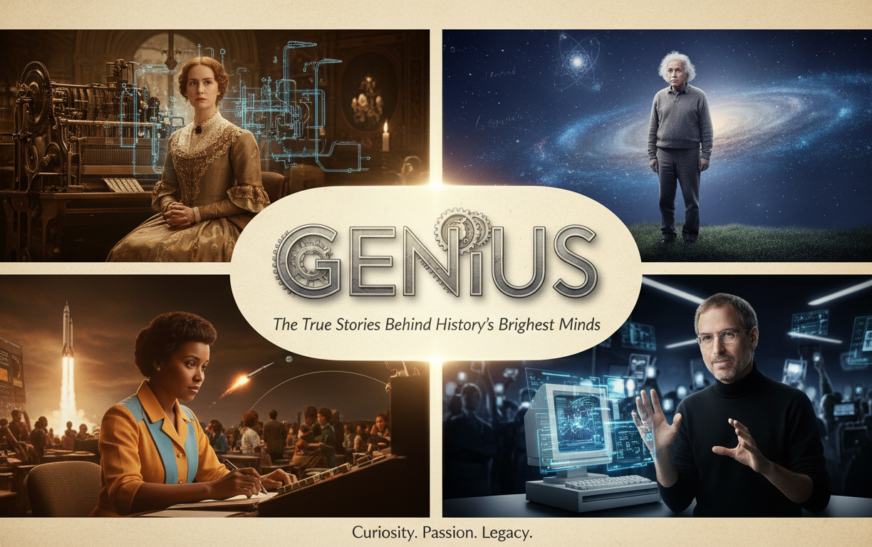
The Genius Movie (or “Genius Movie: The True Stories Behind History’s Brightest Minds”) dives deep into the lives of extraordinary figures. It highlights real-life tales, weaving factual biography with cinematic flair. This article explores how the film portrays these brilliant minds, how faithfully it stays to history, and what narrative choices it makes.
Real Lives, Cinematic Lens
This movie recounts the lives of iconic thinkers—Einstein, Turing, Curie, perhaps others—while adding drama, dialogue, and scenes drawn from creative imagination. It aims to humanize genius. But the approach isn’t sugar-coated: it mixes documented events with dramatized moments. Viewers get impressions of scientific breakthroughs, personal struggles, and the societal pressures each figure faced.
Balancing Fact and Fiction
Documenting someone real comes with responsibility. Filmmakers often condense timelines, invent dialogue, and heighten conflict to sustain drama. That’s the nature of cinematic storytelling. So yes, there’s poetic license. But the core is grounded in research—archival photos, journals, letters, biographies.
For example:
– Einstein’s early struggles and academic setbacks.
– Curie’s lab accidents and groundbreaking discoveries in radioactivity.
– Turing’s wartime code-breaking and post-war hardships.
All based on historical records—but sometimes arranged to fit a dramatic arc. Real life isn’t always tidy or climactic.
Narrative Choices and Storytelling Flow
The movie probably weaves multiple biographies together. That gives a collage of intellect across eras and fields. This structure invites comparisons: the lone genius in a lab, the societal barriers, the breakthrough moment. It also keeps pacing lively. Each story rises, peaks, and resolves—before jumping to the next.
This editing style can feel choppy, but it’s intentional. It reflects how brilliance emerges differently yet shares themes: persistence, doubt, inspiration. And when the film cuts from one era to another, we’re reminded genius isn’t bound by time or discipline.
Real-World Examples That Resonate
Even if the film jumps from Einstein scribbling on chalk to Curie measuring radium, each scene echoes contemporary themes. For instance, Curie’s challenges in a male-dominated world mirror modern conversations about women in STEM. Turing’s post-war persecution echoes today’s debate on privacy, identity, and ethics.
These parallels make the movie feel fresh and relevant, not just historical. They remind viewers that brilliance often clashes with social norms.
Expert Perspective on Artistic License
“A biographical movie must respect the subject’s legacy while telling a story compelling enough to hold our attention. It’s a fine balance between truth and dramatic narrative.”
Such balance helps audiences connect emotionally, even when not every detail is literal fact.
What Works — and What Feels Forced
What works:
– Emotional peaks: Eureka moments, personal loss, triumph.
– Visual storytelling: Labs, war rooms, lecture halls.
– Thematic threads: Isolation, discovery, identity.
Where it may falter:
– Rushed biographies—some figures get less development.
– Over-dramatization—fictional scenes disguised as fact.
– Shallow transitions—switching between stories can feel abrupt.
Still, these choices are understandable. There’s only so much time to cover several lives. If it leaves you wanting more depth on one figure, that’s a sign you cared.
A Human Element Amid the Science
The movie brings genius down to human scale. It shows the doubts, camaraderie, and personal stakes. Scientists aren’t portrayed as infallible—just persistent. Scenes of worry, exhaustion, disagreement—they keep the portrayal grounded.
And the actors’ performances help. A fleeting look, a scribble, a quiet realization—they all reinforce that scientific breakthroughs began in messy, human moments.
Structuring an Impactful Biopic
Lessons from the film’s structure that storytellers can learn from:
- Weave multiple arcs – creates thematic richness.
- Highlight universal struggles – makes genius relatable.
- Lean on emotion, not just facts – evokes engagement.
- Use contrast smartly – switch joy, sorrow, breakthroughs to maintain interest.
These techniques help a complex subject feel alive and relevant.
Cultural Resonance and Legacy
What does this movie mean for audiences now? It invites reflection. Are geniuses from the past still inspiring today? Yes. But the film nudges us to see their flaws and contexts too. It encourages humility: great achievements often come amid struggle.
It also invites curiosity. Viewers might look up the real stories, read biographies, dig deeper. That’s a good thing—a movie that sparks ongoing curiosity about science and humanity.
Conclusion
In essence, Genius Movie: The True Stories Behind History’s Brightest Minds offers a compelling, emotionally rich portrayal of towering intellects. It blends fact and fiction with intention. It may gloss over details, but it introduces these figures with heart. Drama sometimes trumps strict accuracy—but perhaps that’s what makes history feel alive again.
FAQs
What historical figures are featured in the film?
The movie focuses on iconic scientists like Einstein, Curie, and Turing. It traces their breakthroughs alongside personal and societal challenges.
How accurate is the portrayal of real events?
The film roots itself in documented events—journals, letters, biographies—but uses dramatic license for narrative cohesion. Core facts are based on real research, though dialogue and pacing may be fictionalized.
Does the film address modern themes?
Yes. It draws parallels between past obstacles—gender bias or societal pressure—and modern debates about equity, identity, and ethics in science.
Why does the movie jump between different figures?
That structure highlights thematic links across eras. It keeps the pace engaging and underscores how brilliance manifests in varied contexts.
Could the stories feel underdeveloped?
Some arcs are inevitably condensed, which might leave certain figures less explored. But that can encourage viewers to seek more information beyond the film.
Does the movie inspire further interest?
Absolutely. By humanizing historical geniuses, it often motivates audiences to dig into real-life biographies and the true context behind celebrated discoveries.