
The Signature Style of Luhrmann’s Cinema
His movies feel like dreams you can almost touch. He layers music, rich visuals, and stylized dialogue to create experiences that are immersive and—yeah—slightly imperfect in a good way. You leave his films humming along, wondering how something so wild could feel so emotionally real.
Music Meets Narrative Energy
He doesn’t just use music; he blends it into the story itself. In Moulin Rouge!, pop hits become tools of character and plot. Later, in The Great Gatsby, hip-hop pulses through a Jazz Age party—odd, yes, but it works. That unexpected style keeps you leaning in.
A Feast for the Eyes (and Ears)
Colors pop. Costumes tell stories. Every scene floods your senses. The vivid reds, emeralds, and shimmering golds in Moulin Rouge! underline passion and glamour. Romeo + Juliet skips historical accuracy for modern visuals shot in MTV-style frames. Luhrmann gives us heightened fantasy, not realism—and that’s what makes his work so memorable.
Exploring His Major Works
Luhrmann’s filmography may seem small, but it’s mighty. Each movie builds its own extravagant world, distinct yet unmistakably his.
Strictly Ballroom — Dance as Self-Expression
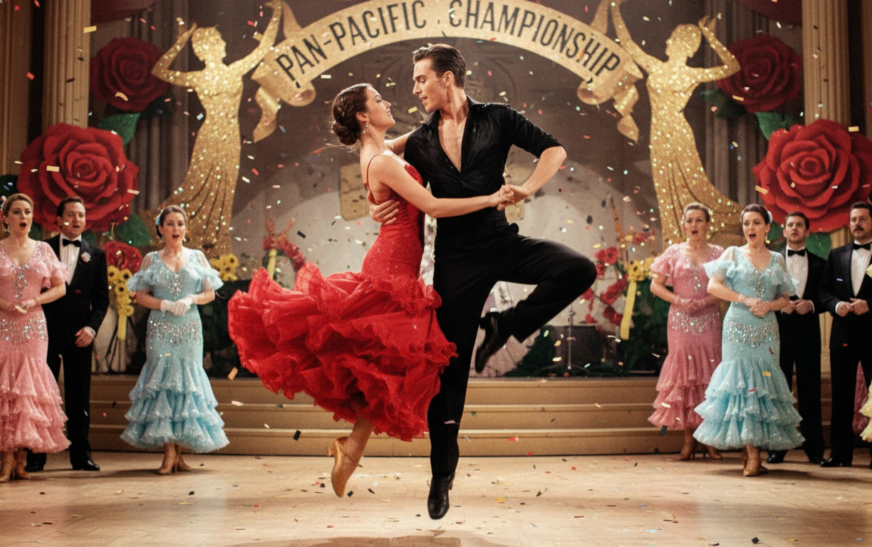
This was his debut; a comedic take on ballroom dance culture in Australia. It’s playful, witty, and heartfelt. The characters embrace boldness, breaking free from tradition. It sets the tone for his future: personal rebellion, grand visual statements, and a touch of humor.
Romeo + Juliet — Tragedy Reborn in MTV Glam
This modern reboot niches classic Shakespeare in glossy, gun-filled Chaos. Stylized, neon-lit, and immediate—it took a centuries-old play and made it pulse with teenage energy. You might roll your eyes at the excess—but that sharp stylization is a power move.
Moulin Rouge! — Love in Burstin’ Technicolor
Arguably his magnum opus. It flings you into a Montmartre cabaret where walls glow, songs melt together, and emotions run wild. He weaves pop, opera, and tragedy into a vibrant tapestry. It’s ridiculously lush, and yes, the emotional payoff is enormous.
Australia — Epic History with Overwhelm
Set before World War II, it’s a sweeping romance wrapped in big landscapes, dramatic stakes, and postcolonial themes. It’s visually stunning, though some critics flagged it for grandeur tipping into indulgence—yet Luhrmann wanted that, and he got it.
The Great Gatsby — Roaring 20s, Loud and Now
The Jazz Age is here in hyperdrive. He injects modern beats, tequila-fueled parties, and neon tears into Fitzgerald’s conflicted characters. It’s less about authenticity and more about mood—an emotional remix of a classic. And man, it’s stylish.
Why Luhrmann’s Worlds Matter
A Bold Break from the Norm
He doesn’t do quiet. His films push boundaries—cultural, aesthetic, emotional. They invite viewers to let go of realism and surrender to the spectacle.
Emotional Connection Through Sensory Overload
Oddly, the more lavish the visuals, the more you connect. The emotional truths shine brighter when everything else is turned up to eleven.
“Film shouldn’t just show life. It should feel like a carnival you step into—and that’s exactly what Luhrmann gives us.”
— imagined quote from a film scholar
Influence That Echoes Beyond Cinema
His aesthetic ripples into music videos, fashion, advertising—even theme-park design. The idea that style itself can drive emotion and story has informed many creative fields.
Skimming Made Easy: What to Know at a Glance
- Distinct voice: Dense visuals, pop music, operatic emotions
- Major films: Strictly Ballroom, Romeo + Juliet, Moulin Rouge!, Australia, The Great Gatsby
- Recurring themes: Love as defiance, spectacle as emotional amplifier
- Ongoing legacy: Bold storytelling that inspires visual artists across mediums
Concluding Thoughts
Luhrmann’s films are theatrical epics played out in painting-like frames, powered by soundtracks that feel alive. You don’t just watch—yeah, there’s a bit of sensory whiplash, but you also feel. He reminds us cinema can be wild, raucous, passionate—and deeply moving all at once.
FAQs
What makes Baz Luhrmann’s movies so visually extravagant?
He layers color, motion, music, and stylized sets to create emotionally charged worlds—preferring symbolic spectacles over realism.
Is Moulin Rouge! his most important film?
It’s widely seen as his breakout global hit—visually daring, musically innovative, and emotionally potent—marking a peak in his style.
Does Luhrmann ever tone it down?
Not really. Whether a small debut like Strictly Ballroom or a mega-budget epic like Australia, you can expect flamboyance.
Why does he mix modern music with period settings?
That contrast sparks emotional clarity. It makes historical or classic narratives feel immediate and relatable.
Has his style influenced other industries?
Absolutely. You can spot Luhrmann’s influence in music videos, ad campaigns, even fashion shoots that go for theatrical flair.
Are his films worth watching if you prefer realism?
Yes—if you’re open to emotional truths served with flair. His style is a bit like hearing a truth told through song and spotlight—intense, yes, but memorable.