
Madea endures because she delivers both belly laughs and heart-tugging truths. That’s it—no overthinking, just the answer. Madea stands out as a cultural icon because she blends outrageous comedy with genuine emotional resonance. Folks love her frankness, resilience, and how she navigates family chaos while still offering smarts and wisdom. In short: she’s funny, tough, real—and always remembers to tell you when you messed up.
A Relatable Matriarch Who Speaks the Truth
Madea’s appeal starts with her relatability. She’s that auntie or grandmother you’d rather not argue with—because she’ll call you out, push you, and then love you. The humor’s coarse, sure. But the core is tenderness wrapped in tough love.
Her flaws make her human. She cusses. She warns. She trusts her gut. And the audience? We nod along. We know a family like hers. That authenticity cuts through the comedy. It’s not a perfect grandma. It’s a real one, with real quirks.
The Power of Comedy Meeting Real-World Issues
Tyler Perry doesn’t shy away from serious topics. Madea movies and plays often touch on domestic abuse, financial stress, addiction, faith—heavy stuff. That contrast between humor and hardship resonates. Comedy becomes a safe bridge to talk about pain.
It’s not preachy or feel-good by design. It’s messy. And people feel seen in that mess. Laughing at confrontation, forgiving flaws, and pressing on—Madea sends those messages without feeling like a sermon.
Cultural Representation and Identity
Madea is unmistakably African American in her style, her mannerisms, her world. That representation matters. It’s not just any matriarch. It’s one steeped in Black southern traditions—Sunday dinners, church gossip, family legend.
She stands in a lineage of Black comedic characters who carry wisdom in their jokes. But she’s modern, too—paying taxes, handling phones, dealing with 21st-century family dynamics. That blend of old-school and new-school connects generations.
The Family-First Narrative
Family anchors every Madea story. The plots often begin with a revisit to family dysfunction. Someone’s getting married, someone’s lost, someone’s lost their way—Madea shows up. And she bulldozes nonsense with love and hollers.
We watch because we care. We want resolution. We want growth. And we want to laugh while we do. It’s unpretentious comfort-popcorn stuff—but it sticks because it’s human.
Theatrical Roots Fuel Film Energy
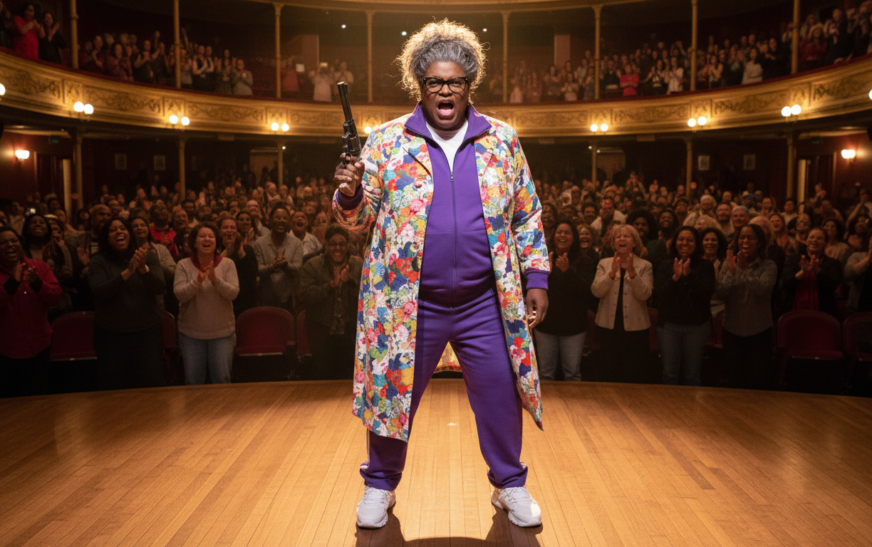
Madea started on stage, in plays. That immediacy survives in the films. You hear the audience sometimes, you sense the energy. The dialogue, pace, timing—it’s punchy, alive.
That theatrical vibe keeps energy high. Even in slow scenes, there’s rhythm. It’s like you’re in the room, catching the snark mid-air. That engagement is rare in modern comedies but makes the experience feel communal.
Why Tyler Perry Keeps Returning to Madea
You ever notice Tyler Perry returns to Madea again and again? There’s a reason beyond financials. Artists revisit what they know best, what resonates deepest. Madea is Perry’s way of exploring social issues with humor and heart.
He’s said—somewhere—that Madea lets him speak truths the world might skim past otherwise. The character allows commentary on relationships, faith, cultural identity, without preaching. Comedy opens doors. Madea just kicks them down.
Box Office and Broad Audience Reach
Let’s be honest: Madea draws money. Films in the franchise have racked up big box office totals—solid numbers, often on modest budgets. That makes the studio nod and audiences show up again. But the numbers don’t tell everything. The feeling of “coming back home” to Madea matters. People feel connected.
The Balance of Flaws and Moral Compass
Here’s what’s interesting: she’s crude, but moral. She lies to protect, she fusses to correct, she pries to care. There’s tension but also consistency. Her moral compass doesn’t always point north—but it points toward love.
That makes her unpredictable. You don’t know if she’ll scold, hug, or throw a plate. But you know, eventually, she’ll hold you accountable. That unpredictability—blended with dependability—is compelling.
Humor as a Gateway, Heart as a Hook
The laughs draw people in. But the heart keeps them. That’s the magic mix. Madea jokes about sex, money, husbands, neighbors. You laugh first. Then you feel. It’s like cotton candy with steak underneath—tiny sugar rush, then real nourishment.
Real-World Example: Madea’s Cultural Impact
Think of how many memes, catchphrases, and parodies revolve around Madea. She’s not just on screen. She lives in social media, at family barbecues, in conversation. People quote her. They paint her on murals. She’s in our shared language.
That spread isn’t just entertainment. It’s culture transmission—how a fictional grandma becomes shorthand for real-life sass and compassion intertwined.
Expert Perspective on Character Longevity
Here’s a quote that fits the vibe:
“A character like Madea survives not because she’s perfect—but because she’s honest, and she gives the audience laughter and something real to hold onto.”
That captures the essence. Imperfect honesty—and giving the audience laughter plus grounded human truth—makes her stick.
The Broader Lesson for Storytelling
Madea shows storytelling doesn’t need to be fancy to be lasting. You don’t need CGI. You don’t need mystery layers. You need voice. You need connection. You need someone like Madea who says what we mean but can’t always say. She gives clarity in chaos.
Beyond this, she models resilience, accountability, forgiveness—and humor. That’s a foundation any storyteller or brand can learn from.
Final Thoughts
Madea’s enduring appeal comes down to simple, raw human things: humor, honesty, family, faith, flaws, and feelings. She’s not polished. She’s real. And she speaks to us—across generations, backgrounds, and screens. That’s the power of an icon who feels like your weird aunt you still love.
Summary
Madea works because she’s relatable, layered, and grounded—both humorous and heartfelt. She addresses real issues through comedy without sugarcoating. Her cultural identity matters. And she grew from live theater to film with her vibrant energy intact. Audiences return because she calls them out, makes them laugh, and still leaves them holding something true.
FAQs
What makes Madea so popular across different age groups?
Madea blends familiar family dynamics with bold humor and heartfelt insight. That mix appeals to both younger viewers who enjoy the laughs and older ones who recognize the traditions and values she brings.
Why do serious issues in Madea stories feel authentic?
Because they’re delivered through comedy rooted in real experience. The humor disarms. Then the emotional core—like abuse, addiction, or reconciliation—lands hard but genuine.
Has Tyler Perry ever planned to retire Madea?
Tyler Perry has hinted at retirement, but Madea keeps coming back. The character lets him explore social themes in a voice that feels direct and familiar. Audiences haven’t let her go either.
Is Madea more a movie character or a cultural figure?
Both. On screen, she’s a comedic persona; off screen, she’s a cultural shorthand for brash honesty blended with love. People reference her beyond the films, in everyday conversation.
How does Madea compare to other comedic matriarchs?
She’s more unfiltered and modern. Unlike traditional matriarchs, she curses, confronts, and commands attention instantly. Yet she keeps the nurturing core intact, making her feel refreshingly real.
What can writers or creators learn from Madea?
Voice matters most. A flawed yet principled character who mixes laughter with emotional depth can endure. Don’t polish away the rough edges—those are what people connect to.