
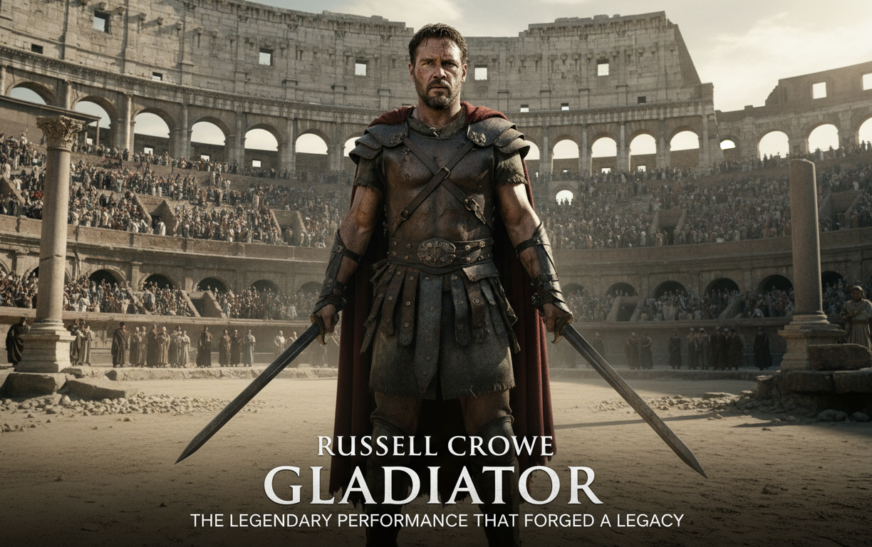
Russell Crowe’s performance in Gladiator isn’t just memorable—it’s career-defining. As Maximus Decimus Meridius, he brought fierce vulnerability and commanding presence to the screen. In one bold stroke, he became a global star, earning Best Actor and shaping his legacy.
The Actor Meets His Role
Crowe wasn’t yet a Hollywood legend. Sure, he’d done solid work before, but nothing quite prepared him for Maximus. He dropped into that role with tireless grit and subtle emotion. The result? A character that felt so real you could almost smell the sweat on his armor.
Before Gladiator, Crowe had carved out a reputation in Australia and for his role in The Insider (1999). Still, it wasn’t until he stepped into the arena as Maximus that global stardom hit full force.
Why Gladiator Changed Everything
A Breakthrough of Crowd and Critics Alike
You know how some movies just click? Gladiator did. It grossed massively—hundreds of millions worldwide, pushing the sword-and-sandals genre back into the limelight. But it wasn’t just the box office. Critics saw something electric in Crowe’s portrayal—imbued with rage, sorrow, honor—that stuck with audiences long after the screen faded to black.
Awards followed, cementing his place among greats. He walked away with the Oscar for Best Actor, the Golden Globe, and the BAFTA. That alone altered perceptions: Crowe was no fleeting star. He was a force.
The Duality He Portrayed
Crowe didn’t play a hero in the conventional sense. Maximus is a grieving father, betrayed general, and reluctant avenger. He’s a warrior who digs trenches in grief, yet he leads with empathy. That complexity made every glance and gesture count.
In one moment, he whispers to his dead wife’s memory with broken composure. In the next, he’s ripping through the Colosseum crowd with such controlled fury you can feel his heartbreak. That emotional layering—raw and tethered—created something unforgettable.
The Human Touch Behind the Epic Armor
Physicality Meets Deep Emotion
Crowe trained hard. He wasn’t just flexing muscles; he was crafting presence. On set, he worked tirelessly—lifting weights, sparring, breathing life into every strike. His body language matched his grief. The stoop of his shoulders, the flat gaze, the gravely whisper—each detail echoed his inner conflict.
A Team Effort Fueled by Camaraderie
Still, Gladiator wasn’t a solo act. Ridley Scott’s direction, Hans Zimmer’s score, and the supporting cast elevated Crowe’s work. Connie Nielsen’s Lucilla brought subtle emotional counterbalance. Joaquin Phoenix’s Commodus, dripping spoiled ambition, sharpened Maximus’s honour by contrast.
There’s a scene where Maximus whispers, “My name is Gladiator.” That line alone, delivered with quiet defiance, catapulted the film’s emotional arc. It showed how well the photography, music, and Crowe’s delivery worked together.
Impact and Legacy: Beyond the Colosseum
A Star Transformed Overnight
Immediately after Gladiator, roles poured in. Crowe became the go-to for weighty, morally rooted characters. He starred in films like A Beautiful Mind, Master and Commander, and The Insider (which had already earned him an Oscar nod). Each role played to his strengths: intelligence, quiet intensity, and a hint of volatility.
Elevated Genre Storytelling
Hollywood noticed that audiences craved historic epics with emotional depth. Gladiator kickstarted a wave—Troy, Kingdom of Heaven, 300, Braveheart resurgence—all sought that rare mix of grand scale and personal stakes. Crowe’s performance set a benchmark: be mythic, but also human.
The Anatomy of a Career-Defining Role
1. Emotional Grounding in Grand Spectacle
Maximus is epic and broken all at once. That duality is what made audiences stand up and notice. Crowe sold both. There’s a lesson here: even in the biggest stories, human core sells.
2. Authenticity Through Physicality
You don’t just act strong—you embody it. Crowe’s training delivered a body that told the story, even when he was still. The weight of armor on his shoulders felt heavy—in his performance, and in yours if you were watching close enough.
3. Surrounding Yourself with Strong Voices
Scott’s strategic framing, Zimmer’s pulse-pounding music, and powerful co-stars turned Crowe’s Maximus into a living force. No actor succeeds alone; the ecosystem matters.
4. Timing and Cultural Appetite
At the turn of the millennium, we wanted big stories again—ones that stirred us. Crowe’s Gladiator arrived just when we needed myth with meaning.
Behind the Scenes Vibe: Stories from the Set
On set, Crowe wasn’t always the gentle giant. He could be intense, demanding seriousness. But that pressure came from authenticity, not vanity. He once reportedly insisted on exploring every character motive—why someone betrayed, why they fought. That depth bled into his performance.
There’s a story of the scene with the horse—Crowe nudges Maximus’s mount. That moment of silent rapport between man and beast added a breath of emotion that didn’t rely on dialogue. It’s the little things.
How Gladiator Continues to Shape Crowe’s Image
Ongoing Cultural References
You can’t scroll through memes or film fan chatter without seeing Maximus lines or poses. “Are you not entertained?!” still gets cheers. It’s a shorthand for boldness, defiance, and — somehow — grace under pressure. Crowe’s image remains tied to that aura.
Influence on His Later Choices
Crowe later took more nuanced, independent roles—Les Misérables cameo, voice work, smaller dramas. But every time he steps back into a larger canvas, people connect to that gladiator energy. It’s as if Maximus lives on in him.
Lessons for Actors and Creators Today
- Own complexity. Even epic characters need human flaws.
- Train the body and soul together; physicality anchors emotion.
- Collaborate fearlessly with directors, composers, co-stars.
- Tap into cultural moods—timing shapes impact.
- Let one role open doors, but build the rooms yourself with variety.
“What makes an actor great is not just the face you put on camera, but the grit in your bones and the fault lines you let show.”
– A casting director once said about roles like Maximus, and it couldn’t ring truer here.
A Personal Reflection on Crowe’s Maximus
There’s a scene I can’t shake—Maximus kneels amid death and loss, breathing in the dust of his fallen men, holding grief so close it seems to crack his armor. In that quiet despair, Crowe transformed a microphone buzz and a lens into something felt.
You feel him wrestle between duty, love, and vengeance. That is the human unpredictability that makes great performances stand. It sticks with you like grit under your nails.
Looking Back, Looking Forward
It’s easy to say Gladiator was Crowe’s peak. But it’s deeper than that. It became the anchor of his screen persona. Maximus wasn’t just a role; he was a milestone. Ever since, Crowe has carried that impact—choosing roles with emotional substance, sometimes grim, sometimes tender—but always real.
Conclusion: The Legacy of a Gladiator
Russell Crowe’s work in Gladiator wasn’t merely powerful—it was a transformation. He took a one-note hero and made him quietly savage, heartbreakingly human. That performance changed Hollywood, reshaped his career, and echoed through pop culture.
For actor or filmmaker, the lesson endures: at heart, every epic still beats with human rhythm. That’s where the real power lies.
FAQs
What made Russell Crowe’s performance in Gladiator stand out?
He balanced physical power with emotional vulnerability, creating Maximus as both warrior and grieving human.
Did Gladiator immediately turn Crowe into an A-lister?
Yes. Awards and box office success catapulted him to international fame and attracted more challenging roles.
How did the film’s production elements support his performance?
Ridley Scott’s direction, Hans Zimmer’s stirring score, and strong co-stars all enhanced the emotional impact of Crowe’s work.
Why does Gladiator still resonate today?
Its blend of epic spectacle with grounded human emotion is timeless, and Crowe’s Maximus remains a cultural icon.
What can actors learn from Crowe’s approach?
Embrace complexity, train your physicality, collaborate deeply, and seek roles that echo your core humanity.
Did Crowe’s image change after Gladiator?
While he veered into other genres and independent projects, the gladiator presence has lingered in audience perception—subtle, intense, unforgettable.