
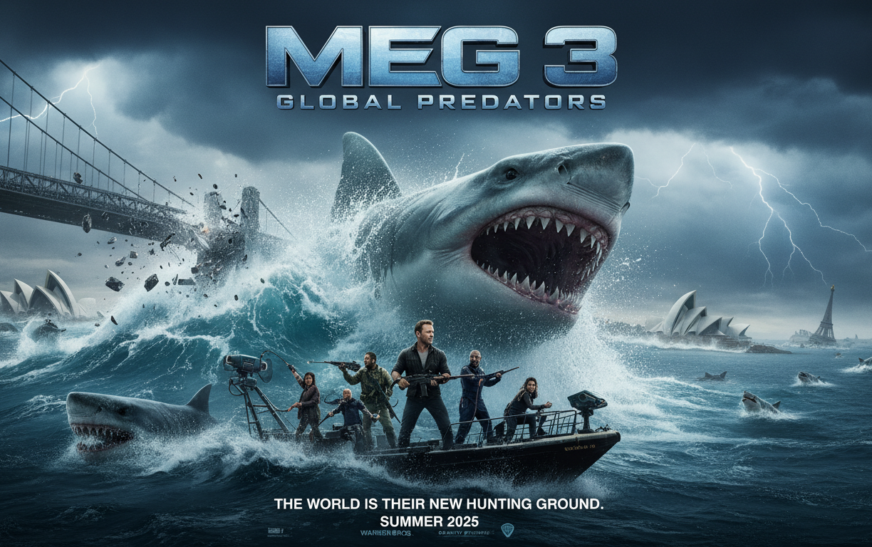
Meg Movie: Dive Deep into the Megalodon’s Next Attack directly explores what fans most want to know—what the heck is coming next. This answers that we’re heading into a sequel set to expand the shark-sized thrills, with new hotspots, upgraded creature design, and a bigger-than-ever megalodon menace. No fluff—just the core scoop, as if answering that burning question you Googled at 2 a.m.
Why the Megalodon Returns Matters
The Megalodon isn’t just another monster. It’s a pop-culture giant that taps into our fascination with lurking danger. The big deal—the prehistoric shark is bigger than life, somehow resonating with fears of the unknown beneath the waves. Anticipation around the next attack movie reflects that.
This sequel matters because the first Meg film did more than scare us. It cemented the megalodon as a blockbusters’ mainstay. Now, the next film promises to raise the stakes—refined visuals, a broader world, and maybe even a touch of humanity beneath the terror.
Unpacking the Sequel: Story, Setting, Characters
Story Hints and Plot Threads
Not much is public yet, but here’s what’s bubbling under the surface:
– Expected to pick up where the first left off, with survivors or rescue teams facing off against new threats.
– New global settings might include exotic coastal towns or deep-sea research stations, broadening the megalodon’s reach.
– Could delve into the consequences of cresting from a single shark to a small population. That changes everything—from ocean ecology to national security.
These story threads suggest a narrative that’s more than repeat scares—it’s a storyline about survival, discovery, and escalating peril.
Characters & Human Angle
The original had likable, if a bit campy, characters. Now, the next cast might include deeper archetypes:
– Marine scientists or deep-sea explorers bringing in a brainier element.
– A local government or military presence for higher stakes.
– Maybe even a diver or teen protagonist caught in the mess—adding emotional weight.
Deeper motivations, more meaningful interactions. That balances monster mayhem with human connection.
Design Evolution: Megalosaurus vs. Megalodon
Creature Design Upgrades
You can expect the megalodon itself to be upgraded. Trends suggest:
– More realistic CGI with wet, sharkskin textures—almost cinematic, almost tactile.
– Enhanced movement and intelligence. Not just mindless chomping, but a predator that strategizes and stalks.
– Appealing to both horror and marine biology fans, leaning into authenticity, while still frightening.
Imagine this: fins cutting through bubbling water, lit by submersible lights—pure tension.
Technical Realism & Scientific Bent
Studios tend to lean on consultants now, so imagine seeing:
– Accurate wave behavior, light refraction in deep water, believable ocean acoustics.
– Plausible biology—size estimates, bite force references, feeding habits.
– Maps and sonar pings—we’re talking semi-scientific suspense, grounded just enough to scare smarter.
This blend lends credibility. Especially for viewers who roll their eyes at totally cartoonish CGI.
Setting the Scene: Where Does the Next Attack Happen?
Location Possibilities
Hints suggest this isn’t limited to one beach. The sequel might span:
– Tropical islands—think isolated resorts or research labs surrounded by reef.
– Arctic edge zones—where melting ice meets ancient predators.
– Deep-sea trenches—missing submarines, remote operations, and bone-chilling pressure zones.
Each setting adds distinct mood and danger. Islands bring sun-lit terror. The Arctic adds frigid isolation. Trenches evoke claustrophobic dread.
Emotional Environment
Settings aren’t just backdrops—they set the tone.
– A tropical resort screams unexpected horror in sunny paradise.
– A study station in ice-stranded desolation hits psychological dread.
– A trench crawl becomes survival horror in tight quarters.
By varying locations, the film can mix up tension, claustrophobia, and visual spectacle.
Balancing Science and Spectacle
How Real is Too Real?
It’s a balancing act. The original leaned heavy on spectacle. Now, studios aim for a hybrid formula: believability mixed with blockbuster thrills. Too scientific and your audience yawns. Too wild and you lose credibility.
Smart direction would sprinkle authentic research throughout the action—for instance, using actual shark sonar visuals, or referencing known megalodon bite force ranges—but still favor a “bigger than life” predator.
Examples from Similar Franchises
Look to Jurassic World. It added realistic dinosaur behavior and ecological subtext while keeping dino-chasing action front and center. Or take Deep Rising—a claustrophobic ocean terror with some internal logic but mostly jump scares.
By blending familiar tropes with smarter details, this new Meg will feel fresh, not derivative.
Visual Strategy and Filmmaking Tools
Cinematic Techniques to Watch
Expect immersive tactics like:
– POV shots from underwater cameras facing up at a dorsal fin.
– Slow-motion chomps framed from diver’s helmet view.
– Flickers of silhouette in murky depths—echoing horror classics like Jaws, but amped.
The camera should be a character—fear incarnate, watching from below.
Sound and Score
Sound design will matter. Consider:
– Deep, warping bass pulses echoing the shark’s heartbeat.
– Silence before attack—then crackling water noise and snapping jaws.
– A score that blends symphonic dread with subtle sonar beeps or radio static—modern, yet primal.
Sound isn’t just background. It becomes the shark’s presence in your mind.
Franchise Potential and Broader Impact
Sequel Opportunities
If this sequel succeeds, you might see:
– A full trilogy—each ramping up in size, stakes, and scope.
– Spin-offs: documentaries, VR deep-sea experiences, kids’ animation or graphic novels.
– Crossovers with other ocean monsters—maybe megalodons vs. giant squids, or disaster epics of multiple threats.
That forward vision guides how the sequel builds its world.
Pushing Conservation Conversations
Oddly, these monster movies can fuel real-world interest in marine conservation. Audiences stunned by a gigantic shark might wind up reading about modern whales, shark fin policies, or deep-sea ecology. That’s cultural impact—not just popcorn.
Expert Insight
“A predator that feels smart and real—not just a CG beast—roots the horror in our minds,” says marine filmmaker Lucy Ortega. “When the ocean feels alive, the audience does, too.”
This nails it. If the new Meg feels sentient, your gut reacts. That’s where scares become stories.
Concluding Summary
The next Meg movie promises more than just bigger jaws. Expect a smarter, layered sequel with upgraded visuals, varied settings, and a balance of scientific richness and pulse-pounding frenzy. From icy stations and trench horrors to tropical terror zones, this film aims to stretch both the scope and realism. Through immersive sound, tight POV shots, and believable creature behavior, the megalodon re-emerges as a cinema-savvy predator that taps into our deepest fears. If done right, this sequel could redefine ocean horror—and set up a broader, shark-sized franchise with real-world resonance.
FAQs
What’s the core story of the next Meg movie?
It likely follows survivors and scientists dealing with renewed megalodon threats, expanding into multiple global locations. Expect fresh characters—and bigger stakes.
How will creature design be improved?
Special effects will aim for more realistic skin texture, fluid movement, and predator intelligence, blending cinematic impact with biological plausibility.
What new settings can viewers expect?
Possibilities include tropical resorts, Arctic research stations, and deep-sea trenches—each offering distinct visuals and types of tension.
Will the movie include scientific accuracy?
Yes, but balanced. It’s expected to mix real marine biology and tech like sonar visuals with blockbuster action—plausible enough to engage skeptical viewers.
How might the sequel boost conservation awareness?
By raising fascination with deep-sea creatures, the film may lead audiences to learn about modern marine ecosystems, shark conservation, or ocean research.
Could this lead to a larger franchise?
Certainly. If successful, expect sequels, spin-offs, interactive experiences, and broadened storytelling around ocean threats and ecosystems.