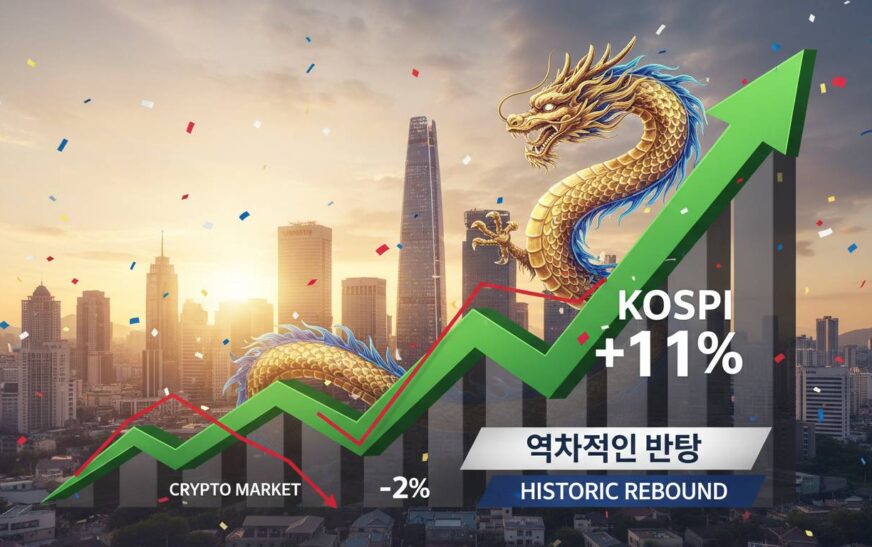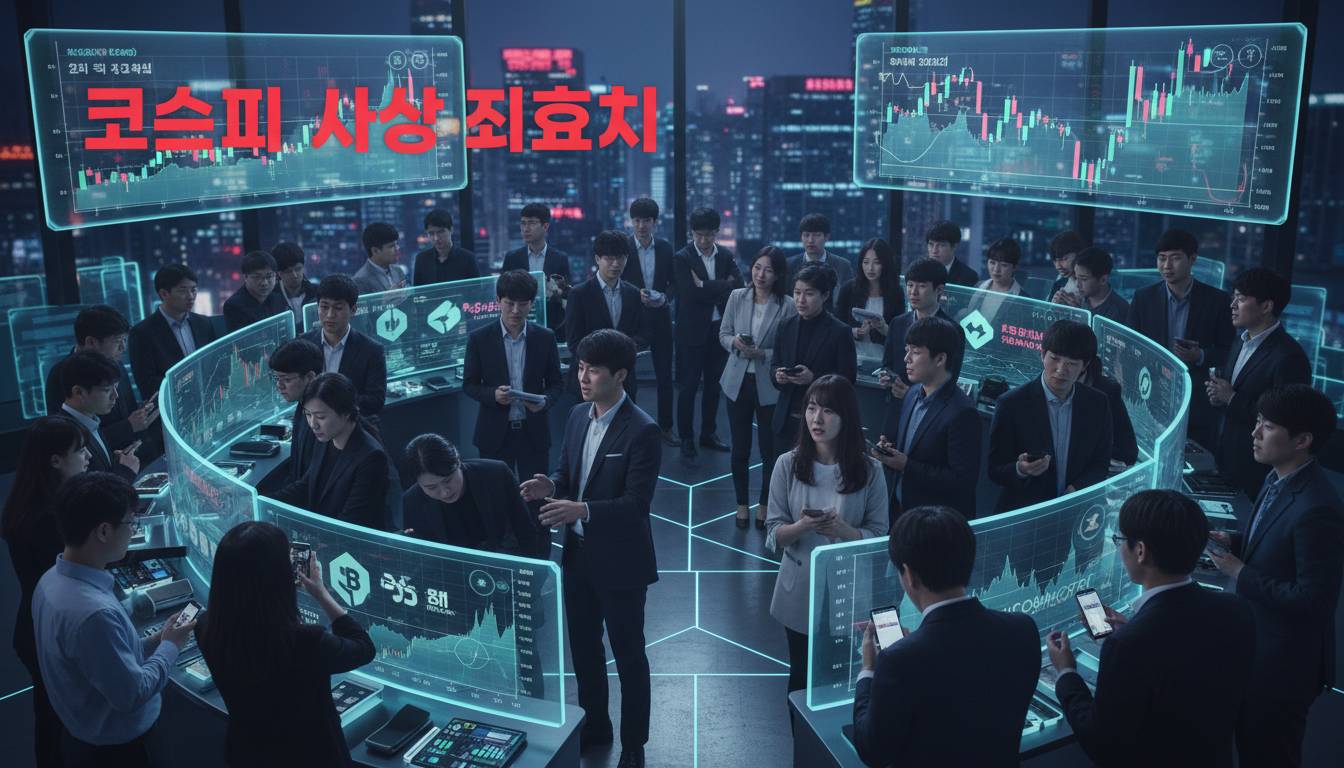

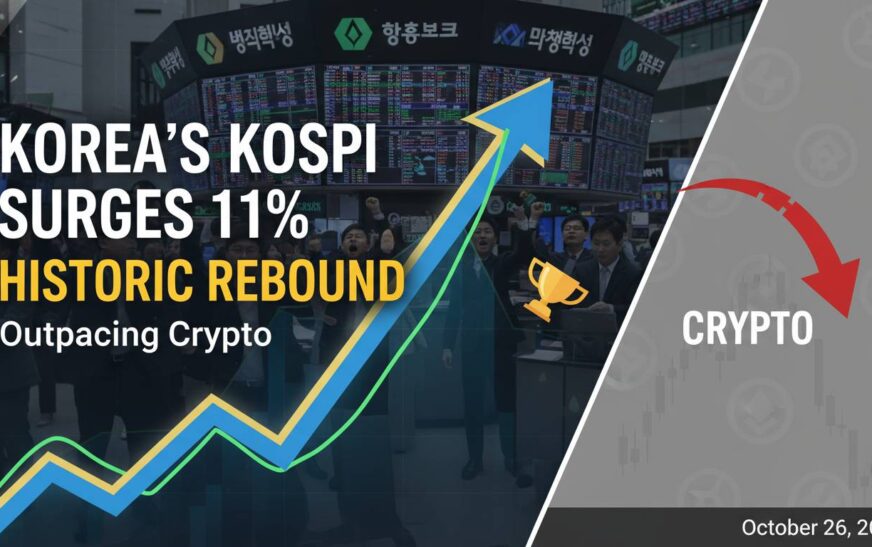
South Korea’s KOSPI index staged a dramatic comeback, soaring more than 11% on Thursday, March 5, 2026—just one day after suffering its worst single-session loss in history. The rebound, fueled by easing geopolitical tensions and stabilizing oil prices, outpaced gains in the crypto market, underscoring a renewed investor preference for equities over digital assets.
A Stunning Reversal in Korea’s Markets
The KOSPI leaped from Wednesday’s close of 5,093 to mid-morning levels above 5,682, even touching an intraday high of 5,715. The tech-heavy KOSDAQ also surged over 11%, while the Korean won strengthened from 1,505 to around 1,461 per US dollar.
This sharp rebound followed a historic plunge of 12.06% on Wednesday—surpassing the previous record drop of 12.02% recorded after 9/11. The sell-off was triggered by fears over Middle East instability and South Korea’s high energy dependence on the region.
Why the KOSPI Fell—and Rebounded—So Sharply
South Korea’s reliance on Middle Eastern energy—over 70% of its imports—made its markets especially vulnerable when US–Israel strikes on Iran raised fears of a Strait of Hormuz closure. This geopolitical shock disproportionately impacted Seoul’s export-driven economy.
By Thursday, oil prices had stabilized—Brent crude held at $81.40 and WTI at $74.66—and reports of back-channel talks between Washington and Tehran lifted investor sentiment across Asia.
Tech Giants Lead the Charge
Major exporters like Samsung Electronics and SK Hynix, which had fallen 21% and 22.75% from late-February peaks, rebounded sharply—gaining between 13% and 15% in early trading. Foreign investors returned to the market, buying over 710 billion won, while retail investors added another 600 billion won.
Crypto vs. Equities: A Shift in Investor Preference
The equity rebound significantly outpaced crypto gains. Bitcoin rose approximately 6.4% in dollar terms over the past 24 hours, but only about 5% in won terms—the won’s recovery absorbed part of the gain.
Retail investors, who had briefly turned to newly listed tokens on Upbit and Bithumb during the crash, are now shifting back to equities. With over 1.3 trillion won flowing into stocks in a single morning, crypto markets face renewed pressure.
Broader Context: KOSPI’s Stellar 2025–2026 Performance
This rebound builds on a broader rally. In early November 2025, the KOSPI had already surged to record highs, gaining 71.8% year-to-date, while Bitcoin’s rise lagged at just 11%. Daily trading volumes in equities soared by 208%, while crypto volumes plunged over 80%.
By early March 2026, the KOSPI had breached the 6,000-point mark, rising nearly 50% year-to-date. Samsung Electronics became the first South Korean company to reach a $1 trillion market cap.
What Analysts Are Saying
Analysts remain cautiously optimistic. Mirae Asset set a near-term KOSPI target of 5,800, while Kiwoom Securities suggested that the two-day sell-off had already priced in much of the geopolitical risk.
One analyst noted that a prolonged blockade of the Strait of Hormuz would be self-defeating for Iran, as it would cut off its own foreign exchange revenues and invite further military response.
Implications for Investors and Markets
• Retail and foreign capital is flowing back into equities, signaling renewed confidence in traditional markets.
• Crypto markets may face liquidity challenges as investor attention shifts back to stocks.
• The won’s recovery reduces the currency-hedge appeal of digital assets.
• Future market direction hinges on geopolitical developments and energy price stability.
Conclusion
South Korea’s KOSPI delivered a historic rebound—surging 11% in a single session and outpacing crypto gains—demonstrating the resilience of its equity markets amid geopolitical shocks. Stabilizing oil prices, easing tensions, and strong performances from tech giants like Samsung and SK Hynix fueled the rally. As investor sentiment shifts back to equities, crypto markets may struggle to regain momentum. The path forward depends on geopolitical stability and continued confidence in Korea’s economic fundamentals.
Frequently Asked Questions
What triggered the KOSPI’s 11% surge?
The rebound followed a record 12% drop amid Middle East tensions. Stabilizing oil prices and reports of diplomatic talks between Washington and Tehran lifted investor sentiment.
How did crypto markets perform during this rebound?
Bitcoin rose about 6.4% in dollar terms but only around 5% in won terms, as the won’s recovery absorbed part of the gain.
Which stocks led the KOSPI rally?
Samsung Electronics and SK Hynix led the rebound, gaining between 13% and 15% in early trading.
What are analysts forecasting for the KOSPI?
Mirae Asset targets a near-term level of 5,800, while Kiwoom Securities believes much of the geopolitical risk has been priced in.
Why is South Korea’s market more sensitive to Middle East shocks?
South Korea imports over 70% of its energy from the Middle East, making its export-driven economy highly vulnerable to commodity shocks.
What does this mean for retail investors?
Retail investors are shifting capital back into equities, drawn by strong gains and reduced geopolitical risk. Crypto markets may see reduced inflows as a result.