

An unexpected surge in tokenized traditional finance (TradFi) asset trading on Hyperliquid is fueling speculation that HYPE, the platform’s native token, could climb as much as 90%, potentially reaching a new all-time high. This article explores the catalysts behind this momentum, the mechanics driving price action, and what it could mean for investors and institutions alike.
TradFi Integration Sparks Massive Volume Growth
Hyperliquid’s integration of tokenized TradFi assets—such as oil, gold, silver, and equities—has dramatically reshaped its trading landscape. In late January, tokenized TradFi assets accounted for 31.6% of Hyperliquid’s total trading volume, up from under 5% just a month earlier . This shift underscores a growing appetite for traditional markets within a decentralized framework.
On a recent Sunday, the platform recorded $6.4 billion in trading volume, with open interest in commodities derivatives surpassing $1.1 billion—setting a new record . These figures highlight the platform’s ability to attract deep liquidity and institutional-grade activity around the clock.
The Burn Flywheel and Technical Setup
Hyperliquid’s tokenomics amplify the impact of rising volume. A significant portion of trading fees is used to buy back and burn HYPE tokens, creating a deflationary feedback loop that supports price appreciation .
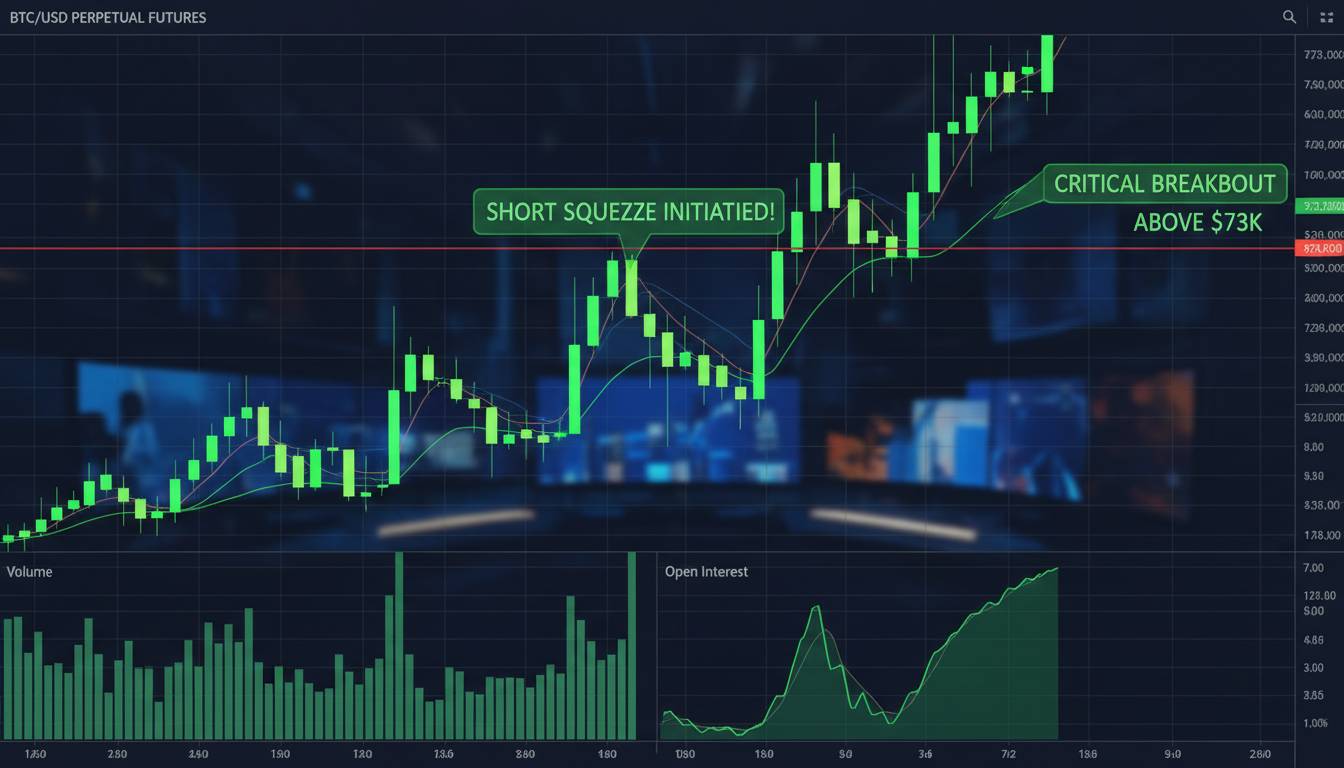
Technically, HYPE recently reclaimed its 20-day exponential moving average (EMA), a bullish signal. Historically, a similar reclaim in late January preceded an 81% rally to $43 . Current resistance levels lie near $34, followed by $39 and $43. If momentum continues, extension targets include $48 and $62—representing approximately 90% upside from current levels near $32 .
Institutional Bridges and Ecosystem Expansion
Hyperliquid’s TradFi edge is reinforced by strategic integrations and institutional access. Ripple Prime now offers institutional clients on-chain derivatives via Hyperliquid, enabling seamless cross-margining with traditional assets like FX and fixed income .
CoinShares launched a physically backed HYPE staking ETP (ticker: LIQD) on Xetra, offering regulated, yield-bearing exposure to HYPE for traditional investors . Additionally, Trojan (formerly Unibot) introduced non-custodial bot trading for TradFi assets directly on Hyperliquid’s order book .
These developments bridge DeFi and TradFi, expanding Hyperliquid’s reach and legitimizing HYPE as a tradable asset in regulated markets.
Institutional Accumulation and Tokenomics
Institutional interest is evident. Hyperliquid Strategies Inc. reportedly holds over $583 million in HYPE, signaling strong conviction from sophisticated investors . Meanwhile, the platform’s deflationary model—allocating over 70% of fees to buybacks—reinforces long-term value creation .
However, token unlocks pose potential supply pressure. The first major team vesting occurred in November 2025, releasing 238 million HYPE over 24 months—roughly 9.92 million tokens per month . Despite this, predictable vesting schedules and ongoing buybacks help mitigate downside risk .
Risks and Regulatory Considerations
Rapid growth invites scrutiny. Hyperliquid’s dominance in decentralized perpetual trading—capturing 70–80% market share—has drawn regulatory attention, particularly from the CFTC . A $4.9 million manipulation incident in late 2025 also exposed vulnerabilities in its liquidity infrastructure .
Moreover, centralization concerns persist. The Hyper Foundation controls a significant portion of staked HYPE, and incidents like validator-led liquidations have raised governance questions .
What This Means for Stakeholders
For traders, the TradFi integration and technical setup suggest a compelling upside scenario. A break above $34 could trigger cascading short liquidations, pushing HYPE toward $62—a new all-time high.
Institutional investors benefit from regulated access via ETPs and prime brokerage integrations, while retail users gain exposure to TradFi markets through decentralized infrastructure.
Yet, regulatory risks and token supply dynamics warrant caution. Sustained volume and continued buybacks are essential to support the bullish thesis.
Conclusion
Hyperliquid’s TradFi edge—marked by tokenized asset integration, institutional partnerships, and a deflationary token model—positions HYPE for a potential 90% rally toward a new all-time high. Technical indicators and volume dynamics reinforce this outlook, while ecosystem expansion and institutional access add credibility.
However, regulatory scrutiny and token unlocks introduce uncertainty. Investors should monitor volume trends, buyback activity, and governance developments closely.
If Hyperliquid continues to deliver on its TradFi promise, HYPE could be on the cusp of a breakout that redefines its trajectory in the DeFi landscape.
Frequently Asked Questions
What is driving the potential 90% rally in HYPE price?
The rally is fueled by a surge in tokenized TradFi asset trading, strong technical indicators, and a deflationary buyback mechanism that amplifies price momentum.
How does Hyperliquid integrate TradFi assets?
Hyperliquid enables perpetual futures trading of commodities, equities, and other traditional assets 24/7, attracting institutional and retail volume.
What role do institutional products play in HYPE’s growth?
Products like the CoinShares ETP and Ripple Prime integration provide regulated, institutional-grade access to HYPE, expanding its investor base.
Are there risks to this bullish scenario?
Yes. Regulatory scrutiny, token unlocks, and governance centralization pose risks that could impact price stability.
What technical levels should traders watch?
Key resistance levels include $34, $39, and $43. A break above $34 could trigger a move toward $48 and potentially $62.
How sustainable is Hyperliquid’s buyback model?
The model is sustainable if trading volume remains high. However, prolonged volume declines could weaken the deflationary pressure supporting HYPE’s value.