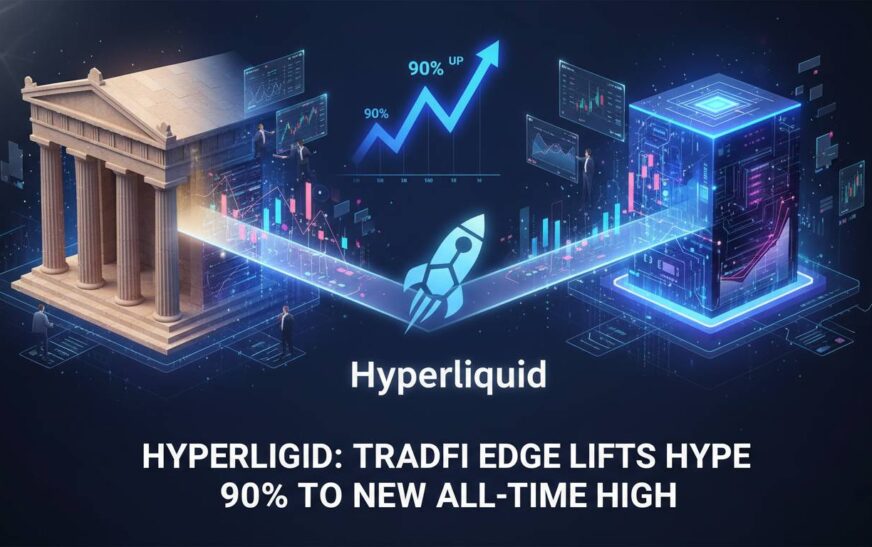


Hyperliquid’s innovative integration of traditional finance (TradFi) instruments into its decentralized ecosystem is fueling renewed optimism for its native token, HYPE. With token burns outpacing emissions and tokenized TradFi volumes surging, analysts see a potential 90% upside—possibly propelling HYPE to a new all-time high near $62.
TradFi Integration Driving HYPE Momentum
Hyperliquid’s platform now supports tokenized TradFi instruments—including commodities, equities, and macro derivatives—via a deterministic order book model that rivals centralized exchanges in speed and finality. By January 2026, tokenized TradFi transactions accounted for 31.6% of total trading volume, reflecting strong institutional and macro-driven demand.
This hybrid architecture—combining on-chain transparency with TradFi-grade execution—positions Hyperliquid as a bridge between DeFi and traditional markets. The platform’s HyperBFT consensus and global transaction queue deliver low latency and consistent order processing, making it attractive for high-frequency and macro traders.
Deflationary Tokenomics: Burns Outpace Emissions
Hyperliquid’s tokenomics are engineered for scarcity. Recent data shows that daily HYPE burns (~48,978 tokens) significantly exceed staking emissions (~26,790 tokens), resulting in a net removal of over 22,000 tokens per day.
This deflationary dynamic is further amplified by fee-driven buybacks. The platform generated $2.74 million in fees over 24 hours and $16.96 million over the past week, with approximately $9.22 million worth of HYPE burned last week alone.
Technical Setup: Targeting $62 All-Time High
Technically, HYPE recently reclaimed its 20-day exponential moving average (EMA), a bullish signal that previously preceded an 81% rally in late January.
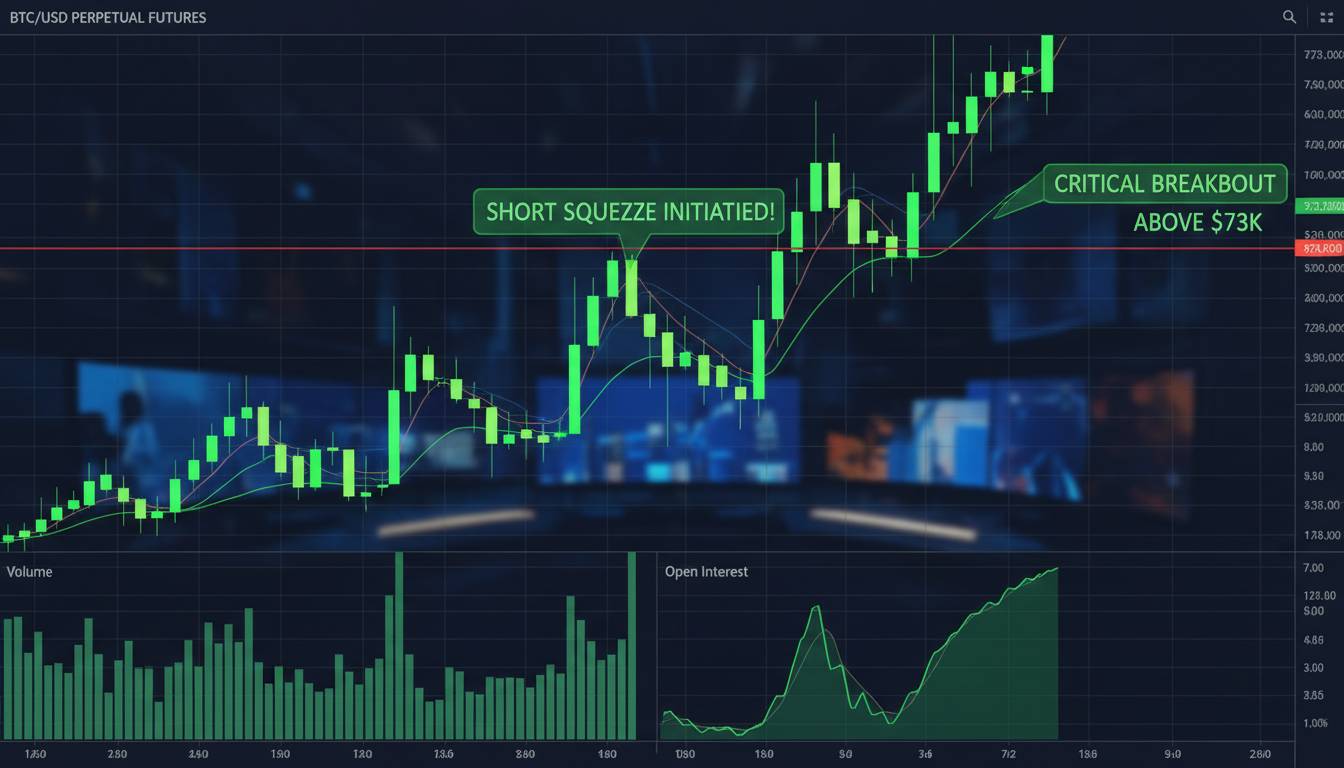
Current resistance levels include $34, where short liquidations may accelerate upward momentum. Beyond that, key targets lie at $39, $43, $48, and ultimately $62—a level that would mark a new all-time high, representing approximately 90% upside from the current ~$32 price.
Institutional Backing and Ecosystem Expansion
Hyperliquid’s growth is bolstered by strategic partnerships and institutional support. The platform’s HIP‑3 upgrade slashed taker fees by up to 90% for new markets, encouraging market creation and volume growth.
Moreover, Hyperliquid’s revenue-sharing model allocates over 70% of trading fees to HYPE buybacks, reinforcing the deflationary cycle.
Institutional adoption is rising. Hyperion DeFi, a U.S.-listed company, entered into a “HAUS” agreement to deploy 100,000 staked HYPE with a proprietary trading firm, unlocking fee savings and new revenue streams.
Risks and Counterpoints
Despite the bullish narrative, several risks warrant caution. A compliance report highlights structural vulnerabilities: third-party front-ends may erode Hyperliquid’s margins, and token unlocks could pressure supply.
TokenMetrics projects a 2026 price range of $48–$70, while Cryptopolitan forecasts $108–$137—both contingent on continued innovation and competitive resilience.
Additionally, centralization concerns persist. The Hyper Foundation controls a significant portion of staked HYPE, raising governance and decentralization questions.
Conclusion
Hyperliquid’s TradFi integration, deflationary tokenomics, and institutional momentum create a compelling case for HYPE’s potential 90% rally toward a new all-time high near $62. The platform’s hybrid architecture and revenue-sharing model underpin this bullish thesis. However, investors should remain mindful of structural risks, token unlocks, and governance centralization.
As Hyperliquid continues to expand into real-world assets and synthetic markets, its ability to sustain growth and fend off competition will determine whether HYPE can truly reach new heights.
Frequently Asked Questions
What is driving HYPE’s potential 90% price increase?
The combination of tokenized TradFi volume growth, deflationary token burns, and technical breakout patterns supports the bullish outlook.
How does Hyperliquid integrate TradFi instruments?
Through a deterministic order book and HyperBFT consensus, Hyperliquid enables tokenized trading of commodities, equities, and macro derivatives with CEX-level speed and DeFi transparency.
What makes HYPE deflationary?
Daily token burns exceed staking emissions, and a large portion of trading fees is used for buybacks, reducing circulating supply.
What are the main risks to HYPE’s rally?
Risks include token unlocks, front-end competition, governance centralization, and potential margin compression.
Who are the institutional backers of Hyperliquid?
Notable participants include Hyperion DeFi, Paradigm, and other institutional investors, supporting ecosystem growth and liquidity.
What technical levels should traders watch?
Key resistance levels are $34, $39, $43, $48, and $62. A break above $34 could trigger short liquidations and accelerate upward momentum.