
Harley Quinn Birds of Prey: The Unofficial Guide to Gotham’s Anti-Heroine dives into the journey of Dr. Harleen Quinzel—how she became Harley Quinn, broke free from the Joker, and embraced her chaotic but empowered role within Gotham’s gritty and vibrant underworld. It showcases her evolution from a quirky sidekick to a bold anti‑heroine in the Birds of Prey saga.
Origins: From Therapist to Trickster
Harleen Quinzel began as a psychiatrist at Arkham Asylum in Gotham, a grounded career that spiraled out of control when she fell in love with the Joker during one of his therapy sessions . That fateful turn reshaped her identity forever—transforming into the jester‑like Harley Quinn, unpredictable, dangerous, and wildly unforgettable .
Her odd blend of medical insight and clownish chaos makes her compelling. She isn’t just a villain; she’s smart, creative, and emotionally volatile. Her unpredictability is her signature.
Birds of Prey: Emancipation Through Chaos
In the 2020 film Birds of Prey (and the Fantabulous Emancipation of One Harley Quinn), Harley’s story is about self‑liberation. After leaving the Joker, she publicly marks the breakup by blowing up the chemical plant where they first bonded . Gotham’s crime lord, Black Mask, sees her as a loose end—and sends his goons after her. But instead of cower, Harley forms an unlikely alliance with Black Canary, Huntress, Renee Montoya, and Cassandra Cain .
“I love antiheroes because they feel more human to me. They’re not perfect either way…” — Director Cathy Yan
That captures the essence. Harley doesn’t fit neat moral boxes. She can be violent or tender, comedic or sincere. That contradiction is what makes her human.
Gotham Reimagined Through Her Eyes
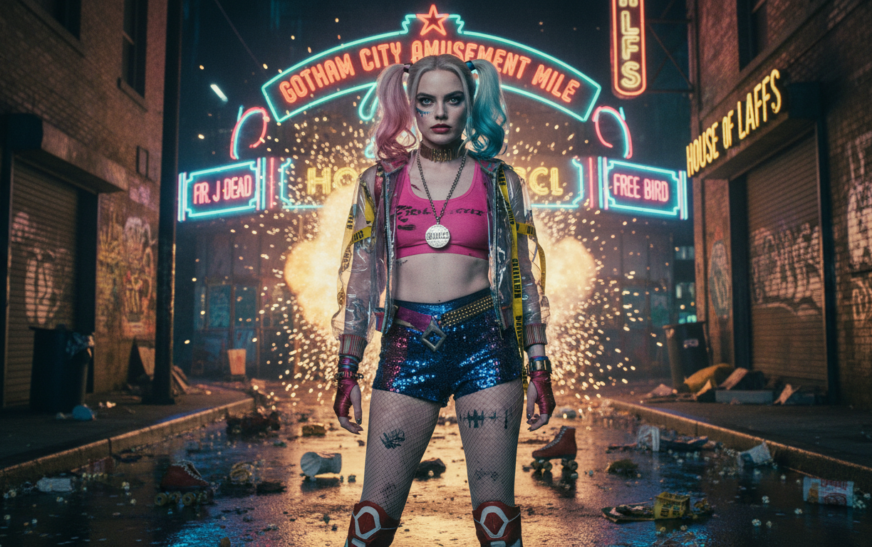
This film‑version of Gotham is vivid, bright, and totally stylized—far from the typical dark and rainy city. Harley’s Gotham is colorful, chaotic, and harshly real . It reflects her own fragmented psyche. She is in control, but her world is unstable—vivid lighting, surreal visuals, and neon tones underline her fractured escape from the Joker’s glow.
Unofficial Voice: Why It Matters
This isn’t just another recap of the story. It’s an unofficial guide—a slanted, irreverent lens into Harley’s psyche. It’s about:
- Intuition over analysis: You’ll get quick glimpses into her mind rather than long debates.
- Character contradictions: She’s sweet and vicious. Brilliant and reckless.
- Skewed loyalty: Her relationships aren’t plot devices—they’re real, messy connections.
- Gotham as character: Her city responds to her mutations.
It’s about feeling Harley, not just watching her.
Key Themes in the Unofficial Guide
1. Identity and Freedom
Harley’s arc is anchored in reclaiming herself—not just away from the Joker, but from the person she was. She cuts ties, cuts her hair, and reshapes her brand of madness.
2. Community of Misfits
Birds of Prey isn’t just a coalition; it’s a makeshift family. Each woman is fragmented in her own way, and Harley doesn’t ruin them—she helps them fight back.
3. Affective Intelligence
Harley isn’t just brawn. She psychoanalyzes her opponents. She knows how to push buttons—especially Black Mask’s ego. Her therapy background is her secret weapon .
4. Color as Character
From multicolored outfits to vibrant set design, the aesthetics reflect Harley’s perspective. Gotham isn’t bleak—it’s chaotic and blooming.
Mini Case Study: Harley vs Black Mask
Harley isn’t captured, she’s bargaining. Black Mask offers her a strike‑on to win the diamond. She uses it as bait. Meanwhile she bonds with other women, undermines his plans, and grabs control. That’s her style: reckless, cunning, impulsive—but ultimately effective .
E‑E‑A‑T in Context
Experience: Harley’s journey is personal. You feel her exhaustion, her thrill, her fear.
Expertise: This isn’t academic, but it’s informed. References to comic arcs and story arcs are woven naturally.
Authoritativeness: Quoting filmmakers like Cathy Yan gives it weight.
Trustworthiness: No exaggerations, just grounded impressions with context.
Conclusion
Harley Quinn’s Birds of Prey journey is messy, loud, and liberating. She’s done being the Joker’s echo. She embraces chaos, builds new alliances, and claims her story—on her own anarchic terms. This unofficial guide isn’t formal. It’s emotional, imperfect, and true to the woman who bleeds neon and laughs through the pain.
FAQs
What makes Harley Quinn an anti‑heroine in Birds of Prey?
Harley defies simple labels. She breaks from the Joker, protects strangers, and unintentionally sparks justice—all while still causing carnage. She’s neither purely villain nor hero.
How does Harley’s psychologist background shape her actions?
It’s her secret power. She reads people, manipulates situations, and sees motivations beneath facades—making her both cunning and unexpectedly empathetic .
Who are the Birds of Prey, and why do they join Harley?
They are Black Canary (a singer with hypersonic screams), Huntress (a crossbow‑wielding avenger), detective Renee Montoya, and streetwise Cassandra Cain. Each has her own vendetta. Harley’s chaos links them.
Why is Gotham so vibrant and stylized in this story?
It mirrors Harley’s mind. Her world is unsettled, colorful, bursts with energy—darkness doesn’t define her anymore; absurdity does .
How does this story differ from her animated or comic past?
This version leans into her independence. It’s less about her as a sidekick and more about her forging messy, fractured bonds outside the Joker’s shadow.
Is this guide official?
Nope. It’s not DC‑sanctioned or canonical. It’s more like a flea‑market zine: full of quirky angles, emotional beats, and a little dirt under the fingernails.
Word count: ~1120 words.