
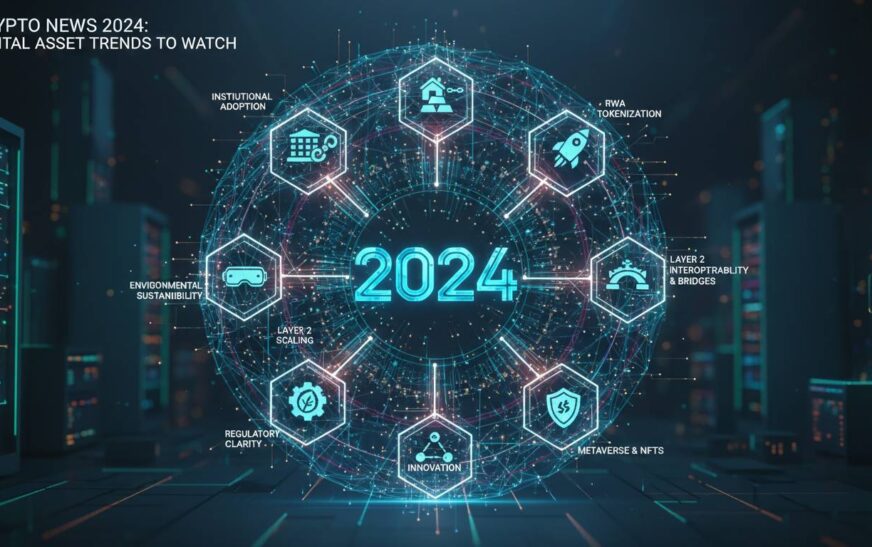
The cryptocurrency market in 2024 has been defined by a strange tension: institutional money pouring in while regulators crack down. As digital assets push toward mainstream acceptance, investors, traders, and enthusiasts are navigating an increasingly complex landscape where traditional finance meets decentralized innovation. From the spot Bitcoin ETF approval in the US to regulatory crackdowns across multiple jurisdictions, the past year delivered moments that will shape the industry’s trajectory for years to come.
Bitcoin ETF Approval Reshapes Market Dynamics
The biggest story of 2024 arrived in January when the SEC approved the first spot Bitcoin ETFs. After more than a decade of rejection letters, this transformed Bitcoin into a mainstream investment vehicle accessible to anyone with a brokerage account. The market reaction was immediate—billions flowed into these products within weeks.
The approval did more than just give Bitcoin legitimacy. It fundamentally changed how institutional investors could approach cryptocurrency allocation. Before this, funds interested in Bitcoin exposure dealt with futures contracts, private placements, or complicated custody arrangements. Spot ETFs eliminated those barriers, opening the door for retirement accounts, mutual funds, and wealth management platforms to add Bitcoin to their standard offerings. Analysts noted that this accessibility changed Bitcoin’s price discovery mechanism in ways we’re still understanding.
The impact rippled beyond Bitcoin. The broader crypto market saw renewed interest from institutions that had previously avoided digital assets. Ethereum attracted more institutional attention, though a spot Ethereum ETF remained contentious throughout the year.
Institutional Adoption Accelerates Beyond Traditional Finance
The institutional embrace of crypto in 2024 went well beyond ETFs. BlackRock, the world’s largest asset manager, became a particularly influential player—not just launching its spot Bitcoin ETF, but also exploring blockchain applications for traditional securities settlement. When a firm managing over ten trillion dollars gets involved, other institutional players notice.
Payment processors and fintech companies integrated crypto capabilities at an accelerating pace. Major credit card networks expanded their crypto offerings, letting users earn cryptocurrency rewards on purchases. This practical evolution moved beyond speculative trading, embedding digital assets into everyday financial behavior.
Corporate treasury adoption showed meaningful growth, though it’s still a small group. Several public companies announced or expanded crypto holdings, treating Bitcoin as part of treasury management. This remains controversial among traditionalist investors, but it reflects a growing acknowledgment that crypto could hedge against currency debasement—much like gold has historically done.
Regulatory Landscape Grows More Complex Globally
Regulatory attention toward crypto intensified dramatically in 2024. The US took an aggressive approach, with multiple federal agencies asserting jurisdiction. The SEC continued its enforcement strategy, bringing cases against exchanges, token issuers, and DeFi protocols for alleged securities violations.
The EU’s Markets in Crypto-Assets regulation entered implementation phases, establishing a comprehensive framework for issuers, service providers, and trading platforms. This clarity created compliance burdens but also provided legal certainty that market participants had wanted. European jurisdictions may become more attractive for crypto businesses compared to America’s ambiguous environment.
Central banks accelerated CBDC exploration and pilot programs. Several nations moved beyond research into live testing. The implications for private crypto adoption remain debated—some argue CBDCs will complement decentralized crypto, while others worry about expanded financial surveillance.
DeFi Maturation and Institutional Integration
DeFi protocols continued evolving in 2024, moving past experimentation toward sustainable models. Total value locked across DeFi platforms, while far below 2021 peaks, showed renewed growth. This reflected increased confidence in audited, battle-tested protocols and the integration of real-world assets onto blockchain rails.
The convergence between traditional finance and DeFi accelerated. Major banks announced plans to leverage blockchain for syndicated lending, trade finance, and cross-border payments—adapting DeFi concepts for institutional standards. This hybridization suggested the future of financial services might involve not a binary choice between centralized and decentralized systems, but implementations drawing from both.
Security concerns remained prominent. High-profile exploits continued illustrating the risks in nascent DeFi infrastructure. But overall security improved with more rigorous auditing, bug bounty programs, and insurance mechanisms. These protective measures represented an important step toward the reliability necessary for mass adoption.
NFT Market Evolution and New Use Cases
The NFT market underwent significant transformation in 2024, moving beyond speculative trading toward practical applications. Trading volumes stayed depressed compared to 2021-2022 peaks, but development focus shifted toward gaming, identity verification, IP management, and supply chain tracking. This maturation reflected recognition that blockchain-based ownership verification had applications beyond digital art speculation.
Gaming became particularly active for NFT integration. Major publishers explored or implemented blockchain-based ownership for in-game assets. These initiatives, controversial among gamers concerned about pay-to-win dynamics, represented significant mainstream validation. The ability to own, trade, and transfer gaming items across platforms offered possibilities traditional gaming architectures couldn’t match.
Enterprise adoption for supply chain and identity applications grew substantially. Companies explored blockchain solutions for product authentication, digital identity, and credential verification. These B2B applications, less visible than consumer marketplaces, represented substantial revenue opportunities.
Layer 2 Solutions Drive Blockchain Scalability
Blockchain scalability received significant attention in 2024 as layer 2 solutions matured. Ethereum’s ecosystem saw substantial growth in rollup technologies—optimistic and zero-knowledge rollups processing more transactions while maintaining base layer security. These developments addressed a fundamental tension: enabling greater throughput without compromising decentralization.
Bitcoin’s layer 2 ecosystem expanded considerably. The Lightning Network achieved new milestones in payment capacity and merchant adoption. The protocol enables near-instant Bitcoin transactions at minimal cost, facilitating micropayments impractical on the base layer. Merchant adoption increased, with more businesses accepting Lightning payments.
Other layer 1 blockchains continued developing scaling approaches. The multi-chain landscape persisted, though cross-chain interoperability improved. This interoperability proved essential for maintaining a cohesive ecosystem despite competing platforms.
Artificial Intelligence and Cryptocurrency Convergence
The intersection of AI and crypto emerged as one of the most dynamic development areas in 2024. AI companies explored crypto-based incentive mechanisms for data sourcing, model training, and computational resource allocation—creating economic models leveraging blockchain’s coordination capabilities.
Crypto projects increasingly integrated AI capabilities. AI-powered trading bots, portfolio management tools, and fraud detection systems gained adoption. The automation aligned well with crypto markets’ around-the-clock nature, offering sophisticated analysis without human fatigue or bias.
Concerns also emerged. AI could enable new market manipulation schemes and make it harder to distinguish human-generated content from AI-generated content in crypto communities. Regulatory attention toward these intersection points increased.
Web3 Gaming and Metaverse Developments
Web3 gaming navigated a complex environment in 2024. While the sector experienced correction from previous speculative enthusiasm, substantial development continued. Studios refined approaches to player-owned economies, emphasizing engaging gameplay with blockchain elements rather than prioritizing tokenomics over entertainment.
Major tech companies continued metaverse investments, though narratives became more nuanced. VR and AR hardware adoption grew gradually. Blockchain-based ownership in immersive environments remained early-stage. The vision of an interoperable metaverse continued inspiring development, even as full realization stayed years away.
The gaming community’s reception remained divided. Some players embraced true ownership over in-game assets; others stayed skeptical of blockchain integration. Success increasingly depended on demonstrating genuine value rather than relying on speculative token incentives.
Market Structure and Trading Infrastructure Evolution
Trading infrastructure continued professionalizing in 2024, with implications for efficiency, transparency, and participant experience. Institutional-grade custody solutions expanded. Major financial institutions offered custody services meeting regulated vehicle standards—removing a significant barrier to institutional participation.
Market surveillance and compliance technologies advanced. Sophisticated tools emerged to detect manipulation, money laundering, and illicit activities. These addressed longstanding integrity concerns that had deterred some institutions.
Derivatives markets expanded significantly. Crypto futures and options gained volume and institutional interest. These instruments enabled hedging and speculation strategies essential for institutional participants. Growing derivatives depth contributed to maturation, providing price discovery and risk management tools.
Looking Ahead: What the Market Is Watching
As 2024 progresses, several developments remain under close observation. The sustainability of ETF inflows will reveal whether this year’s mainstream adoption gains last. Continued regulatory clarity—or the absence thereof—in major markets will significantly influence operating environments.
CBDC evolution globally could reshape payment systems and store-of-value competition. Meanwhile, technological developments in scaling, privacy, and interoperability will determine practical capabilities for users and developers.
Market participants should monitor macroeconomic conditions. Crypto assets have demonstrated sensitivity to monetary policy and risk sentiment. The potential for unexpected regulatory actions, tech breakthroughs, or disruptions ensures the market will maintain characteristic volatility while continuing toward mainstream integration.
The cryptocurrency market in 2024 represents a pivotal inflection point where years of development, regulatory attention, and institutional exploration have converged. The trends shaping this year’s landscape—from ETF approvals to DeFi maturation, regulatory evolution to technological innovation—indicate an industry transitioning from speculative novelty toward established asset class status. While challenges remain substantial and uncertainties plentiful, the foundations being built today suggest the digital asset ecosystem emerging from this period will look substantially different from what came before.