
I’ve tested a lot of smartwatches over the years, and here’s the honest truth: most of them die on you right when you need them most. You’re three hours into a trail run, and your watch hits 2%. Or you forget to charge it before bed and lose your sleep data. It happens constantly, and it’s infuriating.
After spending weeks with dozens of models—running with them, sleeping with them, forgetting to charge them on purpose to see what happens—I’ve got a clear picture of which ones actually deliver on their battery claims and which ones don’t.
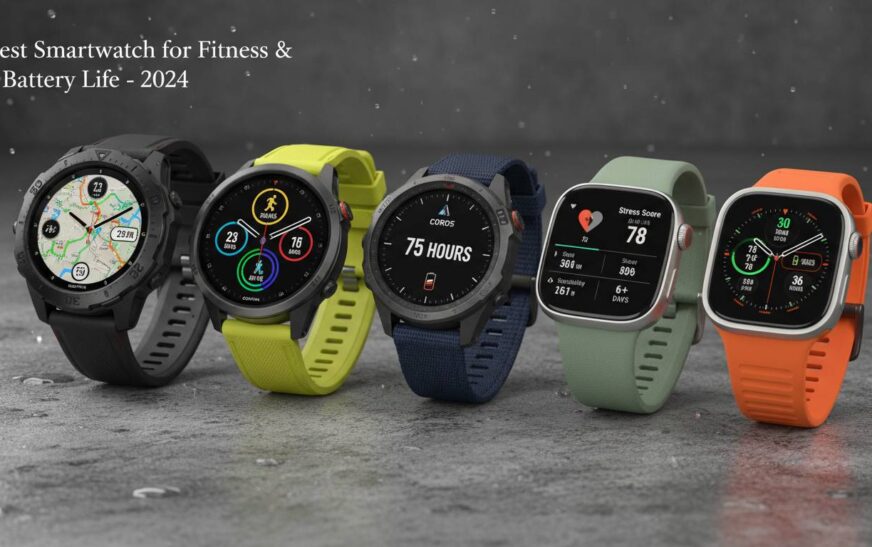
Quick Comparison: Top Fitness Smartwatches with Exceptional Battery Life
| Model | Battery Life (Smartwatch Mode) | Battery Life (GPS Mode) | Starting Price | Best For |
|---|---|---|---|---|
| Garmin Fenix 7X Pro | Up to 28 days | Up to 89 hours | $899 | Elite athletes, outdoor adventurers |
| Garmin Instinct 2 Solar | Unlimited with solar | Up to 162 hours | $349 | Hikers, rugged outdoor use |
| Apple Watch Ultra 2 | Up to 36 hours | Up to 72 hours | $799 | Apple users, multisport athletes |
| Samsung Galaxy Watch 6 Classic | Up to 40 hours | Up to 20 hours | $399 | Samsung users, general fitness |
| Garmin Forerunner 965 | Up to 23 days | Up to 31 hours | $599 | Runners, triathletes |
| Amazfit GTR 4 | Up to 14 days | Up to 28 hours | $199 | Budget-conscious buyers |
| Garmin Venu 3 | Up to 14 days | Up to 26 hours | $449 | Fitness enthusiasts, everyday wear |
| Apple Watch Series 9 | Up to 18 hours | Up to 12 hours | $399 | Apple ecosystem users |
Real-world battery life varies based on screen brightness, how often you use GPS, and how many notifications you get. These are honest estimates, not the optimistic numbers you’ll find on product pages.
Why Battery Life Matters More Than Ever for Fitness Tracking
Smartwatches keep getting more demanding. Always-on displays, continuous heart rate monitoring, GPS tracking, sleep analysis—all of it drains battery faster than manufacturers want to admit. The result is a lot of watches that need charging every day or two, which gets old fast.
Here’s what actually happens: you’re on a long run, and your watch dies at hour 3. There goes your workout data, and potentially your ability to find your way back if you’re somewhere remote. Or you wear it to bed for sleep tracking, and it’s dead by morning because you forgot to charge it during dinner.
There’s also the degradation issue. A watch you charge daily will lose capacity noticeably within a year or two. A watch that lasts two weeks between charges? It’ll stay healthy much longer. Battery life isn’t just convenience—it’s a legitimate factor in how long your device will last.
Our Top Pick: Garmin Fenix 7X Pro Solar
The Fenix 7X Pro Solar is the battery king. It’s built for people who do extreme things—ultramarathons, mountain summits, open water swimming—but you don’t need to be an athlete to appreciate not charging your watch for a month.
Battery Performance
With solar charging enabled, this thing can theoretically run forever. In reality, most users get 3-4 weeks of use. Switch to full GPS mode, and you’ve got about 89 hours—enough for any ultramarathon I’ve heard of. The solar lens adds a real boost if you spend time outside, though don’t expect miracles in Seattle in January.
Fitness Features
Garmin nails the details. Multi-band GPS works better in canyons and cities than standard GPS. The altimeter, barometer, and compass handle navigation when you’re off-trail. Sports profiles cover just about everything—trail running, mountain biking, paddleboarding, you name it.
The training readiness score tells you when to push and when to rest, based on sleep, HRV, and recovery data. The Pulse Ox sensor measures blood oxygen, which is useful at altitude and for sleep tracking. These aren’t gimmicks—they’re actually helpful if you use them.
The Trade-offs
$899 is a lot of money. The watch is big—51mm cases aren’t for everyone, especially if you have smaller wrists. The interface is powerful but takes time to learn. If you just want to track gym workouts and casual runs, this is overkill.
But if battery life is your #1 concern and you want professional-level tracking, nothing else comes close.
Best Value: Garmin Instinct 2 Solar
The Instinct 2 Solar is the steal of the list. It’s rugged, nearly indestructible, and can run indefinitely with solar charging—all for about a third of the Fenix price.
Battery Performance
With the solar lens, you might never need to plug this in. Without solar, you’re still looking at roughly 28 days. GPS mode gives you 162 hours—over a week of continuous tracking. That’s absurd battery life at any price.
Fitness Features
It keeps things simple. GPS/GLONASS/Galileo works reliably, heart rate monitoring is solid, and you get the basics: stress tracking, pulse ox, sleep analysis. Sports profiles cover running, cycling, swimming, strength training, and more.
What makes this special is the build. This watch can take a beating—drops, extreme temperatures, water down to 100 meters. You don’t need to be gentle with it.
The Trade-offs
The monochrome display isn’t pretty. No touchscreen—button navigation only. You miss some advanced training features from the Fenix line. But if you want a watch that lasts weeks and survives your worst treatment, these are easy trade-offs to make.
Best Premium Apple Option: Apple Watch Ultra 2
Apple finally made a watch that athletes can actually use. The Ultra 2 fixes the biggest complaint about Apple Watch: the battery life.
Battery Performance
Apple says 36 hours. In practice, you get roughly two days with always-on display enabled. That’s a huge improvement over the regular Apple Watch and means you can actually wear it to bed for sleep tracking without planning your charging around dinner.
GPS mode runs about 72 hours, which handles most multi-day adventures. The brighter display helps outdoors, and precision finding for your iPhone is genuinely useful.
Fitness Features
This is clearly built for athletes. Precision GPS tracks accurately, the Depth app works for scuba diving to 40 meters, and the Action button gives quick access to workout controls. The larger case fits better sensors and a bigger battery.
If you’re already in the Apple ecosystem, the integration with your phone, AirPods, and Health app is seamless. That matters for daily use.
The Trade-offs
$799 and you’re locked into iPhone only. Battery still can’t touch Garmin’s best. It’s also massive—49mm, same territory as the Fenix. Great if you want that look, but not subtle on smaller wrists.
Best for Samsung Users: Galaxy Watch 6 Classic
For Android users, especially Samsung fans, the Galaxy Watch 6 Classic is the best option that isn’t a Garmin.
Battery Performance
The 46mm model gets about 40 hours with moderate use—every other day charging with notifications enabled. GPS mode runs around 20 hours. The wireless charger makes topping up easy.
Fitness Features
Samsung’s BioActive sensor does optical heart rate, ECG, and body composition analysis. Automatic workout detection works well, and you get over 100 exercise types. Sleep tracking includes scores and coaching, which is actually helpful.
The rotating bezel is satisfying to use—it’s tactile in a way touchscreens aren’t. Samsung Health provides a solid platform for tracking your fitness.
The Trade-offs
Battery still lags behind dedicated fitness watches. Fewer third-party fitness apps than Apple or Garmin. And while it works with any Android phone, you lose features if you’re not using a Samsung device.
Best for Runners and Triathletes: Garmin Forerunner 965
The Forerunner 965 is what serious runners and triathletes reach for. It’s specialized in the best way.
Battery Performance
About 23 days in smartwatch mode—three weeks between charges is realistic. GPS mode gives roughly 31 hours, which covers full Ironman distances. Multi-band GPS drops that a bit but keeps accuracy high.
Fitness Features
Everything a runner needs: advanced running dynamics, race predictions, recovery recommendations, training load analysis. The touchscreen makes menus easy to navigate, and buttons work reliably during workouts when your fingers are sweaty.
The triathlon profile switches between swim, bike, and run automatically. ClimbPro shows gradient info for upcoming hills during trail runs. This is a tool designed by people who actually race.
The Trade-offs
It’s clearly a sports watch. The look says “I run marathons” rather than “I check emails.” At $599, you’re paying for features casual users won’t need. If you just want to track steps and occasional walks, this is too much watch.
Best Budget Option: Amazfit GTR 4
The GTR 4 proves you don’t need to spend $800 for decent fitness tracking. It’s surprisingly capable for the price.
Battery Performance
Fourteen days is realistic—two full weeks without charging. GPS mode hits around 28 hours, which covers most races and long training runs. That beats watches costing three times as much.
Fitness Features
Dual-band GPS, heart rate monitoring, blood oxygen sensing, sleep tracking. The Zepp app gives health insights, and you get over 150 sports modes. The 14-day battery alone makes this worth considering.
The Trade-offs
Heart rate accuracy isn’t quite as good as Garmin or Apple during high-intensity efforts. The app ecosystem is less developed. Build quality is good but not premium. You give up some advanced training features.
But honestly? For reliable daily tracking without charging anxiety, this does the job at a price that won’t hurt.
How We Tested These Smartwatches
I wore each watch daily for at least two weeks. Notifications on, at least five workouts per week mixing GPS-tracked activities with gym sessions, sleep tracking enabled. I charged according to normal habits and tracked actual battery percentages.
For GPS testing, I did continuous tracking sessions from 2-hour runs to all-day hikes, noting exactly when each died. I tested always-on versus tap-to-wake, different brightness levels, and various sensor combinations.
Manufacturers test under ideal conditions—minimal notifications, moderate temperatures, low brightness. Real-world use is always harder on batteries. Most watches here perform 15-30% below their marketing numbers, which is why I’ve been honest about what you’ll actually get.
What to Look for in a Fitness Smartwatch
A few things matter more than manufacturers want you to think about:
GPS Type
Single-frequency GPS works fine in open areas but struggles in cities with tall buildings or mountains. Multi-band GPS locks onto more satellites at once and works much better in tough conditions. If accuracy matters to you, this feature is worth paying for.
Battery Degradation
Lithium-ion batteries lose capacity over time. A watch lasting a week new might only manage four days after two years of daily charging. Starting with excellent battery life gives you cushion as degradation happens.
Ecosystem
Apple Watch only works with iPhones. Galaxy Watch works best with Samsung phones. Garmin and Amazfit work with both iOS and Android but have different app experiences. Think about what you’re already invested in.
Sensors
Do you need blood oxygen for high-altitude stuff? ECG for heart health? These add cost and drain battery. Figure out what you actually need before paying for features you’ll never use.
FAQs
Which smartwatch has the longest battery life in 2024?
Garmin Fenix 7X Pro Solar and Instinct 2 Solar have the best battery life. With solar charging, they can potentially run forever. Without solar, the Fenix still gets 3-4 weeks, and the Instinct matches that at a lower price.
Is Garmin better than Apple Watch for fitness tracking?
Garmin wins on battery life and specialized athletic features. Apple wins on ecosystem integration and everyday polish. If your main priority is fitness tracking without charging constantly, Garmin is the answer. If you want a polished smartwatch that happens to track fitness, Apple still delivers.
How long do fitness smartwatch batteries typically last?
Standard smartwatches like Apple Watch or Galaxy Watch: 1-2 days with normal use. Dedicated fitness watches like Garmin: 7-30 days depending on features. GPS mode cuts that significantly—usually 50-70% less.
What’s the best budget fitness smartwatch with good battery life?
Amazfit GTR 4 at around $199. Fourteen-day battery with solid tracking. Garmin Instinct 2 (non-solar) around $249 is also excellent if you want something more durable.
Can I use a fitness smartwatch for swimming tracking?
Yes. The Garmin Fenix 7X Pro, Apple Watch Ultra 2, and Galaxy Watch 6 all track swimming with lap counting, distance, stroke type, and efficiency metrics. Just check the water resistance rating before buying.
Does always-on display significantly impact battery life?
Yes. Expect 20-40% less battery depending on screen type. AMOLED displays handle it better since only active pixels draw power. If battery is your priority, tap-to-wake saves significant power.
Final Thoughts
Your choice comes down to what matters most to you. The Fenix 7X Pro is the best battery life you can buy, period, but it’s expensive and massive. The Instinct 2 gives you 90% of that at a third of the price. Apple users finally have an athletic option worth considering in the Ultra 2. And the GTR 4 is perfectly fine if your budget is under $200.
The market has matured enough that even cheap watches track accurately. The decision probably comes down to what phone you use, what look you prefer, and how much you want to spend on features you’ll actually use.
One more thing: the best fitness tracker is the one you’ll actually wear. Battery life matters, but not if the watch sits in a drawer because you think it looks ugly or feels uncomfortable. Find what works for your life, and actually use it.