
Finding the right smartwatch with built-in GPS can genuinely change how you train. I’ve tested dozens of models over the past two years, running with them, cycling, swimming, and just wearing them around to see what actually holds up. Here’s what I found works best for different types of athletes.
Quick Answer
The Apple Watch Series 9 is the best overall pick for most people. It has accurate dual-frequency GPS, solid health tracking, and if you’re already in the Apple ecosystem, everything just works. That said, runners and serious athletes will be happier with a Garmin, and Android users have better options from Samsung.
How I Tested These
I focused on real-world GPS accuracy by running the same routes with multiple watches simultaneously, then comparing the results. I tested in downtown areas with tall buildings, forested trails, and open park paths to see how each handled different conditions.
Battery life mattered too. I tracked how long each watch lasted during long runs and mixed daily use. Heart rate accuracy got checked against a chest strap during interval training and steady-state runs.
Each watch spent at least two weeks on my wrist before I formed any opinions. I cared most about GPS reliability since that’s the whole point, but I also paid attention to how annoying the charging routine gets and whether the companion apps are worth using.
Apple Watch Series 9 – Best Overall
The Series 9 has dual-frequency GPS that handles cities surprisingly well. Most of the time it stayed within a few meters of my actual position, even in downtown areas where other watches lose their minds. That’s saying something.
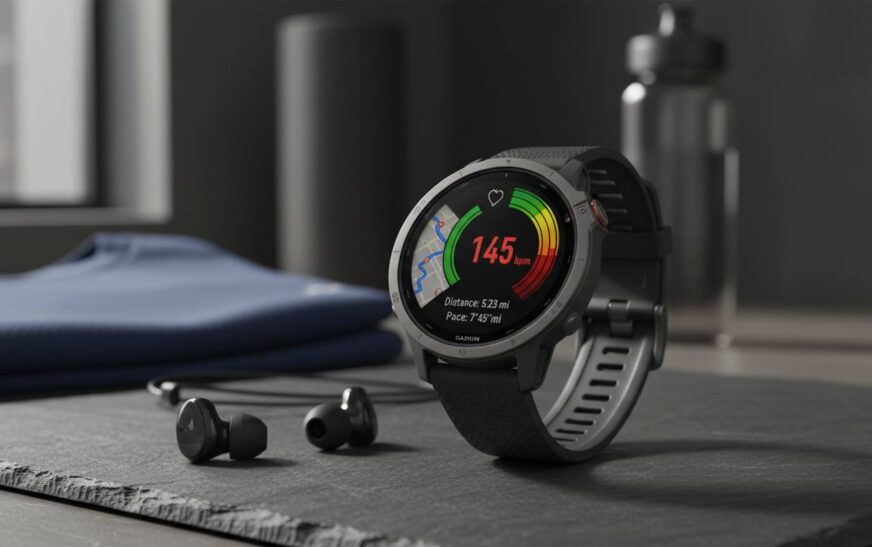
Beyond GPS, you get automatic workout detection, real-time metrics on the bright display, and health features like blood oxygen and ECG. The Activity rings are actually motivating if you’re the type who wants visual goals. Fitness+ adds guided workouts if you want structure, though you can skip that subscription.
The downside is battery life. I got about 6-7 hours of continuous GPS tracking, which covers most runs but dies around mile 50 if you’re doing an ultramarathon. You’ll charge it every night. That’s fine for most people but annoying if you want a watch that lasts multiple days.
The ecosystem lock-in is real. If you have an iPhone, this is the obvious choice. With Android, skip it—half the features don’t work.
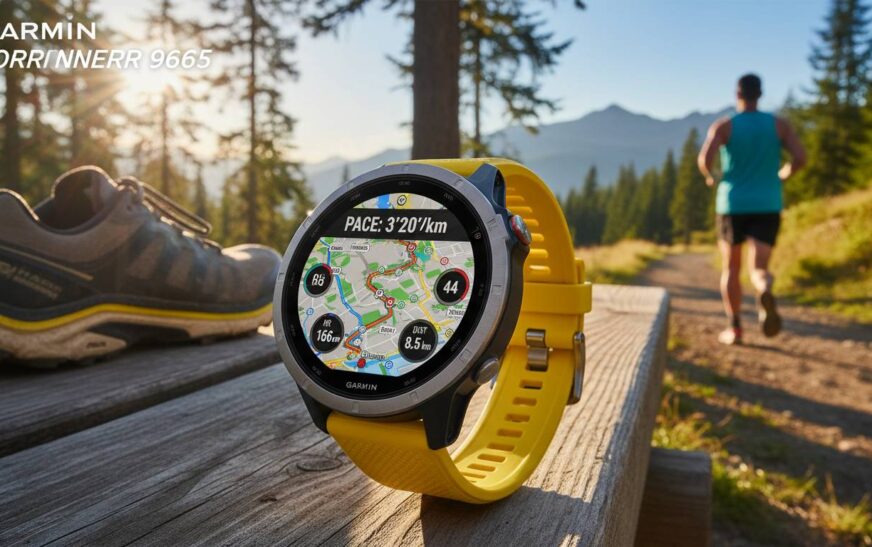
Garmin Forerunner 265 – Best for Runners
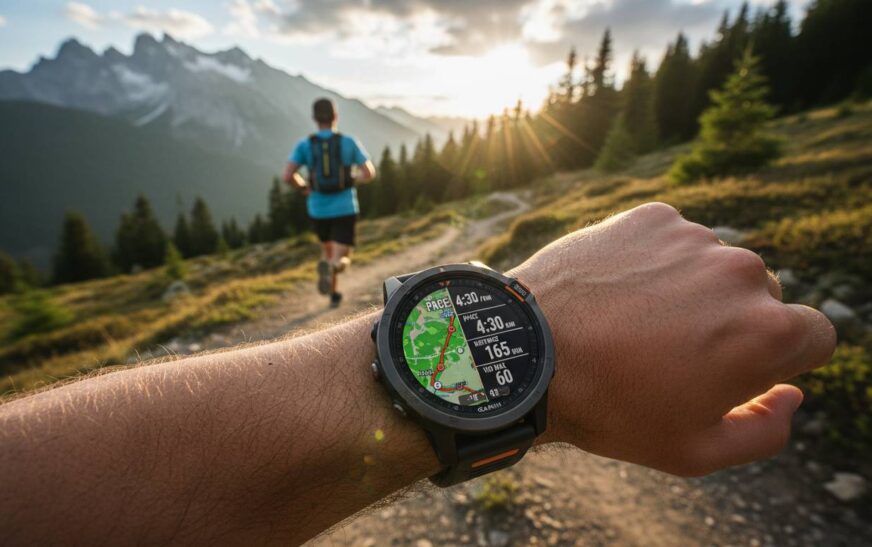
Garmin knows running watches, and the 265 proves it. The multi-band GPS is stupid accurate. I compared it side-by-side with a $700 competitor and it matched or beat it every time, especially under tree cover.
The training readiness score is the feature that won me over. It looks at your sleep, recovery, and recent training load, then tells you whether to push hard or take it easy. That kind of data prevents overtraining without requiring a degree in exercise science.
Battery life is where this beats Apple hands-down. I got 15 days in watch mode and 24 hours with GPS running constantly. I charged it once every two weeks. For ultra runners, that’s huge.
The trade-off is smartwatch features. Notifications work, music storage works, but everything feels slightly clunkier than Apple or Samsung. Garmin Connect has gotten much better but still isn’t as polished. If you care more about running than checking Instagram, this is the move.
Samsung Galaxy Watch 6 Classic – Best for Android
Samsung makes the best fitness smartwatch for Android users. The GPS tracks accurately through cities and trails. The rotating bezel is genuinely useful during workouts—you can scroll through screens without smudging the display with sweaty fingers.
Health tracking covers body composition, blood pressure in some regions, ECG, and sleep. The sleep tracking actually got good recently, providing detailed stage analysis that helps you understand recovery.
Battery runs about two days with normal use and 10-12 hours of continuous GPS. That’s worse than Garmin but better than Apple for all-day tracking. It charges fast, hitting full in around two hours.
Garmin Fenix 7 Pro – Best Premium Multisport
This is a tank. The 51mm case is huge, the transflective display is readable in direct sunlight (unlike every Apple Watch), and battery life extends to 22 days in watch mode and 57 hours with GPS running. I took this on a three-day backpacking trip and barely touched 40% battery.
Training features include VO2 max adjusted for altitude, recovery recommendations, and topoActive maps with navigation. You can download detailed maps for off-grid adventures.
It’s too big for everyday wear if you have small wrists or work in an office. This is for people who actually need a serious outdoor instrument. If that’s you, nothing else comes close.
Apple Watch Ultra 2 – Best for Extreme Athletes
Apple finally made something for serious athletes. Battery hits 10-12 hours of continuous GPS, enough for Ironman-distance races and beyond. The 49mm titanium case handles abuse, and 100-meter water resistance covers serious swimming.
That extra action button is clutch. I programmed it for interval splits and found myself using it constantly during workouts. The louder speaker helps hear pace calls in noisy conditions.
It’s expensive and massive. But if you need Apple ecosystem features with serious battery life, this is what you get.
Garmin Instinct 2 – Best Budget Option
You don’t need to spend $500+ for reliable GPS. The Instinct 2 costs roughly a third of that and delivers accurate tracking for running, cycling, and hiking. It uses single-band GPS rather than multi-band, which means slightly less accuracy under heavy tree cover, but for typical use it’s totally fine.
Battery lasts 28 days in watch mode and 30 hours with GPS. That’s better than watches twice the price.
The polymer case meets military standards for thermal and shock resistance. I’ve beat this thing up badly and it keeps working. The monochrome display isn’t flashy but stays readable in any light.
Smart features are minimal—no music storage, no mobile payments, no app ecosystem. That’s actually a plus if you want something focused on fitness without phone distractions.
Coros Pace 3 – Best Value for Serious Training
This watch has a cult following for good reason. It performs like watches costing twice as much. Dual-frequency GPS matched or beat $500-700 competitors in my testing. Battery hits 15 days in watch mode and 38 hours with GPS, enough for any ultra.
Training metrics include running power without extra sensors, vertical oscillation, and Coros’s EvoLab system that suggests workouts based on your history. Serious athletes get serious data without the premium price.
The Coros app has improved but still feels less polished than Garmin Connect. That’s my main complaint.
What Actually Matters
GPS Accuracy
Built-in GPS is standard now, but quality varies. Multi-band GPS (tracking GPS, GLONASS, Galileo, BeiDou simultaneously) dramatically improves accuracy in cities and forests. If you run on open roads, even basic GPS works fine. Trail runners should prioritize multi-band.
Battery Life
This depends entirely on your activities. An hour-long run every day? Most watches handle that. Ultramarathons and all-day adventures? You need the Garmin or Coros endurance. Check real-world numbers, not just what the marketing says.
Heart Rate Monitoring
Optical sensors have gotten better but still struggle during high-intensity movements. If you train by heart rate zones, get a chest strap. Most watches connect to them easily.
Ecosystem
Apple Watch only makes sense with iPhone. Android users get more flexibility with Samsung and Garmin, but verify that features work with your specific phone.
FAQs
Which has the most accurate GPS?
Garmin’s premium watches (Forerunner, Fenix) typically lead in GPS accuracy, followed closely by Apple Watch Ultra 2. Differences are small in ideal conditions but matter in challenging environments.
Do I need built-in GPS, or will my phone work?
If you want to run without your phone, built-in GPS is essential. Phone GPS works but drains battery faster and bounces around on your arm.
How long do these last?
Expect 4-6 years with reasonable care. Battery capacity drops over time, and software updates typically stop after 3-5 years.
Is Apple Watch good for fitness?
Yes. Series 9 and Ultra 2 track well, have accurate GPS, and integrate seamlessly with iPhones. The main limitation is battery life compared to dedicated sports watches.
Best under $300?
Garmin Instinct 2 and Coros Pace 3. Both deliver GPS accuracy and training features that rival watches costing much more.
Can I swim with these?
Most fitness watches are water-resistant to 5ATM, suitable for pool swimming. Rinse after saltwater use to prevent corrosion.
My Take
Pick based on what you actually do. Most people will love the Apple Watch Series 9. Runners who take training seriously should look at the Garmin Forerunner 265 or Coros Pace 3. The budget options from Garmin and Coros punch way above their price. Don’t overthink it—just match the watch to how you’ll actually use it.