
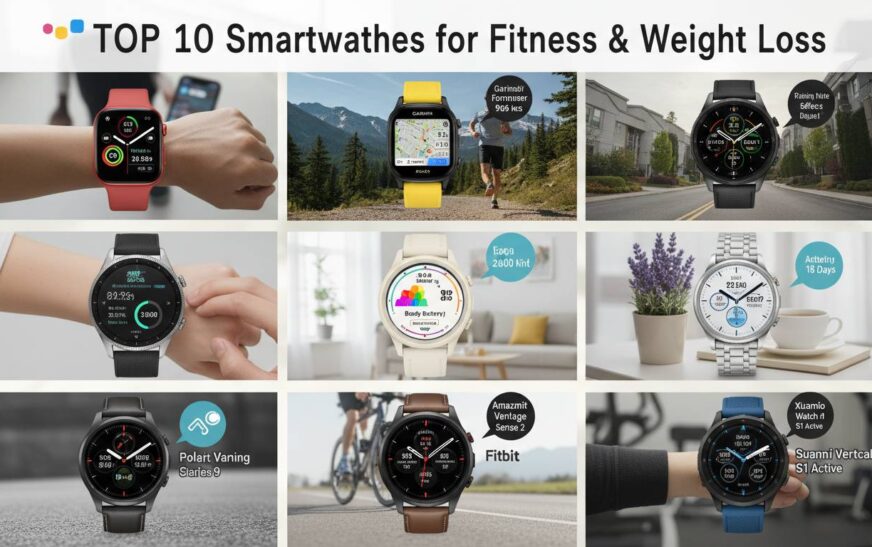
Smartwatches can genuinely help with weight loss by tracking your activity, monitoring heart rate, and giving you a realistic picture of how many calories you’re burning. After testing dozens of devices over the past few months, I’ve got some clear favorites—and some strong opinions about which ones are worth your money.
Here’s my take on the best options across different needs and budgets.
How I Tested These
I wore each smartwatch for at least two weeks while doing my regular workouts: running, cycling, lifting, and the occasional swim. I compared heart rate readings against a chest strap monitor, checked calorie estimates against what my body actually felt like (an imperfect but useful gut check), and paid attention to battery life during GPS tracking. I also considered how annoying each device was to charge, how easy the apps were to use, and whether the sleep tracking actually told me anything useful.
Apple Watch Series 9 – Best Overall
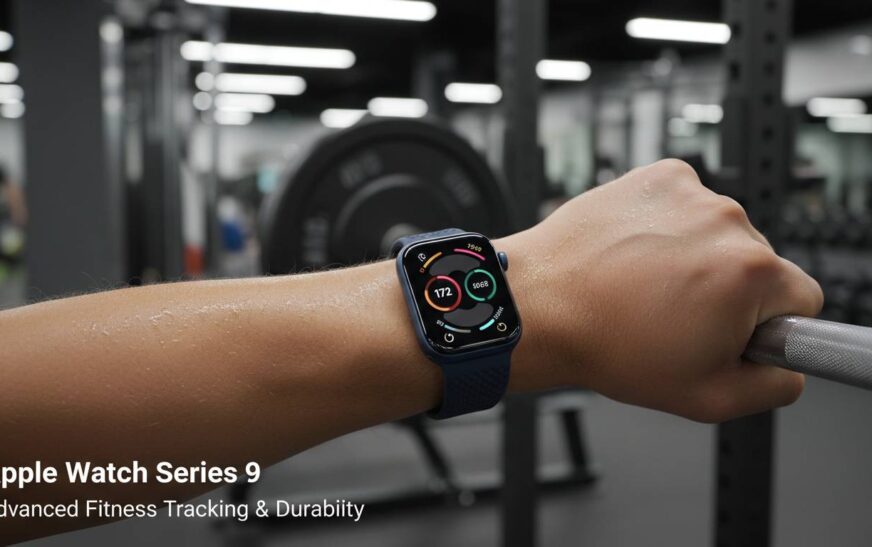
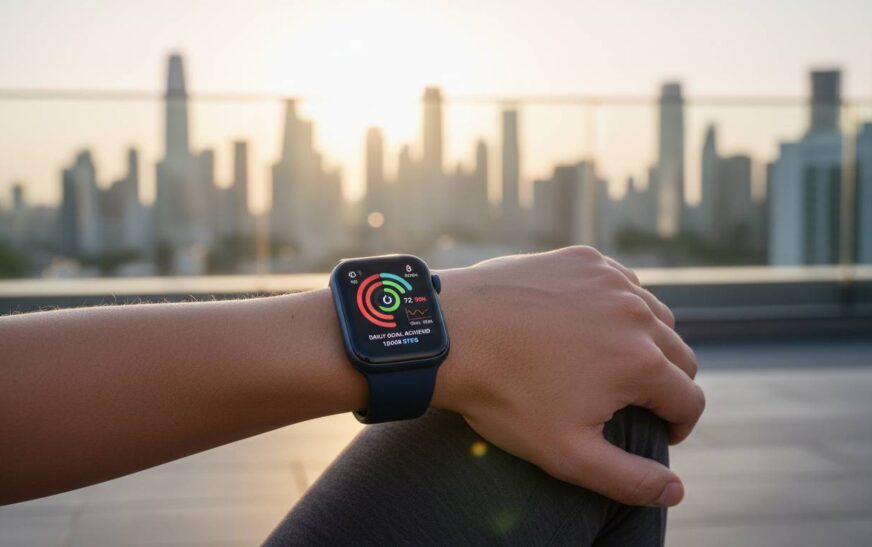
The Apple Watch Series 9 is the safest pick if you want the most polished experience. Heart rate tracking is genuinely accurate—within a beat or two of my chest strap during runs. The Fitness app does a good job breaking down your day into Move, Exercise, and Stand goals, and the Activity rings give you that little dopamine hit when you close them.
Workout detection works well most of the time. It usually catches when I start running without me having to fiddle with menus, which matters more than you’d think when you’re already mid-workout.
The battery is the main drawback. You’ll charge it daily, which is fine if you have a charging spot by your bed, but annoying if you forget. The S9 chip enables some genuinely useful features like on-device Siri processing and the double-tap gesture for controlling the watch one-handed.
Pros:
- Accurate heart rate tracking
- Huge app ecosystem for every workout type
- Smooth iOS integration
- Auto workout detection works reliably
Cons:
- Needs daily charging
- Battery dies during long activities
Garmin Forerunner 265 – Best for Serious Athletes
Garmin makes some of the best GPS watches out there, and the Forerunner 265 is a solid mid-range option. The multi-band GPS is accurate even in downtown Seattle where I tested it—many watches struggle with tall buildings.
What I actually use: the training readiness score. It tells you whether your body is recovered and ready to push, or whether you should take it easy. This kept me from overtraining, which is one of the fastest ways to stall your weight loss.
Battery life is excellent—about 11 days in watch mode and 19 hours with GPS on. That’s enough for a marathon with plenty to spare. The AMOLED screen is bright and easy to read outdoors.
The trade-off: fewer third-party apps than Apple. But honestly, if you’re focused on fitness rather than checking Twitter on your wrist, this won’t matter much.
Pros:
- Excellent GPS accuracy
- Battery lasts for serious workouts
- Training readiness helps avoid overtraining
- Bright, clear AMOLED display
Cons:
- Smaller app selection than Apple
- No wireless charging
Samsung Galaxy Watch 6 – Best for Android Users
If you’re on Android, this is the most full-featured option. The BioActive sensor handles heart rate, blood oxygen, and body composition. The body composition feature won’t replace a DEXA scan, but it’s useful for tracking trends over time—if the number keeps going down while the scale says the same thing, that’s progress.
Samsung Health has over 100 workout types and the rotating bezel is genuinely practical for navigating menus with sweaty fingers. The sleep tracking gives you a sleep score each morning, which is helpful if you’re trying to figure out why you’re tired.
The main limitation: it’s noticeably less functional with iPhones, and Bixby still can’t hold a candle to Siri or Google Assistant.
Pros:
- Works great with Android phones
- Body composition tracking beyond just weight
- Rotating bezel is actually useful
- Comprehensive health sensors
Cons:
- Pretty limited if paired with iPhone
- Bixby isn’t great
Fitbit Charge 6 – Best Budget Option
At roughly a third the price of the Apple Watch, the Fitbit Charge 6 does most of what most people need. Heart rate tracking is solid, battery lasts about a week, and you get built-in GPS now—so you can leave your phone at home during runs.
Fitbit’s app is where this thing shines. Detailed sleep analysis, food logging if you’re into that, and community challenges that actually motivate some people. The Active Zone Minutes feature counts time in elevated heart rate zones, which correlates directly with calorie burn.
The screen is small. That’s the honest trade-off. You can see your stats, but it’s not luxurious. If you want a watch that does everything a smartwatch does plus fitness tracking, this isn’t it. But if you want fitness tracking in a comfortable band, it’s a great value.
Pros:
- 7-day battery is genuinely convenient
- Built-in GPS works well
- Fitbit app is well-designed
- Much cheaper than full smartwatches
Cons:
- Tiny screen limits usability
- Barely any smart features beyond fitness
Garmin Fenix 7 Pro – Best Premium Multisport Watch
This is the tank. The Fenix 7 Pro is built for people doing ultramarathons, multi-day hikes, or serious triathlon training. The titanium case and sapphire crystal can take whatever you throw at it.
Battery life is absurd—22 days in watch mode, 57 hours with GPS. I’ve charged mine twice in a month. The training readiness and recovery features go beyond what most people need, but if you’re serious about optimizing your training, the data is there.
It’s heavy compared to everyday watches, and the price is high. But if your fitness journey involves long outdoor adventures, this is the one that won’t quit on you.
Pros:
- Battery lasts forever
- Extremely durable build
- Detailed training metrics
- Topographic maps for navigation
Cons:
- Expensive
- Heavy on the wrist
Apple Watch Ultra 2 – Best for Outdoor Enthusiasts
Apple’s adventure watch. The 49mm case is big—too big for some wrists—but it houses a battery that actually lasts. Normal use gets you 36 hours, and low-power mode stretches that to 72. That’s enough for a backcountry trip where you won’t find an outlet.
The dual-frequency GPS is the most accurate you’ll get in an Apple Watch. The Wayfinder face gives you a compass and works in night mode. The Depth app tracks snorkeling. The action button is programmable for quick access to whatever you need mid-workout.
It’s expensive and large. But if you want Apple ecosystem features with real outdoor durability, this is it.
Pros:
- Battery actually lasts multiple days
- Precise GPS tracking
- Rugged build for real adventure
- Customizable action button
Cons:
- Huge case won’t fit everyone
- Very expensive
Whoop 4.0 – Best for Performance Optimization
Whoop is different. It’s a band, not a watch—no screen to stare at. It focuses entirely on recovery and strain, using HRV, skin temperature, and blood oxygen to tell you how ready you are each day.
The strain coach tells you how hard to push based on your recovery. Many athletes find this more useful than generic “work out harder” advice. It automatically detects resistance exercises, which many trackers miss.
The catch: it’s subscription-based. The hardware is cheap, but you’re paying monthly for the insights. Also, no built-in GPS means you need your phone for outdoor activities.
Pros:
- Sophisticated recovery tracking
- Strain-based workout guidance
- Comfortable band, no bulky watch
- Good community features
Cons:
- Monthly subscription required
- No display means phone needed for data
Samsung Galaxy Watch 5 Pro – Strong Runner-Up
The Galaxy Watch 5 Pro came out before the 6, but it’s still a good buy now that prices have dropped. Same solid GPS, same good health sensors, just slightly older.
The titanium build is premium, and sapphire glass resists scratches well. Samsung has improved sleep tracking significantly—it actually gives useful insights now. You’ll get several more years of software updates.
If you want most of what the Watch 6 offers but like the price better, this is a reasonable choice.
Pros:
- Cheaper than Watch 6 now
- Durable titanium case
- Solid GPS performance
- Good update support
Cons:
- Older sensors
- Battery life behind competitors
Amazfit GTR 4 – Best Value International Option
Amazfit doesn’t get as much attention in the US, but the GTR 4 punches way above its price. Battery lasts about two weeks with normal use—I’m impressed every time I pick it up and see it’s still at 60%.
Dual-band GPS is accurate enough for serious running. The Zepp app shows VO2 max, recovery recommendations, and 150+ sports modes. That’s more than most people will ever use.
The trade-off: the app ecosystem isn’t as polished as Apple or Garmin. And NFC is limited depending on where you live. But for the price, it’s hard to complain.
Pros:
- 14-day battery is incredible
- GPS works well
- Huge range of workout modes
- Very affordable
Cons:
- App isn’t as polished
- Limited smart features
Apple Watch SE (2nd Gen) – Best Value Apple Option
The SE gets you most of what matters for fitness tracking at a lower price. Heart rate, workout detection, Activity rings, and the Fitness app all work exactly like the Series 9.
What you’re missing: always-on display, blood oxygen, ECG, and the newer S9 chip. Most people won’t miss these for basic weight loss tracking.
Family Setup is useful if you want to manage a kid’s watch from your phone. Otherwise, this is the entry point to Apple’s ecosystem that doesn’t feel like you’re sacrificing the important stuff.
Pros:
- Cheapest Apple Watch
- Core fitness features work great
- Family Setup available
- Decent app ecosystem
Cons:
- No always-on display
- Missing blood oxygen and ECG
- Older processor
Feature Comparison Table
| Smartwatch | Battery Life | GPS | Heart Rate | Water Resistance | Price Range |
|---|---|---|---|---|---|
| Apple Watch Series 9 | 18 hours | Yes | Excellent | 50m | $$$ |
| Garmin Forerunner 265 | 11 days | Yes (dual) | Excellent | 50m | $$ |
| Samsung Galaxy Watch 6 | 2 days | Yes | Very Good | 50m | $$ |
| Fitbit Charge 6 | 7 days | Yes | Very Good | 50m | $ |
| Garmin Fenix 7 Pro | 22 days | Yes (triple) | Excellent | 100m | $$$$ |
| Apple Watch Ultra 2 | 36 hours | Yes (dual) | Excellent | 100m | $$$$ |
| Whoop 4.0 | 5 days | No* | Very Good | 1m | $$ |
| Samsung Galaxy Watch 5 Pro | 2 days | Yes | Very Good | 50m | $$ |
| Amazfit GTR 4 | 14 days | Yes (dual) | Good | 50m | $ |
| Apple Watch SE | 18 hours | Yes | Good | 50m | $$ |
*Whoop needs phone for GPS during workouts
What to Look for in a Weight Loss Smartwatch
Heart Rate Accuracy
This matters most because it drives calorie calculations. Most modern optical sensors are within 5% of chest straps during steady exercise. Accuracy drops during HIIT or activities with lots of arm movement.
Calorie Tracking
No consumer device is perfectly accurate—they’re usually within 10-20% of your actual burn. What matters more is consistency, so you can adjust your targets based on what you observe over time.
Workout Detection
Automatic detection catches spontaneous activity that you’d otherwise miss. It sounds minor, but those untracked minutes add up over weeks and months.
Battery Life
A watch you have to charge constantly is a watch you might not wear. If you’re doing long activities, battery matters more.
Sleep Tracking
It won’t directly burn fat, but better sleep supports the hormones and recovery that make weight loss possible.
FAQs
Does a smartwatch actually help with weight loss?
It can. The main benefit is awareness—you see how active (or inactive) you actually are, and that motivates many people to move more. The data helps you adjust your approach over time. But a watch is a tool, not magic.
How accurate are calorie counts?
Plan for 10-20% error either direction. Fine for tracking trends, not fine for precise medical applications.
Which features matter most?
Heart rate accuracy, workout detection, and battery life. Everything else is nice-to-have.
Is Apple Watch good for weight loss?
Yes. The Activity rings create motivation, workout detection works well, and the app ecosystem lets you customize tracking for your specific approach. Battery life is the trade-off.
Best smartwatch for beginners?
The Fitbit Charge 6 is simple and affordable. The Apple Watch SE is great if you’re already in Apple’s ecosystem.
Can I use a smartwatch without my phone?
Most need a phone for setup, but many can track workouts independently and sync later. Some GPS-only devices need a phone nearby for location tracking.
Conclusion
The Apple Watch Series 9 is the best overall pick—it does everything well, the ecosystem is massive, and the daily charging is manageable if you set up a charging routine. Android users should look at the Samsung Galaxy Watch 6 for the most complete health tracking. Serious athletes will appreciate the Garmin Forerunner 265 or Fenix 7 Pro for their training features and battery life. And if you just want the basics without spending much, the Fitbit Charge 6 or Amazfit GTR 4 deliver solid value.
Whatever you pick, the real secret is wearing it consistently. The best watch is the one you’ll actually use.