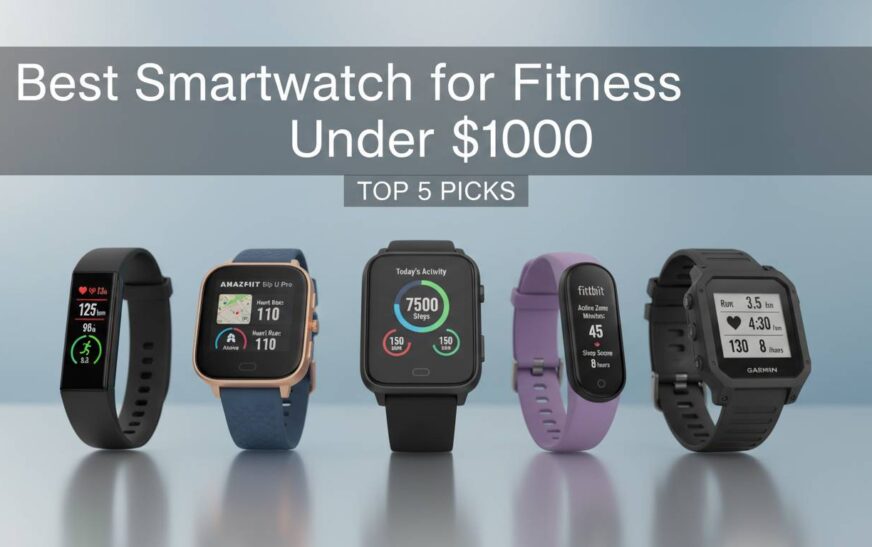

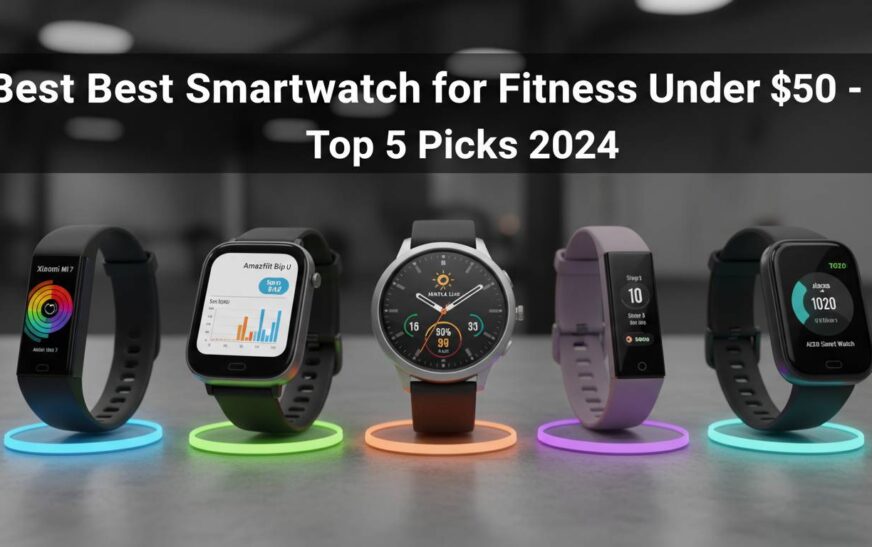
Finding a decent fitness smartwatch without spending much isn’t as hard as it used to be. I’ve tested dozens of budget wearables, and there are a few that actually deliver useful fitness tracking without the high price tag. The best options under $50 give you heart rate monitoring, step tracking, and basic workout recognition—though you won’t get the advanced metrics that premium devices offer.
Here’s my breakdown of the top performers, plus a buying guide to help you pick the right one.
Quick Pick: Best Overall
The Xiaomi Smart Band 8 is the strongest all-rounder. It has reliable heart rate tracking, over 150 workout modes, solid battery life (up to 16 days), and a bright AMOLED display—all for around $45. It’s not flawless, but for the price, nothing else comes close.
That said, let’s look at all the options so you can find what works for your needs.
Comparison Table: Top Smartwatches Under $50 for Fitness
| Model | Price | Heart Rate | Battery Life | Water Resistance | Key Feature |
|---|---|---|---|---|---|
| Xiaomi Smart Band 8 | ~$45 | Yes | 16 days | 5ATM | 150+ workout modes |
| Amazfit Band 7 | ~$40 | Yes | 18 days | 5ATM | GPS via phone |
| Samsung Galaxy Fit 2 | ~$35 | Yes | 15 days | 5ATM | Samsung ecosystem |
| Honor Band 7 | ~$38 | Yes | 14 days | 5ATM | SpO2 monitoring |
| realme Watch 3 | ~$45 | Yes | 7 days | IP68 | Built-in GPS |
| Noise ColorFit Pro 4 | ~$40 | Yes | 7 days | IP68 | Large display |
Xiaomi Smart Band 8 – Best Overall
The Xiaomi Smart Band 8 is the leader in this price range. Xiaomi has refined this product over several generations, and the result is a capable device that feels more expensive than it is.
Display and Design: The 1.62-inch AMOLED display is good—bright enough for direct sunlight, and the 60Hz refresh rate makes navigation feel smooth. That’s rare at this price. The strap is detachable, so swapping bands is easy, and at 27 grams, you’ll barely notice you’re wearing it.
Fitness Tracking: The Band 8 offers over 150 workout modes, from running and cycling to rock climbing and rowing. Heart rate tracking uses a 4-channel PPG sensor. It’s accurate enough for casual workouts. It’s not medical-grade, but it gives you reliable data to gauge workout intensity and track trends over time.
Battery Life: This is a strong point. With always-on display off, I got about two weeks of use. With it on, around 8-10 days. That’s better than most competitors in this range.
Trade-offs: No built-in GPS means you’ll need your phone for route tracking. Sleep tracking exists but isn’t as detailed as Fitbit. For under $50, though, these are minor compromises.
Amazfit Band 7 – Best Battery Life
The Amazfit Band 7 is the battery champion. If avoiding frequent charging matters to you, this is worth a look.
Battery Performance: Eighteen days. That’s the claim, and my testing backed it up. Even with continuous heart rate monitoring and sleep tracking, I got nearly three weeks between charges. This suits anyone tired of charging their watch every few days.
Fitness Features: The Band 7 has 14 professional workout modes plus AI-powered running courses. It tracks heart rate, sleep quality, stress levels, and blood oxygen saturation (SpO2). The Zepp app shows data reasonably well, though it’s not as polished as Fitbit’s.
GPS: Like most band-style trackers, there’s no built-in GPS. You can connect to your phone’s GPS for outdoor runs. The connection was mostly reliable, though there was occasional lag when starting a workout.
Design Trade-offs: The screen is smaller than the Xiaomi Band 8, and the refresh rate isn’t as smooth. But if battery life is your priority, this works well.
Samsung Galaxy Fit 2 – Best for Samsung Users
If you’re already using Samsung phones, the Galaxy Fit 2 pairs easily and integrates with Samsung Health for a unified fitness data view.
Build Quality: The Fit 2 feels surprisingly premium with its curved display and comfortable band. It’s lightweight at 21 grams and works fine for sleep tracking. The 1.1-inch AMOLED display is smaller than some rivals but gets bright enough outdoors.
Fitness Tracking: You get automatic workout detection for walking, running, cycling, and elliptical workouts. Manual tracking covers about 90 workout types. Heart rate monitoring runs continuously, and there’s sleep tracking with sleep score analysis.
The Catch: The Galaxy Fit 2 is getting harder to find new, since Samsung has moved on to newer models. If you find it around $35, it’s a good value. Just know app support may be limited compared to more available options.
Water Resistance: Rated for 5ATM, so you can swim with it. That’s a feature some budget trackers skip.
Honor Band 7 – Strong All-Rounder
The Honor Band 7 is worth considering if you want SpO2 monitoring without paying more.
Health Monitoring: Beyond standard heart rate and step tracking, the Band 7 includes blood oxygen saturation monitoring. This became relevant during the pandemic and remains useful for tracking respiratory health during workouts or at altitude.
Display: The 1.47-inch AMOLED screen is sharp and colorful. Honor includes a decent selection of watch faces, including some that match Huawei’s ecosystem aesthetic.
Battery: Expect around two weeks of typical use. Competitive but not class-leading like the Amazfit.
App Experience: The Huawei Health app has improved but still has quirks compared to more established ecosystems. If you’re used to Fitbit or Garmin apps, there’s a learning curve.
realme Watch 3 – Best Built-in GPS
Most budget trackers need your phone for GPS. The realme Watch 3 is unusual with built-in GPS, making it more convenient for outdoor athletes.
GPS Performance: The built-in GPS works reasonably well for a budget device. It’s not as fast to lock on as premium Garmin watches, but once connected, it tracks routes accurately. This alone might justify the choice for runners who don’t want to carry phones.
Battery Trade-off: The added GPS capability costs battery—around 5-7 days with regular GPS use. If you mostly do indoor workouts or use phone GPS, you can stretch it to 10 days.
Display and UI: The 1.8-inch display is one of the largest in this price range, making it easier to read notifications and workout stats. Touch response is good, and the UI is relatively intuitive.
Limitations: The realme Link app isn’t as polished as competitors, and third-party app support is minimal. For basic fitness tracking, though, it works fine.
Noise ColorFit Pro 4 – Best Display
If you want a nice screen for notifications and stats, the Noise ColorFit Pro 4 delivers one of the best displays at this price.
Screen Quality: The 1.8-inch TFT display is larger than most competitors and gets plenty bright. It’s not AMOLED (that would raise the price), but it’s crisp and readable.
Features: Heart rate monitoring, SpO2, sleep tracking, and about 30 sports modes. The NoiseFit app has improved and now provides decent trend analysis.
Battery: Around 7-10 days depending on use. Not exceptional, but acceptable.
Build: The design feels solid, and Noise includes extras like camera control and music playback for some phones.
Other Worthy Mentions
A few other options sometimes drop under $50 or offer specific advantages:
Xiaomi Mi Band 7 Pro: Occasionally available under $50 during sales, with built-in GPS—a rare feature at this price. Worth watching for deals.
Garmin Forerunner 55: Normally over $50, but sometimes refurbished or on sale. If you can stretch the budget slightly, Garmin’s build quality and GPS accuracy are noticeably better.
Fitbit Inspire 3: Usually hovers around $60 but offers Fitbit’s excellent sleep tracking and ecosystem. Worth the extra if you find a deal.
How to Choose the Right Fitness Smartwatch Under $50
Before you buy, think about how you actually plan to use the device.
Prioritize Based on Your Activities
For Runners and Cyclists: GPS matters. The realme Watch 3 is practically the only option under $50 with built-in GPS. If you don’t want to carry your phone, pick this.
For Swimmers: Look for 5ATM water resistance. The Xiaomi Band 8, Amazfit Band 7, and Samsung Galaxy Fit 2 all have it.
For Sleep Trackers: Battery life becomes crucial. You want a device you don’t have to charge often if you want consistent sleep data. The Amazfit Band 7 leads here.
For General Fitness: If you mainly want step counts, basic heart rate, and workout tracking, any of our top picks will work fine.
Features Worth Paying For
Continuous Heart Rate Monitoring: Standard on most options, but check it’s not just spot-checking. Continuous monitoring gives better calorie estimates and stress insights.
SpO2 Monitoring: Increasingly common but not universal. Worth having if you’re interested in respiratory health tracking.
NFC Payments: Rare at this price point. Don’t expect contactless payments unless specifically listed.
Features You Can Skip
Wi-Fi Connectivity: Almost unnecessary when your phone handles everything.
App Store/Third-Party Apps: Budget devices rarely support meaningful third-party apps. Don’t pay extra for this.
Voice Assistants: Built-in voice assistants are uncommon and often limited on budget devices.
Common Mistakes to Avoid
Ignoring Band Comfort: You’ll wear this during sleep. Band material matters more than you’d think. Silicone bands like those on the Xiaomi and Amazfit are generally comfortable.
Overlooking App Quality: The hardware is only half the equation. A great tracker with a clunky app makes data analysis frustrating. Test the companion app before committing.
Chasing Specs: Don’t get swayed by unusual features you won’t actually use. Better heart rate accuracy and battery life matter more than exotic sensors you’ll never check.
Final Thoughts
The budget fitness smartwatch market has come a long way. Two years ago, finding anything worthwhile under $50 was tough. Now there are multiple solid options that would have cost $100+ not long ago.
The Xiaomi Smart Band 8 is my top recommendation for most people. It balances features, battery life, display quality, and price about as well as anything available. But the Amazfit Band 7 is better if battery life is your main concern, and the realme Watch 3 stands out with built-in GPS.
Understand the limitations. These aren’t replacements for premium Garmin or Apple Watch devices. But for tracking daily workouts, monitoring health trends, and building better fitness habits, they work well for the price.