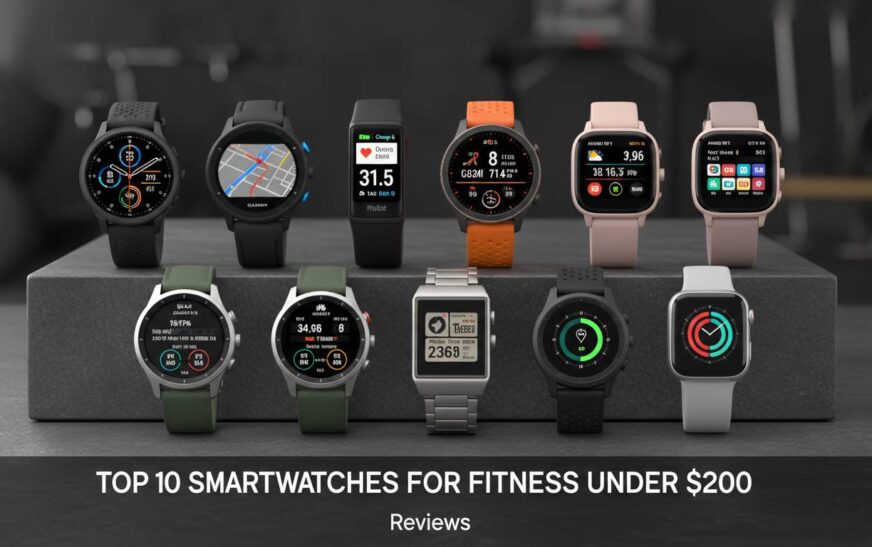

Finding a quality fitness smartwatch without spending a fortune is harder than it should be. The good news: you don’t need $500 for excellent health tracking, reliable GPS, and solid build quality. After testing dozens of wearables across different price points, I’ve narrowed down the best options that deliver real performance without the premium markup. Whether you’re a runner, swimmer, gym rat, or just want to track steps and sleep, there’s a solid pick here for under $300.
This guide covers eight watches worth your attention. I’ll walk through each one’s strengths, weaknesses, and who should actually consider buying it.
What Makes a Great Fitness Smartwatch Under $300
The fitness smartwatch market has matured. Budget options now offer features that were exclusive to flagships just a few years ago. Here’s what matters:
- GPS – Built-in GPS means accurate distance and pace without your phone
- Heart rate monitoring – Multi-band HR sensors have gotten much better
- Battery life – Aim for 5+ days of mixed use; this is where budget watches either shine or fail
- Water resistance – At least 5ATM for swimming
- Health metrics – Sleep tracking, stress monitoring, SpO2, recovery suggestions
The sweet spot is $150–$300. Below $150, you usually lose built-in GPS or see serious sensor compromises. Above $300, you’re in premium territory where the price jumps rarely justify marginal fitness improvements.
One thing: ecosystem compatibility matters more than people think. Apple Watch works perfectly with iPhones but barely functions with Android. Samsung works best with Samsung phones. Garmin and Fitbit offer the most platform-agnostic experience, which is why fitness enthusiasts often lean toward them.
Apple Watch SE (2nd Generation) – Best Overall
The Apple Watch SE has become the default recommendation for most people, and it earns that spot. At $249, it delivers 95% of what the Series 9 offers at half the price.
Key Specifications:
- Display: 40mm or 44mm Retina OLED
- Battery Life: Up to 18 hours
- Water Resistance: 50m (5ATM)
- GPS: Built-in
- Heart Rate: Optical third-generation sensor
- Additional Sensors: Accelerometer, gyroscope, compass, altimeter
The SE uses the same S8 SiP processor as the Series 8, so apps launch quickly and watchOS runs smoothly. You get fall detection, crash detection, emergency SOS, and the full Activity rings system. The workout app supports over 100 exercise types, from running and cycling to yoga and swimming.
What sets the Apple Watch SE apart is how polished the ecosystem feels. The Health app integrates with your iPhone, showing detailed breakdowns of activity, sleep, and health trends. Notifications, messages, and phone calls work reliably—important for morning runs when you don’t want to carry your phone but might need to stay connected.
Pros:
- Excellent display with vibrant colors
- Smooth performance with quick app launches
- Comprehensive health and safety features
- Great third-party app ecosystem for fitness
- Automatic workout detection
Cons:
- Battery lasts about 18 hours (needs nightly charging)
- No blood oxygen sensor or ECG
- Requires iPhone; won’t work with Android
- Always-on display not available on 40mm version
Who Should Buy This: iPhone users who want a reliable, well-rounded fitness tracker without feeling like they settled. If you’re already in the Apple ecosystem, the SE makes no sense to skip in favor of more expensive options unless you specifically need ECG or blood oxygen monitoring.
Garmin Forerunner 55 – Best for Runners
Garmin built its reputation serving serious athletes, and the Forerunner 55 shows why the brand dominates running watches. At $299, it’s essentially a stripped-down Forerunner 255, but it keeps everything that matters for runners.
Key Specifications:
- Display: 1.04″ (208 x 208) MIP LCD
- Battery Life: Up to 14 days (smartwatch mode), 20 hours (GPS)
- Water Resistance: 5ATM
- GPS: Multi-band GPS + GLONASS + Galileo
- Heart Rate: Elevate V4 optical sensor
- Additional Sensors: Pulse Ox, barometric altimeter
The Forerunner 55 includes genuinely useful training features that used to cost significantly more. Race Predictor gives estimated finish times for 5K, 10K, half marathon, and marathon based on recent training data. Recovery Time tells you how long to rest before your next hard workout. VO2 Max estimates cardiovascular fitness, updating as you log more runs.
The interface takes a moment to get used to if you’re coming from an Apple Watch, but it makes sense once you understand the button layout. Three buttons on the right let you navigate menus, start/stop workouts, and mark laps. This physical button approach works much better during exercise than touchscreen-only alternatives, especially when your fingers are sweaty.
Garmin Connect has improved dramatically, offering detailed training plans, social challenges, and deep analytics. The free training plans adapt based on how you’re actually performing, which is genuinely useful for anyone following a structured program.
Pros:
- Exceptional GPS accuracy with multi-band support
- Impressive 20-hour battery life with GPS
- Real training and recovery insights
- Comfortable, lightweight design
- Physical buttons work great during workouts
Cons:
- Basic smartwatch features compared to Apple/Samsung
- Black-and-white display lacks OLED vibrancy
- No onboard music storage
- Limited third-party app ecosystem
Who Should Buy This: Runners who want accurate tracking, detailed metrics, and battery that won’t quit mid-marathon. If running is your primary sport and you take training seriously, the Forerunner 55 delivers more value than anything else at this price.
Samsung Galaxy Watch FE – Best Value for Android
Samsung’s Galaxy Watch FE hits a sweet spot for Android users who want premium build quality and solid fitness tracking without the $329+ price of the standard Galaxy Watch 6. At around $199, it remains relevant and capable.
Key Specifications:
- Display: 1.2″ (396 x 396) Super AMOLED
- Battery Life: Up to 40 hours
- Water Resistance: 5ATM + IP68
- GPS: GPS, GLONASS, Galileo, BeiDou
- Heart Rate: BioActive sensor (HR, BP, ECG)
- Additional Sensors: Accelerometer, gyroscope, compass
The BioActive sensor is the real story. It combines optical heart rate, electrical heart (for ECG), and bioelectrical impedance analysis (for body composition) into one module. You get ECG and blood pressure monitoring—features Apple reserves for its much more expensive Ultra.
Samsung Health offers comprehensive fitness tracking with automatic exercise detection, over 100 workout types, and detailed post-workout analysis. The watch tracks sleep stages, generates a sleep score, and provides personalized tips. For daily activity, the three-ring system mirrors Apple’s approach while adding Samsung-specific metrics.
Pros:
- Full ECG and blood pressure monitoring
- Beautiful Super AMOLED display
- Rotating bezel navigation is satisfying
- Solid battery life for an OLED watch
- Works well with Android phones
Cons:
- Limited functionality with iOS (no ECG, reduced features)
- Battery drops significantly with always-on display
- Bixby still feels underdeveloped
- Slightly bulkier than competitors
Who Should Buy This: Android users who want the Samsung experience without the premium price. If you’re in the Samsung ecosystem (Galaxy phone, Galaxy Buds), the FE integrates beautifully. The ECG and blood pressure monitoring alone make it stand out.
Garmin vívoactive 5 – Best All-Rounder
The Garmin vívoactive 5 sits in an interesting space—more feature-complete than the Forerunner 55 but less specialized for running. This makes it the best choice if you do multiple sports and don’t want to sacrifice smartwatch capabilities.
Key Specifications:
- Display: 1.2″ (390 x 390) AMOLED
- Battery Life: Up to 11 days (smartwatch mode), 21 hours (GPS)
- Water Resistance: 5ATM
- GPS: GPS, GLONASS, Galileo
- Heart Rate: Elevate V4 optical sensor
- Additional Sensors: Pulse Ox, barometric altimeter, compass
The vívoactive 5 finally brings AMOLED to the vívoactive line, making it significantly more readable outdoors and more attractive as an everyday watch. The upgrade from LCD to OLED is the kind of change that makes you wonder how you lived without it—watch faces look crisper, notifications pop harder, and the experience feels more premium.
Garmin packed nearly every advanced metric into this thing. Body Battery aggregates sleep, stress, and activity data to tell you your energy reserves. Morning Report gives you a daily summary upon waking, including Body Battery status, weather, and calendar events. Menstrual Tracking and Pregnancy Tracking make this one of the most comprehensive options for women, a category often overlooked in fitness wearables.
Pros:
- Excellent battery life with AMOLED display
- Multi-sport profiles including golf and pickleball
- Advanced health metrics like Body Battery and stress tracking
- Onboard music storage with Spotify/Amazon support
- Garmin Pay contactless payments
Cons:
- No multi-band GPS (slightly less accurate than Forerunner)
- Thicker case than sleek competitors
- Touchscreen can be less reliable in wet conditions
- At $299, pushes the budget limit
Who Should Buy This: Multi-sport athletes who want a do-it-all watch that handles running, cycling, swimming, gym sessions, and daily wear equally well. If you want battery life but refuse to give up a beautiful display, the vívoactive 5 is your best bet.
Fitbit Charge 6 – Best Fitness Tracker Style
Some people don’t want a bulky watch. The Fitbit Charge 6 proves you can get excellent fitness tracking in a compact band, and at $159, it’s the most affordable option that doesn’t feel like a toy.
Key Specifications:
- Display: 1.1″ (197 x 364) AMOLED
- Battery Life: Up to 7 days
- Water Resistance: 5ATM
- GPS: Connected GPS (uses phone) or built-in (select models)
- Heart Rate: Fitbit PurePulse 2.0
- Additional Sensors: SpO2, accelerometer, altimeter
Fitbit has refined the formula over many generations, and the Charge 6 is the most polished version yet. The physical side button finally solves the awkwardness of navigating the touchscreen during workouts. Google integration brings YouTube Music controls, Google Maps navigation, and future AI features.
The fitness tracking remains Fitbit’s strongest suit. Sleep tracking is arguably the best in the industry, with detailed breakdown of REM, light, and deep sleep plus a daily Sleep Score. Active Zone Minutes reward you for exercising in elevated heart rate zones, gamifying daily activity in a way that actually works. The daily Readiness Score tells you whether to push hard or take it easy based on recovery.
Pros:
- Compact, comfortable design
- Best-in-class sleep tracking
- Bright, readable AMOLED display
- Google integration adds useful features
- Most affordable option on this list
Cons:
- Connected GPS means you need your phone for accurate runs
- Smaller screen limits app functionality
- Fewer sports profiles than dedicated watches
- Ecosystem feels less robust than Apple/Garmin
Who Should Buy This: Anyone who wants thorough fitness tracking without the watch aesthetic. If you’ve always found traditional smartwatches too large, the Charge 6 delivers nearly all the health insights in a package that barely feels like you’re wearing anything.
Amazfit GTR 4 – Best Battery Life
Amazfit keeps punching above its weight, and the GTR 4 shows why the brand has gained fans. The battery life is unmatched—30 days on a charge makes every other option look power-hungry.
Key Specifications:
- Display: 1.43″ (466 x 466) AMOLED
- Battery Life: Up to 14 days (typical use), 30 days (basic mode)
- Water Resistance: 5ATM
- GPS: Dual-band GPS + L1+L5
- Heart Rate: BioTracker 4.0 PPG
- Additional Sensors: SpO2, temperature, barometric altimeter, compass
The dual-band GPS is a genuine achievement at this price. Most watches in the $200 range offer basic GPS; the GTR 4 matches flagships with L1 and L5 frequency support, resulting in impressively accurate tracking even in dense urban areas or tree cover.
Amazfit’s Zepp app has matured significantly, offering detailed workout analysis, health insights, and device management. It’s not as polished as Garmin Connect or Apple Health, but it covers essentials and adds unique features like PAI (Personal Activity Intelligence), which converts heart rate data into a single scoring system.
Pros:
- Astounding battery life (14+ days typical use)
- Dual-band GPS matches watches twice the price
- Comprehensive sports app with 150+ modes
- Built-in speaker and microphone
- Excellent value
Cons:
- Zepp app feels less refined than competitors
- No contactless payments
- Limited third-party app support
- Heart rate accuracy can lag during high-intensity intervals
Who Should Buy This: People who hate charging devices and want to forget the watch needs power. If you travel frequently, camp, or simply don’t want weekly charging, the GTR 4’s endurance is impossible to ignore.
Fitbit Sense 2 – Best Health Features
The Fitbit Sense 2 focuses on holistic health monitoring, making it the choice for anyone concerned with stress management, cardiovascular health, or comprehensive wellness. At around $249, it undercuts Apple’s premium watches while offering more health features.
Key Specifications:
- Display: 1.58″ (336 x 336) AMOLED
- Battery Life: 6+ days
- Water Resistance: 5ATM
- GPS: GPS, GLONASS
- Heart Rate: Fitbit PurePulse 2.0
- Additional Sensors: cEDA skin conductance, SpO2, skin temperature
The standout feature is the cEDA (continuous electrodermal activity) sensor, which detects micro-sweat variations to identify stressful moments throughout your day. Combined with daily stress scores and guided breathing exercises, this makes the Sense 2 genuinely useful for mental wellness—not just physical fitness.
The ECG app checks for atrial fibrillation, while SpO2 monitoring tracks blood oxygen during sleep. These medical-grade features used to require dedicated devices or much more expensive watches. Fitbit has made health monitoring accessible in a way that feels meaningful.
Pros:
- Comprehensive health sensors (EDA, ECG, SpO2, temperature)
- Excellent sleep tracking with detailed analysis
- Thin, comfortable design for all-day wear
- Strong emphasis on mental wellness
- Google integration for maps and music
Cons:
- No onboard GPS (requires phone for distance tracking)
- Battery life drops significantly with always-on display
- At $249, limited fitness improvements over cheaper Fitbits
- Button implementation feels somewhat cheap
Who Should Buy This: Health-conscious individuals who want medical-grade monitoring in a consumer-friendly device. If stress management, heart health, and detailed sleep analysis matter more than raw sports tracking, the Sense 2 delivers.
Comparison Table
| Model | Price | Battery Life | GPS | Water Resistance | Best For |
|---|---|---|---|---|---|
| Apple Watch SE | $249 | 18 hours | Built-in | 5ATM | iPhone users |
| Garmin Forerunner 55 | $299 | 20 hours (GPS) | Multi-band | 5ATM | Runners |
| Samsung Galaxy Watch FE | $199 | 40 hours | Built-in | 5ATM | Android users |
| Garmin vívoactive 5 | $299 | 21 hours (GPS) | Single-band | 5ATM | Multi-sport |
| Fitbit Charge 6 | $159 | 7 days | Connected | 5ATM | Compact tracking |
| Amazfit GTR 4 | $199 | 14 days | Dual-band | 5ATM | Battery life |
| Fitbit Sense 2 | $249 | 6 days | Built-in | 5ATM | Health monitoring |
How to Choose the Right Fitness Smartwatch
Consider your primary activity: Runners should prioritize GPS accuracy and battery life—Garmin Forerunner 55 leads here. Swimmers need reliable water resistance and dedicated swim tracking—Garmin vívoactive 5 and Apple Watch SE both perform well. Gym-goers care more about rep counting and strength training tracking, where Fitbit and Garmin excel.
Think about your ecosystem: Apple Watch SE only makes sense with an iPhone. Samsung Galaxy Watch FE works best with Samsung phones. Garmin and Fitbit work universally but offer different app experiences. Choose the watch that integrates smoothly with what you already have.
Be honest about battery: If you charge your phone daily, the Apple Watch’s 18-hour battery might annoy you. If you want to forget about charging for weeks, the Amazfit GTR 4 becomes compelling despite other tradeoffs. Battery affects how you actually use the watch.
Prioritize what matters to you: Sleep trackers vary significantly in accuracy—Fitbit leads. Heart rate accuracy matters most for high-intensity training. Stress monitoring works well on Sense 2 but barely exists on basic trackers. Make a list of what you actually want to track.
Final Verdict
After testing these watches, clear winners emerge depending on your needs:
Best Overall: Apple Watch SE delivers the most polished experience for iPhone users, combining reliable fitness tracking with excellent smartwatch features at a reasonable price. The tradeoff is daily charging, but most Apple users won’t mind.
Best for Runners: Garmin Forerunner 55 remains the gold standard for running-specific features. The training insights, GPS accuracy, and battery life justify every penny of $299.
Best Value: Samsung Galaxy Watch FE brings premium features (including ECG) at mid-range pricing, making it the obvious choice for Android users who want the most health features for their money.
Best Battery: Amazfit GTR 4 wins simply—if battery life is your primary concern, nothing else comes close to its 14+ day endurance.
The best watch for you depends on your sport, your phone, and how you live. Any of these options will serve you well; the key is matching your priorities to the right strengths.
FAQs
Which smartwatch has the best battery life under $300?
The Amazfit GTR 4 offers the best battery life, lasting up to 14 days with typical use and up to 30 days in basic mode. This significantly outlasts all competitors in this price range.
Is Apple Watch SE worth it for fitness tracking?
Yes, the Apple Watch SE is excellent for fitness tracking, offering automatic workout detection, comprehensive Activity rings, and over 100 exercise types. It’s only worth considering if you have an iPhone, as it doesn’t work well with Android.
Can I track swimming with these watches?
All watches on this list offer at least 5ATM water resistance, meaning they’re suitable for swimming, pool workouts, and shallow water activities. The Apple Watch SE and Garmin models offer the most detailed swim tracking.
Do budget fitness watches have accurate heart rate monitors?
Modern fitness watches in the $150–$300 range generally offer accurate heart rate monitoring for casual and intermediate athletes. Garmin and Apple lead in accuracy during high-intensity activities, while budget options may show slight variations during rapid heart rate changes.
Do I need built-in GPS or is connected GPS enough?
Built-in GPS allows accurate distance and pace tracking without carrying your phone. Connected GPS (using your phone) works well but requires carrying your phone during runs. If you prefer running phone-free, prioritize watches with built-in GPS like Garmin Forerunner 55 or Apple Watch SE.
How often should I replace my fitness smartwatch?
Most fitness smartwatches remain functional for 3–5 years with proper care. Battery degradation typically becomes noticeable after 2–3 years of daily charging. Software updates usually continue for 3–4 years, after which the watch may lose compatibility with newer phone operating systems.