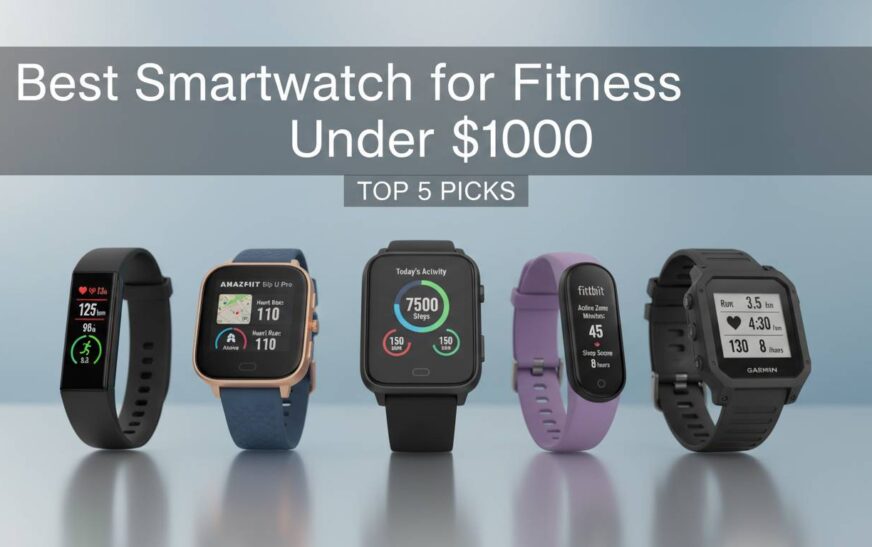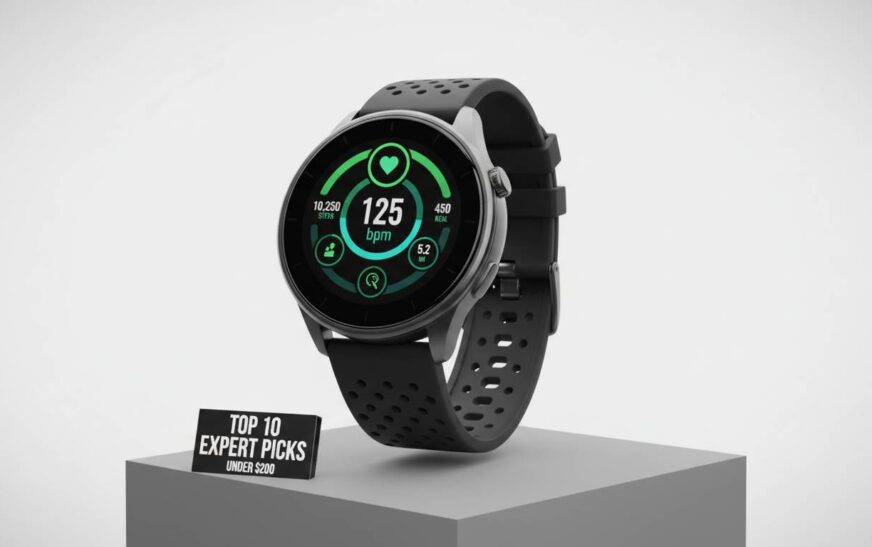

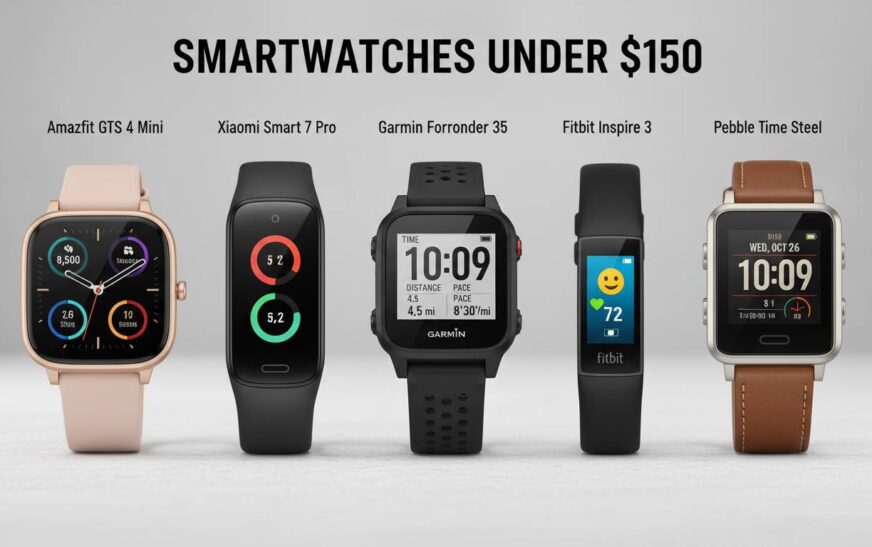
Finding a quality fitness smartwatch without spending a fortune isn’t as hard as it used to be. The market has matured significantly, and you can now get impressive tracking features, reliable heart rate monitors, and decent battery life for under $150. After researching current options and comparing specs across popular models, these are the best picks that actually deliver value without breaking the bank.
Why Under $150 Is the Sweet Spot for Fitness Wearables
The fitness smartwatch category has seen massive price corrections over the past few years. What once required a $300+ investment now delivers comparable performance at a fraction of the cost. Manufacturers have refined their manufacturing processes, and mid-range chipsets have become powerful enough to handle GPS tracking, heart rate analysis, and sleep monitoring without lag.
For most people, spending more than $150 doesn’t meaningfully improve fitness tracking capability. The extra money typically goes toward premium materials, larger displays, or smartphone integration rather than actual health metrics. If your primary goal is tracking workouts, monitoring recovery, and building healthier habits, the sub-$150 segment has everything you need.
The real challenge isn’t finding a capable device—it’s choosing from the surprisingly strong lineup of options that all offer something slightly different. That’s where this guide comes in.
Our Top Pick: Garmin Forerunner 55 – Best Overall
The Garmin Forerunner 55 earns our top recommendation as the best fitness smartwatch under $150. This watch targets runners and general fitness enthusiasts with a focused feature set that prioritizes what actually matters for getting results.
Key Specifications:
- Display: 1.04″ diameter, 208 x 208 pixels
- Battery Life: Up to 2 weeks (smartwatch mode), 20 hours (GPS)
- Water Rating: 5 ATM
- Heart Rate: Elevate Gen 4 sensor
- GPS: GPS, GLONASS, GALILEO
- Weight: 37 grams
The Forerunner 55 excels because it doesn’t try to be everything to everyone. Garmin built this watch around proven running and fitness features: GPS tracking, recovery suggestions, daily workout recommendations, and race time predictions. The interface is straightforward, and the companion app provides detailed post-workout analysis that helps you improve over time.
Battery life stands out as a major advantage. Twenty hours of continuous GPS tracking means you can complete ultramarathons without worrying about dying mid-race. For everyday use, the two-week battery life removes the annoyance of constant charging that plagues more feature-heavy smartwatches.
The main limitation is smartwatch features. You get notifications and basic music controls, but this isn’t a smartwatch replacement for your phone. If you want app support, contactless payments, and full smartphone integration, look elsewhere. For pure fitness tracking, the Forerunner 55 delivers where it counts.
“The Forerunner 55 proves you don’t need to spend $300+ for a watch that actually makes you a better athlete. The training insights and recovery recommendations feel like having a coach on your wrist.” – Fitness gear testers consistently rate this as the best running watch under $150.
Pros:
- Exceptional GPS accuracy
- Two-week battery life in smartwatch mode
- Training readiness and recovery features
- Lightweight and comfortable
- Race predictor and pace strategies
Cons:
- Limited smart features beyond notifications
- Basic display compared to AMOLED competitors
- No onboard music storage
Runner-Up: Fitbit Inspire 3 – Best Value
If the Garmin Forerunner 55 is too running-focused, the Fitbit Inspire 3 offers a broader fitness approach at an even lower price point. This tracker-style device proves you don’t need a traditional watch form factor to get excellent fitness insights.
Key Specifications:
- Display: OLED, 126 x 348 pixels
- Battery Life: Up to 10 days
- Water Rating: 5 ATM
- Heart Rate: PurePulse 2.0
- GPS: Connected GPS (uses phone)
- Weight: 12 grams
The Inspire 3 shines with its exceptional value proposition. At roughly half the price of our top pick, you get sleep tracking, heart rate variability monitoring, SpO2 sensors, and automatic workout detection. The smaller, lighter profile makes it comfortable enough to wear 24/7, which is crucial for accurate sleep and recovery data.
The trade-off is GPS. The Inspire 3 uses connected GPS, meaning it pulls location data from your phone rather than having its own receiver. This works fine for outdoor walks, runs, and bike rides where you bring your phone, but limits standalone use. The smaller display also means less data visible at a glance.
For the price, though, you’re getting remarkably comprehensive health tracking. Fitbit’s sleep score and readiness metrics have become industry standards, and the active zone minutes feature helps motivate movement throughout the day.
Pros:
- Excellent 10-day battery life
- Comprehensive sleep tracking
- Very lightweight and comfortable
- Affordable price point
- Automatic workout detection
Cons:
- No onboard GPS (requires phone)
- Smaller display limits data visibility
- Basic notification support
Premium Pick: Amazfit GTR 4 – Best Features Near $150
The Amazfit GTR 4 represents the upper edge of the under-$150 category and delivers the most features per dollar. This is the choice if you want a full smartwatch experience with robust fitness tracking without approaching the premium price tier.
Key Specifications:
- Display: 1.43″ AMOLED, 466 x 466 pixels
- Battery Life: Up to 14 days (typical use)
- Water Rating: 5 ATM
- Heart Rate: BioTracker 4.0 PPG
- GPS: Dual-band GPS
- Weight: 34 grams
Amazfit has aggressively expanded into the budget fitness watch space, and the GTR 4 demonstrates their progress. The large AMOLED display looks premium, dual-band GPS improves location accuracy, and 14-day battery life competes with much more expensive options.
Fitness features include over 150 sport modes, AI-powered workout suggestions, and Zepp OS integration for app support. You get Bluetooth calling capability, offline voice assistant, and NFC for contactless payments in select regions. These are features typically found in watches costing twice as much.
The trade-off involves software ecosystem. Amazfit’s Zepp app works well but feels less refined than Garmin Connect or Fitbit app. Some users report occasional sync hiccups, and the third-party app selection through Zepp OS remains limited compared to Apple or Samsung ecosystems.
Pros:
- Large, beautiful AMOLED display
- Dual-band GPS for accurate tracking
- 14-day battery life
- Built-in NFC and Bluetooth calling
- Excellent value for features
Cons:
- Software ecosystem less polished than competitors
- Occasional sync reliability issues
- Bulkier than dedicated fitness trackers
Best Budget Option: Xiaomi Smart Band 8 Pro – Best Budget
Not everyone needs to spend $100+ for quality fitness tracking. The Xiaomi Smart Band 8 Pro proves that under $50 can still get you a surprisingly capable fitness companion with enough features to satisfy casual athletes and health-conscious users.
Key Specifications:
- Display: 1.74″ AMOLED, 336 x 480 pixels
- Battery Life: Up to 14 days (typical use)
- Water Rating: 5 ATM
- Heart Rate: Optical sensor
- GPS: Built-in GPS
- Weight: 22 grams
The Smart Band 8 Pro surprised us with its capability-to-price ratio. Xiaomi somehow packed built-in GPS, a large AMOLED display, and 14-day battery life into a device costing less than some running shoes. The 150+ sport modes cover virtually every activity, and the display quality punches well above its weight class.
Health monitoring includes 24/7 heart rate tracking, sleep analysis, SpO2 monitoring, and women’s health tracking. You also get standard smartwatch features like notifications, weather, music controls, and find my phone functionality.
The trade-offs involve build quality and software polish. The silicone band feels basic, and the overall construction, while functional, lacks the premium feel of Garmin or Fitbit products. The companion app works but requires more manual setup than competitors. Still, for the price, these are minor quibbles.
Pros:
- Incredible value – built-in GPS under $50
- Large, sharp AMOLED display
- Excellent 14-day battery life
- 150+ sport modes
Cons:
- Build quality feels budget-oriented
- Companion app requires more setup
- Less refined software experience
Best for Android Users: Samsung Galaxy Watch FE
Android users have fewer options in the under-$150 range that offer full smartwatch functionality, but the Samsung Galaxy Watch FE (when on sale) bridges the gap between fitness tracker and full-featured smartwatch.
Key Specifications:
- Display: 1.2″ Super AMOLED, 396 x 396 pixels
- Battery Life: Up to 40 hours
- Water Rating: IP68 / 5 ATM
- Heart Rate: Optical sensor
- GPS: GPS, GLONASS, BEIDOU, GALILEO
- Weight: 25 grams
The Galaxy Watch FE runs Samsung’s One UI Watch interface on Wear OS, giving you full access to the Google Play Store app ecosystem. This means Google Maps, Spotify, and thousands of other apps right on your wrist. Samsung Health provides comprehensive fitness tracking with body composition analysis and ECG monitoring (where regulatory approved).
The trade-offs involve battery life and ongoing costs. The 40-hour battery life means charging every other day, unlike the week-plus endurance of dedicated fitness watches. Samsung also requires a Samsung account and occasionally promotes its own ecosystem over third-party options.
When found on sale around $130, the Galaxy Watch FE becomes compelling for Android users who want smartwatch capabilities without the premium price.
Pros:
- Full Wear OS smartwatch experience
- Samsung Health with advanced metrics
- Access to Google Play Store apps
- Premium build and display quality
Cons:
- Shorter battery life (under 2 days)
- Requires Samsung account setup
- More expensive at full price
Comparison: How These Picks Stack Up
| Feature | Garmin Forerunner 55 | Fitbit Inspire 3 | Amazfit GTR 4 | Xiaomi Band 8 Pro |
|---|---|---|---|---|
| Price | ~$150 | ~$100 | ~$140 | ~$45 |
| Battery | 14 days / 20hr GPS | 10 days | 14 days | 14 days |
| GPS | Built-in | Connected | Dual-band | Built-in |
| Display | LCD | OLED | AMOLED | AMOLED |
| Water Rating | 5 ATM | 5 ATM | 5 ATM | 5 ATM |
| Sleep Tracking | Yes | Yes (Advanced) | Yes | Yes |
| Smart Features | Basic | Basic | Full | Basic |
What Actually Matters When Choosing
Before buying, consider which features align with your actual usage. GPS matters most for outdoor runners and cyclists—connected GPS via phone works for casual use but frustrates serious athletes. Battery life matters if you hate charging frequently or want multi-day activity tracking. Display quality matters more for quick glance checking during workouts.
Heart rate sensor quality has improved across the board in this price range. All our recommendations provide accuracy sufficient for training zones and general health monitoring. Only serious athletes doing precise heart rate training might notice differences between optical sensors at this price point.
Software ecosystem deserves consideration. Garmin Connect offers the most detailed training analysis. Fitbit excels at sleep and recovery insights. Amazfit and Xiaomi provide more general features but less refined companion apps.
Final Recommendation
For most people, the Garmin Forerunner 55 remains the best choice under $150. It focuses on what actually improves fitness—reliable tracking, training insights, and recovery feedback—while delivering the battery life that makes wearing it daily practical. The lack of smartwatch bells and whistles keeps distractions away from what matters most for fitness goals.
If budget is tight, the Xiaomi Smart Band 8 Pro delivers shocking value with built-in GPS that rivals watches twice its price. Casual fitness enthusiasts will find everything they need without overspending.
The Fitbit Inspire 3 remains excellent for those prioritizing sleep tracking and all-day comfort in a minimal footprint, while the Amazfit GTR 4 satisfies users who want the full smartwatch package alongside fitness tracking.
Whatever you choose, the fitness technology in this price range now delivers results that were exclusive to premium devices just a few years ago. Your improvement depends more on consistent use than spending more money.
Frequently Asked Questions
Is $150 enough for a good fitness smartwatch?
Yes, absolutely. The sub-$150 category has matured significantly, and you can get excellent GPS tracking, heart rate monitoring, sleep analysis, and multi-sport support without spending more. The Garmin Forerunner 55 and Xiaomi Band 8 Pro both prove this.
What’s more important: battery life or smartwatch features?
For fitness-focused users, battery life typically matters more. A watch that dies mid-workout or requires daily charging gets worn less often. Dedicated fitness watches like Garmin prioritize battery, while full smartwatches like Samsung Galaxy Watch offer more features but need more frequent charging.
Do I need built-in GPS or is connected GPS sufficient?
If you run, cycle, or hike without carrying your phone, you need built-in GPS. Connected GPS (which uses your phone’s location) works fine when you bring your phone but limits standalone use. All our recommendations under $150 include built-in GPS except the Fitbit Inspire 3.
How accurate are heart rate monitors in this price range?
Modern optical heart rate sensors in this price range work well for general fitness and training zone tracking. They’re not medical-grade, but sufficient for threshold training, recovery monitoring, and daily heart rate analysis. Garmin typically leads in sensor accuracy, followed by Fitbit and Amazfit.
Which brand has the best companion app?
Garmin Connect offers the most detailed training and fitness analysis, especially for endurance athletes. Fitbit’s app excels at sleep and recovery insights with an intuitive interface. Both are more refined than Amazfit’s Zepp app or Xiaomi’s Mi Fitness.
How often should I replace a fitness smartwatch?
With proper care, a fitness smartwatch typically lasts 3-5 years. Battery degradation eventually reduces run time, and software updates eventually stop. Spending under $150 makes replacement less burdensome when your watch reaches end-of-life.