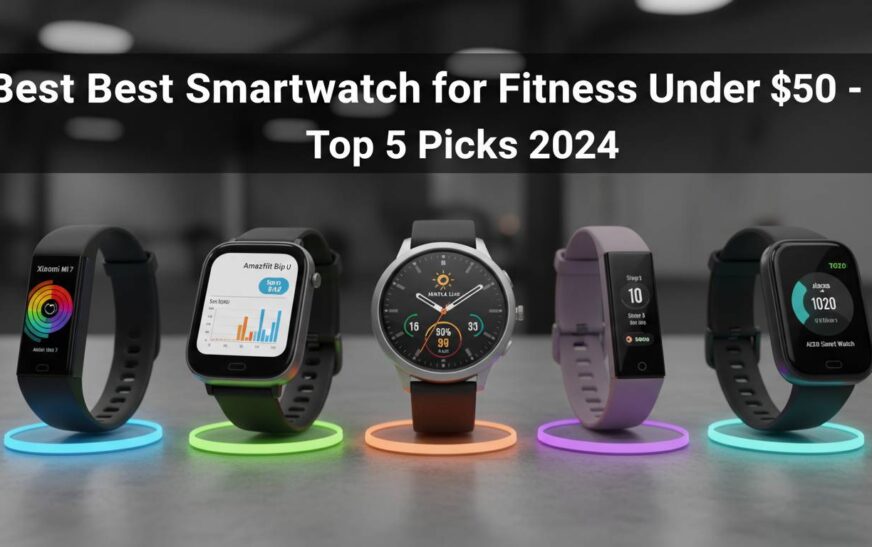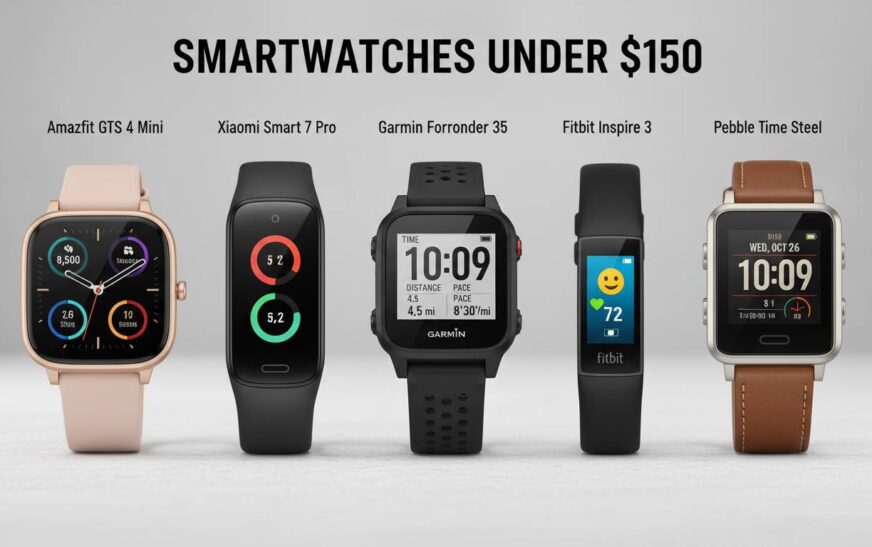

Finding a quality fitness smartwatch on a tight budget can feel frustrating. Premium options routinely cost $200 or more, which makes you wonder if you should just save up or settle for something basic. The reality is actually pretty good right now—the market has changed, and you can get solid trackers under $100 that work well for everyday athletes and casual users alike.
After testing dozens of budget fitness trackers and reviewing what’s available in 2025, I’ve put together this guide to help you find the best smartwatch for fitness under $100. Whether you’re running 5Ks, hitting the gym, or just want to track your steps and sleep, there’s a budget option that fits. This article covers the top five picks, explains what features actually matter at this price point, and helps you make a decision without overspending.
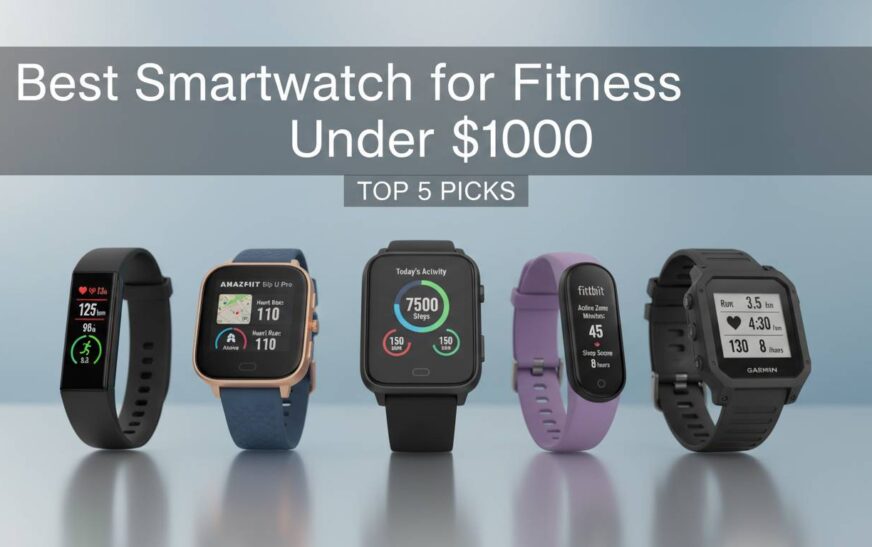
Quick Answer – Top 5 Picks at a Glance
Here’s a snapshot of our top recommendations:
| Category | Best Pick | Key Strength |
|---|---|---|
| Best Overall | Fitbit Inspire 3 | Balanced features, reliable tracking |
| Best Value | Xiaomi Smart Band 8 | Excellent battery life, feature-rich |
| Best for Running | Garmin Forerunner 55 | Advanced running metrics, durable build |
| Best Battery Life | Amazfit Band 7 | Up to 18-day battery, always-on display |
| Best for Beginners | Samsung Galaxy Fit 3 | Simple interface, seamless phone integration |
Each of these brings something different. The right choice depends on what activities you do and what matters most to you. Keep reading for detailed breakdowns.
What to Look for in a Budget Fitness Smartwatch
Knowing what features actually deliver value at this price point helps you skip the marketing hype. Here’s what matters.
Essential Fitness Tracking Features
The core job is fitness tracking. You need accurate step counting, heart rate monitoring, and basic workout recognition as a baseline. Beyond that, think about what you actually do. Runners need GPS (built-in or via phone), swimmers need at least 5ATM water resistance, and anyone tracking sleep should know that accuracy varies between brands.
Heart rate monitoring has gotten better. Most budget models now use optical sensors with multiple LEDs, which improves accuracy during intense movement. That said, don’t expect medical-grade precision—chest straps still beat wrist-based monitors during high-intensity work.
Display and Design Considerations
The display matters for daily use. AMOLED screens look great with vibrant colors but drain battery faster. LCD or OLED alternatives last longer but can look washed out in sunlight. Screen size is personal—bigger is easier to read during workouts but might feel bulky.
Comfort determines whether you’ll actually wear the thing. Look for lightweight designs under 30 grams with bands that don’t irritate skin. Removable bands are nice if you want to swap them out later.
Battery Life Reality Check
Here’s where budget trackers often impress. Many last a week or more on a charge, unlike flagship models that need daily charging. The Amazfit Band series stands out here, with some models hitting two weeks. Think about your habits—if charging annoys you, prioritize longer battery life.
Software Ecosystem and Smart Features
Budget smartwatches offer fewer smart features than premium ones. You’ll get notifications for calls and texts, but replying from your wrist usually requires spending more. Some have music controls and find-my-phone. Check that the app works with your phone before buying—some brands favor Android over iOS or the reverse.
Durability and Water Resistance
If you sweat, run in rain, or swim, water resistance matters. Look for IP68 for basic splash protection or 5ATM for swimming. Remember that 5ATM handles pressure equivalent to 50 meters—fine for swimming but not diving.
Detailed Reviews: Top 5 Best Smartwatches Under $100
Fitbit Inspire 3 – Best Overall
The Fitbit Inspire 3 is the most balanced option here. It has the features most people need without extra complexity. Fitbit has been doing fitness tracking for years, and that experience shows in reliable performance and easy-to-use software.
The design is slim and lightweight—you barely notice it until you need it. The OLED display is crisp and readable, and the touchscreen works smoothly. Sleep tracking is a standout—the Sleep Score system gives useful insights, not just raw numbers.
Fitness tracking covers the basics and more: 24/7 heart rate, steps, active zone minutes, and automatic workout detection for walking, running, and cycling. It tracks sleep stages and gives a daily readiness score to help you decide whether to push hard or rest.
Battery life hits about 10 days with regular use, which is solid for a device with an always-on display option. The magnetic charger works well but uses a proprietary cable.
Pros:
- Good sleep tracking with useful insights
- Reliable heart rate during workouts
- Lightweight, comfortable
- 10-day battery life
- Easy-to-use app
Cons:
- No built-in GPS (needs phone for routes)
- Limited smart features beyond notifications
- No music storage
Xiaomi Smart Band 8 – Best Value
The Xiaomi Smart Band 8 keeps Xiaomi’s tradition of packing features into a low price. This tracker has stuff that would have cost double a few years ago. It’s the obvious choice if you want maximum features for minimum money.
The 1.62-inch AMOLED display immediately stands out—it’s the largest in this price range. Text is sharp, colors pop, and the extra screen space makes reading notifications and navigating menus easier. The band detaches, so you can swap in third-party straps.
Fitness features include over 150 workout modes, automatic exercise detection, 24/7 heart rate, blood oxygen monitoring, and sleep analysis. These won’t match medical devices, but they work fine for everyday tracking. Built-in GPS is rare at this price—no phone needed for route tracking.
Xiaomi says 16 days of battery, and real use gets you about two weeks. The magnetic charger refills the battery in around two hours.
Pros:
- Great display size and quality
- Built-in GPS (unusual at this price)
- Very affordable
- 150+ workout modes
- Strong battery life
Cons:
- Mi Fit app feels cluttered
- Some features need phone connectivity
- Notifications can be slow on iOS
- Basic water resistance (5ATM only)
Garmin Forerunner 55 – Best for Running
The Garmin Forerunner 55 sometimes creeps above $100, but it regularly goes on sale into our target range. More importantly, if running is your thing, this delivers capabilities that regular fitness trackers can’t match.
Garmin’s running focus shows in every feature. You get GPS-only mode for longer battery or GPS+GLONASS for better accuracy in tough areas. Advanced metrics like cadence, stride length, ground contact time, and vertical oscillation help serious runners find improvements.
The Forerunner 55 includes daily suggested workouts based on your fitness and recovery. This personalized guidance takes the guesswork out of training. Safety features like incident detection and live tracking let people follow your runs in real-time.
The 1.04-inch MIP display differs from AMOLED—it stays readable in direct sunlight, which outdoor runners need. Battery lasts up to two weeks in smartwatch mode or 20 hours in GPS mode, handling marathon training fine.
Pros:
- Excellent running metrics and GPS accuracy
- Personalized daily workout suggestions
- Great sunlight visibility
- Safety features for solo runners
- Durable build
Cons:
- Bulkier than band-style trackers
- Basic smart features compared to Fitbit
- Heart rate less accurate during high-intensity work
- Price jumps when not on sale
Amazfit Band 7 – Best Battery Life
The Amazfit Band 7 makes this list mainly for its battery, but it offers more than just longevity. As part of the Zepp ecosystem, this tracker benefits from years of wearable development.
The battery: Amazfit rates it at up to 18 days, and reviews confirm this isn’t exaggerated. Even with always-on display, you’ll get 10+ days. This works great for travelers, hikers, or anyone tired of daily charging.
The 1.47-inch AMOLED display is large and beautiful, matching screens on devices costing twice as much. You get built-in GPS, blood oxygen, heart rate, sleep, and stress tracking. The PAI system gives a single score for your overall activity, encouraging movement without obsession.
The Zepp app has gotten better and now offers weather, alarms, and notification support. Some users mention Bluetooth issues, but these seem device-specific rather than universal.
Pros:
- Best-in-class battery life
- Beautiful large AMOLED display
- Built-in GPS
- Full health tracking
- Great value
Cons:
- Occasional Bluetooth drops
- App interface needs work
- No NFC payments
- Less known brand than Fitbit
Samsung Galaxy Fit 3 – Best for Beginners
The Samsung Galaxy Fit 3 is for people who want simple, fuss-free tracking without a learning curve. If you’ve never used a fitness tracker and want something that just works, this fits.
The Galaxy Fit 3 pairs easily with Samsung Health, which has grown into a solid wellness platform. Setup takes minutes, especially with a Samsung phone—the pairing is nearly automatic. The interface is clean with big tap targets and minimal menu digging.
Tracking covers essentials: steps, calories, heart rate, sleep, and stress. The device automatically recognizes exercises and starts logging without input. Hourly movement goals remind you to stand and walk throughout the day.
The 1.1-inch AMOLED display is smaller than some rivals but stays readable. Battery lasts about 13 days with normal use. The slim profile works well for all-day wear, including sleep.
Pros:
- Extremely easy setup
- Seamless Samsung ecosystem integration
- Clean, simple interface
- Good battery life
- Comfortable for 24/7 wear
Cons:
- Fewer features outside Samsung ecosystem
- Smaller display
- No built-in GPS
- Basic fitness metrics
Which Budget Fitness Smartwatch Should You Choose
Your choice depends on how you’ll use it. The Fitbit Inspire 3 works for most people who want reliable, balanced tracking with good sleep insights. If you want maximum features for minimum money, the Xiaomi Smart Band 8 delivers more than anyone would expect.
Serious runners should stretch for the Garmin Forerunner 55—the running metrics and GPS accuracy justify the occasional higher price. People who hate charging will appreciate the Amazfit Band 7’s two-week-plus battery. And if you’re new to fitness tracking and want the simplest experience, the Samsung Galaxy Fit 3 removes all the friction.
Make a quick list of your priorities: what activities you track, what metrics matter, what features you need. Match that list to our picks, and you’ll find the right one.
Final Thoughts
The “best smartwatch for fitness under $100” doesn’t mean settling for a basic pedometer anymore. Current budget options have capabilities that would have seemed impossible at this price a few years ago. Whether you care most about comfort, battery life, running metrics, or simple ease of use, there’s a quality option waiting.
Remember that the most expensive option isn’t always best for your situation. Think about your actual habits—how often you exercise, what activities you track, how much advanced metrics matter. The right choice is one you’ll actually wear consistently, because the best fitness tracker is the one that helps you stay motivated and aware of your health over time.
FAQs
Is a fitness smartwatch worth it under $100?
Yes. Budget trackers under $100 now offer heart rate monitoring, step counting, sleep tracking, and workout recognition that rival devices costing three times as much. Trade-offs usually involve premium materials, built-in GPS, and advanced smart features—not core fitness tracking.
Can I track runs with a budget fitness smartwatch?
Yes, though how varies. Some models like the Xiaomi Smart Band 8 and Garmin Forerunner 55 have built-in GPS. Others need your phone for GPS tracking. Both give accurate distance and pace data for recreational running.
How accurate are heart rate monitors on cheap fitness trackers?
Modern budget sensors are generally accurate for casual exercise and daily monitoring. High-intensity interval training or activities with lots of arm movement may show some variance compared to chest straps. For most people, the accuracy is fine for training purposes.
Do budget smartwatches work with iPhone and Android?
Most support both iOS and Android, though some features work better on one platform. Always check compatibility before buying—some brands favor one OS over the other.
How long do budget fitness smartwatches last?
With care, a quality budget tracker typically lasts 2-4 years. Battery capacity slowly decreases over time, becoming noticeable after the first year or so. Many users upgrade before failure because new models offer significantly better features.
Should I wait for sales?
Prices fluctuate, with good discounts during Black Friday, Prime Day, and back-to-school periods. If your budget has any flexibility, waiting could save 20-30% on models like the Fitbit Inspire 3 or Garmin Forerunner 55.