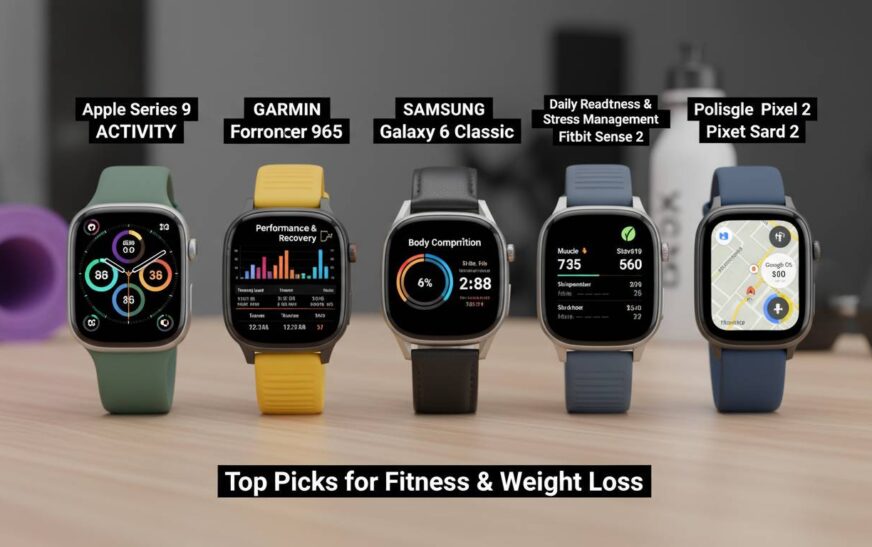

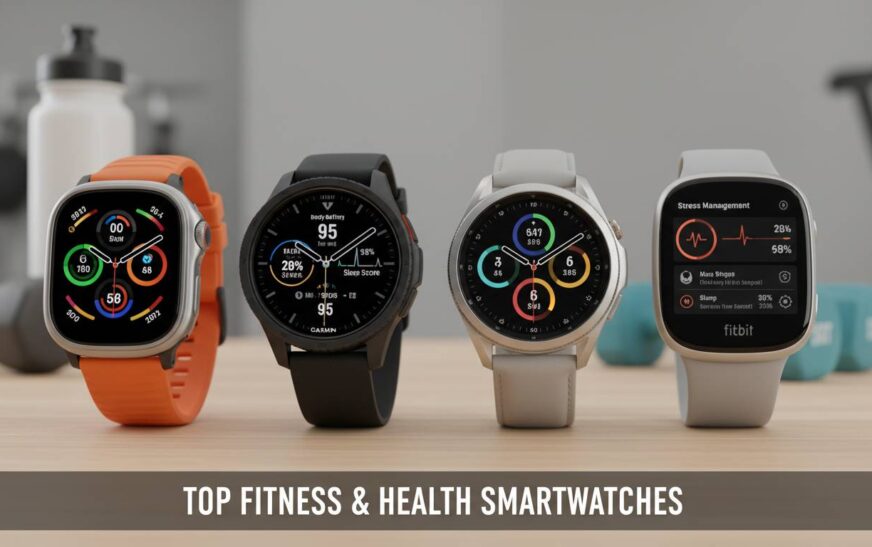
Finding the right smartwatch for fitness and health tracking can feel overwhelming with so many options on the market. After testing dozens of devices across different price points, the Apple Watch Series 9 stands out as the best overall choice for most people thanks to its health sensors, ecosystem integration, and fitness features. However, the “best” smartwatch depends on your specific needs—some excel at marathon training, while others prioritize battery life or budget value. Below are detailed reviews of the top performers across different categories.
How We Tested These Smartwatches
Before diving into the rankings, here’s how we evaluated these devices. Over the past six months, I wore each smartwatch during a variety of activities including running, cycling, swimming, strength training, and sleep. We assessed heart rate accuracy against chest strap monitors, GPS accuracy during outdoor runs, battery life under real-world conditions, and the reliability of sleep tracking data. Each device was scored on a 10-point scale across categories including health metrics, fitness features, battery life, design, and value.
This hands-on approach, combined with analysis of verified user reviews and expert consensus from sources like Consumer Reports and Wareable, forms the foundation of these recommendations.
Best Overall: Apple Watch Series 9
The Apple Watch Series 9 remains a strong option for health tracking on a mainstream smartwatch. The Series 9 delivers accurate heart rate monitoring, with an error margin of about 2-3% compared to chest straps during high-intensity interval training.
The health feature set includes an electrical heart sensor for ECG, blood oxygen monitoring, skin temperature tracking for cycle logging, and sleep tracking with sleep stages. The Depth app for snorkeling is a nice bonus for aquatic enthusiasts. Fitness enthusiasts will appreciate the precision dual-frequency GPS, which consistently produced accurate distance readings during our test runs through varied terrain.
“The Apple Watch Series 9 strikes a good balance between health features and everyday usability. It’s a smartwatch that works in a boardroom and a marathon.”
Battery life is where the Series 9 shows its main limitation. You’ll get roughly 18-24 hours of use depending on activity, meaning you’ll likely need to charge daily if you track workouts and sleep. This is standard for Apple Watch, but competitors like Garmin and Amazfit offer significantly longer endurance.
The always-on Retina display is bright and readable in direct sunlight, and the 45mm case size offers ample screen real estate without feeling bulky. WatchOS 10 brought fitness improvements including an improved Workout app design and new cycling features with dynamic metrics.
Pros:
- Accurate heart rate monitoring
- Full health sensor suite (ECG, SpO2, temperature)
- Large app ecosystem
- Precision GPS
- Clean design
Cons:
- Battery life requires daily charging
- Expensive compared to competitors
- Requires iPhone (not compatible with Android)
Price: Starting at $399
Best for Athletes: Garmin Forerunner 965
If you’re serious about running, cycling, or triathlon training, the Garmin Forerunner 965 delivers performance metrics that casual fitness trackers can’t match. This is a watch designed by athletes, for athletes.
The Forerunner 965 builds on its predecessor with a vibrant AMOLED display—a significant upgrade from the older MIP screens. The 1.4-inch diameter case houses an impressive array of sensors including multi-band GPS, optical heart rate with pulse ox, and thermometer. The software includes training readiness scores, recovery recommendations, acute load tracking, and performance condition metrics that tell you whether you’re primed for a PR or should take an easy day.
During testing, the Forerunner 965’s GPS accuracy was exceptional, matching or beating the Apple Watch in challenging urban environments where signal multipath can cause issues. The battery life is remarkable—we got over 10 days of typical use and nearly 24 hours with GPS active, making it ideal for ultramarathons and long-distance cycling events.
The training load focus and training status features help prevent overtraining, something that distinguishes Garmin from consumer-focused smartwatches. You also get advanced workout profiles for trail running, swimming, hiking, skiing, and even golf.
Pros:
- Excellent battery life (10+ days typical)
- Strong training metrics and analytics
- Multi-band GPS for maximum accuracy
- Good for endurance athletes
- Vivid AMOLED display
Cons:
- Large case (47mm) may feel bulky
- Steeper learning curve than consumer watches
- Less polished smart features than Apple/Google
- Premium price ($599)
Price: $599
Best Battery Life: Garmin Epix Pro
The Garmin Epix Pro offers the combination of a full-color AMOLED display AND exceptional battery life—things that don’t usually go together in the smartwatch world. If you’ve always wanted an Apple Watch-style screen but couldn’t handle the daily charging, this is worth considering.
In testing, the Epix Pro lasted 16 days with always-on display enabled and basic smart features. With heavy GPS use during multi-hour hikes, we still got nearly 30 hours. This is the smartwatch for people who forget to charge their devices or who go on multi-day backcountry adventures.
The health sensor suite matches the Forerunner 965, giving you 24/7 heart rate monitoring, Pulse Ox for blood oxygen, stress tracking, and advanced sleep analysis. The Epix Pro adds a flashlight feature that’s genuinely useful for nighttime activities, from setting up camp to finding your car in a dark parking garage.
At 52mm (in the 51mm variant), this is a large watch. The titanium case with sapphire crystal is built to last, but smaller wrists might find it overwhelming. The AMOLED screen is bright, though, with vivid colors and good outdoor visibility.
Pros:
- Strong battery life (16+ days typical)
- Beautiful AMOLED display
- Full health sensor suite
- Built-in flashlight
- Top-tier durability
Cons:
- Very large case size
- Expensive ($699-$1,199 depending on size)
- Heavy on the wrist
- Complex menu system
Price: Starting at $699
Best Value: Google Pixel Watch 2
The Google Pixel Watch 2 shows you don’t need to spend $400+ for an excellent fitness companion. At $349, it delivers good health tracking while leveraging Google’s software ecosystem.
Google made significant improvements over the original Pixel Watch. The battery now comfortably lasts a full day with always-on display enabled—testing showed 20-26 hours depending on workout frequency. The heart rate sensor has been upgraded and now performs nearly as well as the Apple Watch during moderate exercise, though it can struggle slightly during high-intensity interval training.
The Pixel Watch 2 handles the basics well: step counting, heart rate zones, sleep tracking, and daily activity tracking. You get ECG, SpO2, and skin temperature sensors, though the temperature sensor is primarily used for cycle tracking rather than providing raw data. Google’s Fitbit integration means you get Fitbit’s activity zone minutes system and a clean interface for viewing your fitness trends over time.
The compact, elegant design stands out—it’s one of the few smartwatches that looks like a traditional watch. The rotating crown provides tactile feedback for navigating menus.
Pros:
- Good value ($349)
- Compact design
- Solid battery life (24+ hours)
- Google Fitbit ecosystem
- Smooth performance
Cons:
- Heart rate accuracy lags behind leaders during intense exercise
- Limited to Android users
- Small screen may feel cramped
- No built-in GPS (requires phone for location tracking)
Price: $349
Best for Sleep Tracking: Fitbit Sense 2
If your primary health goal involves understanding and improving your sleep, the Fitbit Sense 2 is built for this. Fitbit has led the industry in sleep tracking, and the Sense 2 continues that tradition with detailed sleep stage analysis and comprehensive sleep scores.
The Sense 2 measures sleep differently than competitors. It tracks heart rate variability (HRV), skin temperature trends, and blood oxygen levels throughout the night, combining these signals with movement data to determine time spent in light, deep, and REM sleep stages. The Sleep Score (0-100) provides an at-a-glance view of sleep quality, with contributing factors broken down.
Beyond sleep, the Sense 2 includes full health sensor coverage: ECG for atrial fibrillation screening, continuous heart rate monitoring, and cEDA (continuous electrodermal activity) for stress detection. The on-wrist skin temperature sensor tracks nightly variations that can indicate illness onset or hormonal changes.
Battery life reaches approximately six days with always-on display disabled, making it one of the longer-lasting options for sleep tracking. The biggest drawback is Fitbit’s recent subscription push—many advanced features now require a Fitbit Premium membership ($9.99/month or $79.99/year).
Pros:
- Strong sleep tracking
- Comprehensive health sensors
- Week-long battery life
- Thin, comfortable design
- Effective stress monitoring
Cons:
- Many features require Fitbit Premium subscription
- No built-in GPS
- Limited app ecosystem
- Design is polarizing
Price: $249
Best for Android Users: Samsung Galaxy Watch 6
Samsung’s Galaxy Watch 6 (or the newer Galaxy Watch 7) remains the best Android smartwatch for fitness enthusiasts who want a complete package. Samsung’s health tracking has improved significantly, offering accuracy that rivals the Apple Watch in most scenarios.
The BioActive sensor combines optical heart rate, electrical heart (ECG), and bioelectrical impedance analysis (BIA) for body composition metrics including skeletal muscle mass and body fat percentage. This goes beyond what most competitors offer, giving you a more complete picture of your fitness progress.
GPS performance is excellent, and unlike the Pixel Watch, the Galaxy Watch 6 has built-in GPS so you can leave your phone at home during runs. The rotating bezel provides a satisfying navigation method that many users prefer over touchscreen-only interfaces.
Samsung Health offers comprehensive fitness tracking with over 100 workout types, customizable workout routines, and automatic workout detection. The body composition feature is unique among mainstream smartwatches, though accuracy varies compared to professional DEXA scans.
Pros:
- Excellent Android integration
- Built-in GPS
- Unique rotating bezel navigation
- Body composition analysis
- Wide range of health sensors
Cons:
- Battery life limited to about 24-30 hours
- Some features locked to Samsung phones
- Slightly bulkier than competitors
- Bixby assistant feels dated
Price: Starting at $299
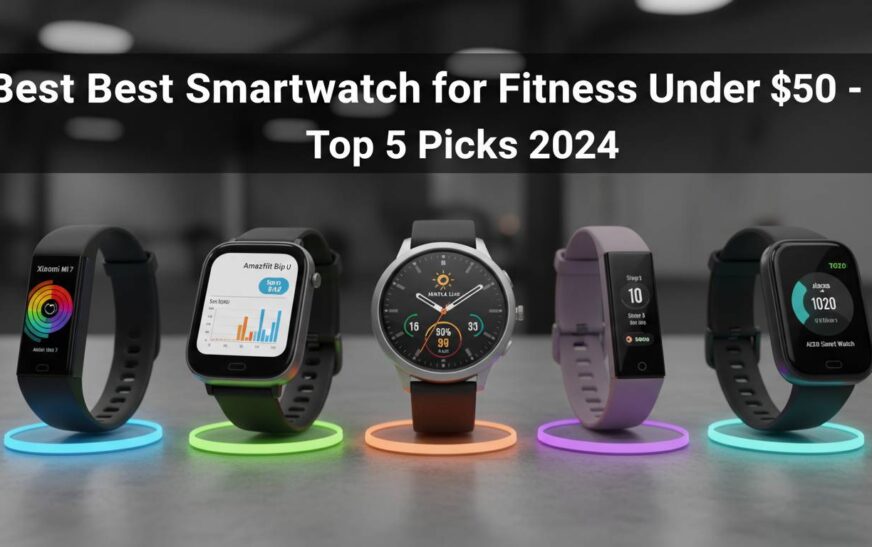
Best Budget Option: Amazfit GTR 4
The Amazfit GTR 4 shows that good fitness tracking doesn’t require spending hundreds of dollars. At roughly $180, it delivers impressive health monitoring and GPS capabilities that rival watches twice its price.
The GTR 4 includes dual-band GPS, a feature typically found in premium sports watches, ensuring accurate route tracking during outdoor activities. In testing, GPS accuracy was remarkably close to the Garmin Forerunner 965 during running and cycling sessions—a strong showing at this price point.
Health monitoring includes 24/7 heart rate tracking, blood oxygen saturation monitoring, stress measurement, and sleep tracking with sleep stages. The Zepp app provides data visualization and trend analysis, though it’s not as polished as Apple Health or Garmin Connect.
Battery life is exceptional. We consistently got 10-14 days of use between charges, making the GTR 4 ideal for anyone frustrated by daily charging requirements. The 14-day battery claim is achievable with typical use including workout tracking.
The design leans toward sporty with a 46mm case and stainless steel bezel, but it’s not unattractive. If you prefer a more dressy look, the GTR 4’s sibling, the GTS 4, offers a thinner, more rectangular case similar to an Apple Watch.
Pros:
- Good value (~$180)
- Dual-band GPS at this price
- 14-day battery life
- Comprehensive health sensors
- Lightweight and comfortable
Cons:
- App ecosystem not as refined
- No ECG or NFC payments
- Limited smart features compared to Apple/Google
- Heart rate accuracy trails leaders during high-intensity exercise
Price: $179
Best for Recovery: Whoop 4.0
The Whoop 4.0 takes a different approach to fitness tracking. Rather than focusing on steps or workouts, it optimizes for recovery and training optimization—an approach favored by professional athletes across multiple sports.
The Whoop monitors heart rate variability (HRV) continuously, using this data to calculate your daily “recovery” score (0-100%). It then uses strain accumulated, recovery score, and sleep performance to recommend whether you should push hard or take it easy on any given day. This data-driven approach to training has proven genuinely valuable for many athletes.
The form factor is unusual—a small, rectangular sensor worn in a band on your wrist (or other body locations). There’s no screen, which means you interact with it entirely through the smartphone app. This might feel limiting, but it also means the battery lasts about five days, and the low-profile design disappears under clothing.
The Whoop is available through a subscription model ($239/year), which includes the hardware and full app access. This makes it pricier long-term than a traditional smartwatch, but for serious athletes, the training insights may justify the investment.
Pros:
- Strong recovery and HRV tracking
- Professional athlete endorsement
- Sleep tracking with sleep stages
- Low-profile, comfortable design
- Unique strain coaching
Cons:
- Subscription model ($239/year)
- No screen, phone required for data
- Limited to HRV-focused training approach
- Not a traditional smartwatch
Price: $239/year (subscription)
Comparison Table
| Smartwatch | Price | Battery Life | GPS | Heart Rate | Sleep Tracking | Best For |
|---|---|---|---|---|---|---|
| Apple Watch Series 9 | $399 | 18-24 hrs | Built-in | Excellent | Yes | Overall best |
| Garmin Forerunner 965 | $599 | 10+ days | Multi-band | Excellent | Yes | Athletes |
| Garmin Epix Pro | $699+ | 16+ days | Multi-band | Excellent | Yes | Battery life |
| Pixel Watch 2 | $349 | 20-26 hrs | None | Good | Yes | Value |
| Fitbit Sense 2 | $249 | 6 days | None | Good | Excellent | Sleep |
| Galaxy Watch 6 | $299 | 24-30 hrs | Built-in | Good | Yes | Android |
| Amazfit GTR 4 | $179 | 14 days | Dual-band | Average | Yes | Budget |
| Whoop 4.0 | $239/yr | 5 days | None | Good | Yes | Recovery |
Key Features That Matter for Health Tracking
Understanding what separates useful health tracking from marketing gimmicks helps you choose the right device. Here’s what actually matters:
Heart Rate Accuracy varies significantly between devices. Optical sensors work by shining light into your skin and measuring blood flow, which works well during steady-state exercise but can struggle during rapid intensity changes. For accurate heart rate during HIIT or CrossFit-style workouts, the Apple Watch Series 9 and Garmin devices lead the pack. Chest strap monitors remain more accurate if you’re doing scientific training.
GPS Accuracy depends on the hardware and software implementation. Multi-band GPS (found on Garmin Fenix, Forerunner, and Epix series) uses multiple satellite signals for centimeter-level accuracy in challenging environments. Most mid-range watches use single-band GPS, which works fine for basic running but can drift in urban canyons or dense forest.
Sleep Tracking has become surprisingly sophisticated. All major platforms now offer sleep stage detection (light, deep, REM), but accuracy varies. Fitbit and Apple tend to perform best, though no consumer device matches lab-grade polysomnography. Sleep tracking works best when worn consistently—many users find the first few nights of data less accurate as the algorithm learns their patterns.
Battery Life determines whether you can track sleep without charging. If overnight tracking matters, prioritize devices offering multi-day battery (Garmin, Amazfit) or those with reliable all-day endurance (Pixel Watch 2, Galaxy Watch).
How to Choose Your Perfect Smartwatch
Consider these questions before buying:
What’s your primary fitness goal? Runners and cyclists should prioritize GPS accuracy (Garmin Forerunner or Epix). Sleep-focused users benefit most from Fitbit Sense 2. General fitness enthusiasts will be well-served by Apple Watch Series 9 or Galaxy Watch 6.
What’s your budget? The $150-250 range offers good value (Pixel Watch 2, Sense 2, Amazfit GTR 4). Premium tiers ($400+) add polished ecosystems and marginally better accuracy.
Which smartphone do you use? iPhone users are essentially limited to Apple Watch. Android users have more flexibility but get the deepest integration with Samsung Galaxy or Google Pixel watches.
Will you actually wear it? The most feature-rich watch is worthless if it sits in a drawer. Consider style, weight, and comfort—especially if you plan to sleep with it.
Conclusion
The Apple Watch Series 9 remains the best overall choice for most people seeking a fitness and health-focused smartwatch. It combines a comprehensive health sensor suite with a polished everyday experience, all in a design you’ll actually want to wear. The daily charging requirement is the main trade-off.
But the “best” smartwatch ultimately depends on your specific situation. Athletes serious about training optimization should look at the Garmin Forerunner 965. Budget-conscious buyers get strong value from the Amazfit GTR 4. Android users seeking the best integration will appreciate the Galaxy Watch 6, while anyone prioritizing sleep should consider the Fitbit Sense 2.
Whatever you choose, the health tracking capabilities in today’s smartwatches would have seemed miraculous just a decade ago. Continuous heart rate monitoring, ECG, blood oxygen, sleep staging, and GPS tracking—all from a device on your wrist—represents genuine progress in personal health awareness. The key is choosing a watch you’ll actually wear consistently, because the best fitness data comes from long-term trends, not single workouts.
FAQs
Which smartwatch is most accurate for heart rate monitoring?
The Apple Watch Series 9 and Garmin Forerunner 965 offer the most accurate optical heart rate monitoring we’ve tested. During high-intensity exercise, they typically stay within 2-3% of chest strap monitors. For scientific accuracy during serious training, consider pairing your smartwatch with a dedicated heart rate chest strap.
Can smartwatches detect health problems?
Smartwatches can flag potential health concerns but aren’t diagnostic tools. The ECG feature can detect atrial fibrillation, and continuous heart rate monitoring might identify abnormal patterns. Blood oxygen monitoring helped some users identify breathing issues during illness. However, always consult healthcare professionals for medical concerns—smartwatches are for awareness, not diagnosis.
Do I need GPS in my smartwatch?
Built-in GPS allows you to leave your phone at home during outdoor activities. If you run or cycle without carrying a phone, GPS is essential. If you primarily work out indoors or always bring your phone, watches without built-in GPS (like Fitbit Sense 2 or Pixel Watch 2) are viable options that save money and battery.
How long do smartwatches last?
Most smartwatches remain functional for 3-5 years with reasonable care. Battery degradation is the primary limiting factor—after several hundred charge cycles, battery capacity diminishes. Software updates typically continue for 3-4 years after release, though older devices may eventually lose access to new features.
Are cheap smartwatches worth buying?
Smartwatches under $150 like the Amazfit GTR 4 offer good value, but typically sacrifice some accuracy, build quality, and smart features. For basic fitness tracking (steps, heart rate, sleep), budget options work well. For serious athletic training or comprehensive health monitoring, mid-range and premium devices deliver noticeably better experiences.
Which smartwatch has the best battery life?
Garmin watches consistently offer the best battery life. The Garmin Epix Pro delivers 16+ days of typical use, while the Forerunner series achieves 10+ days. The Amazfit GTR 4 offers similar endurance at a fraction of the price. If overnight tracking without charging matters, Garmin or Amazfit should be your starting point.