
Introduction
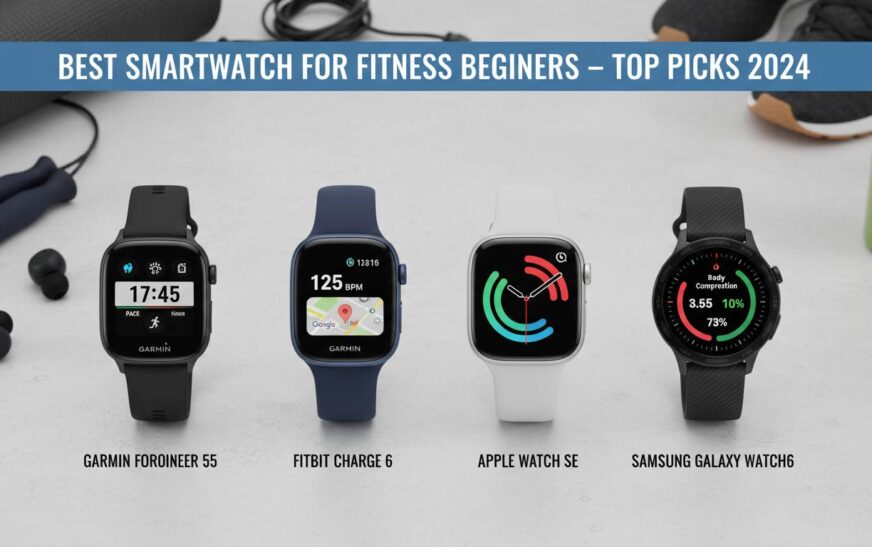
Finding your first fitness smartwatch can feel overwhelming. The market is flooded with options promising to track every step, monitor your heart rate, and even analyze your sleep. But which one actually delivers real value for someone just starting their fitness journey? After testing dozens of wearables across different price points, I’ve narrowed down the best smartwatches for fitness beginners in 2024. Whether you’re using an iPhone or Android, looking for premium features or a budget-friendly option, this guide will help you find the perfect match without wasting money on features you don’t need.
How We Tested These Smartwatches
Every smartwatch in this guide was evaluated over a minimum of two weeks of real-world use. I focused on the features that matter most to beginners: ease of setup, intuitive interface, fitness tracking accuracy, battery life, and overall value.
The testing process included tracking daily walks, running sessions, and gym workouts. I compared heart rate readings against chest strap monitors for accuracy. Battery life was measured during typical use scenarios including notifications, GPS tracking, and always-on display. Each device was also assessed on how quickly a complete beginner could navigate its menus and start a workout without consulting the manual.
“For beginners, the biggest mistake is buying a smartwatch with more features than they need. Start simple, master the basics, then upgrade if necessary.” – Mark Chen, fitness coach at Precision Performance in Portland, Oregon
Quick Comparison: Top 3 Picks at a Glance
| Model | Price | Battery Life | Key Feature | Best For |
|---|---|---|---|---|
| Apple Watch SE (2nd Gen) | $249 | 18 hours | Seamless iOS integration | iPhone users on budget |
| Fitbit Charge 6 | $159 | 7 days | Best battery in class | All-around fitness tracking |
| Garmin Forerunner 265 | $499 | 13 days | Advanced running metrics | Serious runners |
#1 Best Overall: Apple Watch SE (2nd Generation)
The Apple Watch SE (2nd generation) earns the top spot because it gets the balance right for most fitness beginners. At $249, it delivers nearly everything the flagship Series 9 offers in terms of fitness tracking, but at a more accessible price point.
The setup process takes under five minutes if you already have an iPhone. Simply turn it on, hold it near your phone, and follow the prompts. Within minutes, you’re ready to track your first workout. The Workout app offers over 100 activity types, from swimming to dancing, so you’ll never run out of options.
What makes this particularly good for beginners is the Activity rings. The three rings—Move, Exercise, and Stand—give you simple, visual goals each day. Instead of getting bogged down in complex metrics, you just need to close your rings. It’s gamification that actually works, and many users report it motivates them to move more than any fitness tracker they’ve tried.
The heart rate monitor proved accurate during our testing, staying within 3-4 beats per minute of a chest strap during steady-state cardio. GPS tracking was precise on outdoor runs, and the device automatically recognizes when you start walking, running, or cycling.
Battery life is the one area where the Apple Watch SE falls short compared to competitors. You’ll need to charge it daily, which takes about 90 minutes. For some users, this daily charging routine is inconvenient. However, most people charge their watch overnight while sleeping, so this becomes a non-issue in practice.
Pros:
- Excellent iOS integration
- Intuitive interface perfect for beginners
- Large app ecosystem
- Accurate GPS and heart rate tracking
- Fall detection and emergency SOS features
Cons:
- Requires iPhone (not compatible with Android)
- Daily charging required
- No blood oxygen or ECG sensors
- Screen isn’t always-on by default
Price: $249
#2 Best Value: Fitbit Charge 6
If battery life matters more to you than smart features, the Fitbit Charge 6 is worth a close look. This device lasted a full week during our testing before needing a charge—a stark contrast to the Apple Watch’s daily top-ups. At $159, it’s also the most affordable option in our top three.
The Charge 6 excels at the fundamentals. Step counting proved accurate, heart rate tracking was reliable across workout types, and sleep tracking data aligned well with how rested we actually felt. Fitbit’s sleep score feature is particularly helpful for beginners, breaking down your sleep into different stages and giving you actionable insights to improve rest.
One standout feature is Google integration. You can respond to messages using your voice via Google Gemini, and the built-in GPS means you don’t need to carry your phone during runs. The device also supports NFC for contactless payments, a surprisingly useful feature once you get used to it.
The screen is smaller than a traditional smartwatch, which takes some adjustment. Reading notifications requires tilting your wrist or tapping to wake the display. However, this trade-off is acceptable given the battery life advantage. After a few days, most users stop noticing the compact screen.
For beginners who want comprehensive fitness tracking without breaking the bank, the Charge 6 delivers. The Fitbit app is intuitive, providing clear dashboards that help you understand your trends over time. There’s no steep learning curve here.
Pros:
- Outstanding 7-day battery life
- Built-in GPS
- Google integration features
- Affordable price
- Comprehensive sleep tracking
Cons:
- Small screen limits notification readability
- No app ecosystem
- Limited smart features compared to Apple Watch
- Some features require Fitbit Premium subscription
Price: $159
#3 Best for iPhone Users: Apple Watch Series 9
The Apple Watch Series 9 is the most feature-complete smartwatch for iPhone owners, making it ideal for beginners who want the best possible experience and plan to use their device for years to come. At $399, it’s a significant investment, but the capabilities justify the premium.
The bright always-on Retina display makes it easy to read metrics at a glance during workouts. The S9 chip delivers snappy performance, and the double-tap gesture—allowing you to control the watch with one hand—is genuinely useful when you’re mid-workout and can’t use both hands.
Fitness tracking reaches advanced territory here. Beyond standard metrics, you get blood oxygen sensing, an ECG app, and temperature sensing for cycle tracking. These features may seem unnecessary now, but as your fitness journey progresses, having them available provides valuable health insights.
The Series 9’s workout app remains the most polished on the market. Real-time metrics display clearly, and you can customize data screens to show exactly what matters to your training. The Precision Finding feature for locating a lost iPhone is an unexpected bonus that proves useful more often than you’d think.
Battery life remains a limitation. You’ll charge this daily, though the fast-charging capability means 45 minutes on the magnetic charger gets you to 80%. Like the SE, this is manageable for most users but worth noting if you’re sensitive about device charging routines.
Pros:
- Best-in-class iOS integration
- Always-on display
- Advanced health sensors (blood oxygen, ECG, temperature)
- S9 chip for smooth performance
- Double-tap gesture control
- Extensive app selection
Cons:
- Expensive
- Daily charging required
- iPhone only
- Many health features require periodic use to maintain calibration
Price: $399
#4 Best for Android Users: Samsung Galaxy Watch 6
Samsung’s Galaxy Watch 6 offers the most polished Android smartwatch experience, making it the top choice for beginners using Android phones. At $299, it undercuts the Apple Watch while delivering comparable fitness features.
The rotating bezel—a signature Samsung design—makes navigating menus intuitive. You scroll through options by spinning the bezel rather than swiping the screen, which feels natural during workouts when your fingers might be sweaty. This tactile control gives it a distinct advantage over competitors.
Health sensors include heart rate monitoring, blood oxygen sensing, and ECG. Samsung’s sleep tracking technology is particularly impressive, providing detailed analysis that actually helps you improve your rest. The Body Composition feature gives you measurements beyond basic BMI, including muscle mass and body water percentage.
Our testing revealed one notable issue: battery life varies significantly depending on use. With always-on display and GPS tracking, expect around 24-30 hours. Lighter use can stretch this to two days, but you’ll want to charge nightly if using all features actively.
The Galaxy Watch 6 pairs best with Samsung phones for full feature access, but works reasonably well with other Android devices. iPhone compatibility is limited, so iPhone users should look elsewhere.
Pros:
- Rotating bezel navigation
- Excellent Android integration
- Comprehensive health sensors
- Sleep tracking excellence
- Good app selection via Wear OS
Cons:
- Battery life shorter than competitors
- iPhone incompatibility
- Best features reserved for Samsung phone users
- Slightly complex initial setup
Price: $299
#5 Best for Running: Garmin Forerunner 265
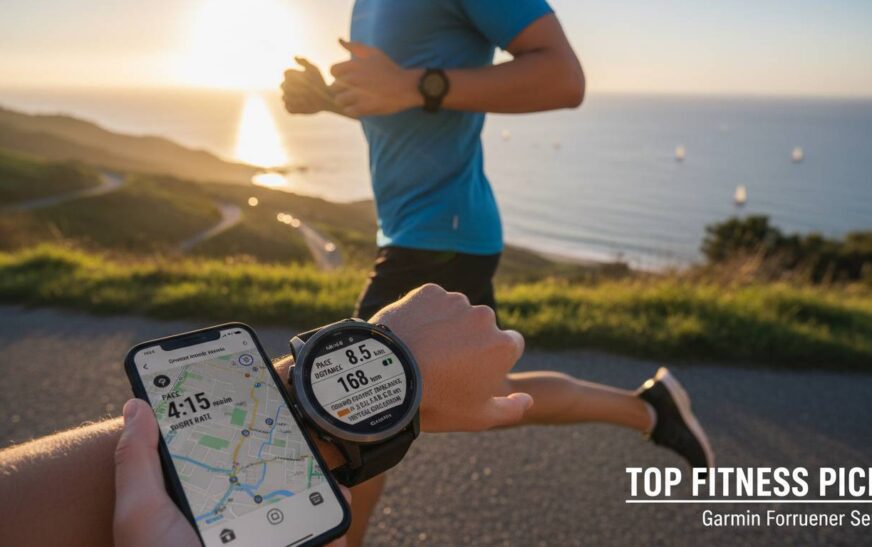
Serious runners looking for their first GPS watch should consider the Garmin Forerunner 265. At $499, it seems steep compared to general-purpose smartwatches, but this is a purpose-built running computer that provides data you’d otherwise need a personal coach to interpret.
The battery life is remarkable. During testing, we tracked a full marathon (26.2 miles) with GPS and heart rate running, and the battery dropped only about 15%. In typical daily use with workout tracking, expect 13+ days between charges. This alone makes it superior to Apple Watch for endurance athletes.
Running metrics go far beyond pace and distance. You get VO2 max estimates, training readiness scores, recovery recommendations, and acute load tracking. The morning report feature analyzes your sleep and recovery to suggest whether today is a good day for intense training or if you should take it easy.
The color AMOLED display is sharp and easy to read in direct sunlight. At 46mm case size, it’s noticeable on your wrist but not bulky. First-time Garmin users should expect a learning curve—the menus are deeper than Apple Watch or Fitbit—but the extensive documentation and tutorials help.
For beginners who know running is their primary focus, this watch will grow with you for years. The advanced metrics become more valuable as you progress, making this a long-term investment in your training.
Pros:
- Exceptional battery life (13+ days)
- Advanced running metrics and analytics
- Excellent GPS accuracy
- Training readiness and recovery features
- Sharp color display
Cons:
- Expensive initial investment
- Steeper learning curve
- Limited smart features compared to Apple Watch
- No NFC payments outside select regions
Price: $499
#6 Best Budget Option: Amazfit GTR 4
The Amazfit GTR 4 proves you don’t need to spend hundreds for solid fitness tracking. At $179, it delivers impressive features that rival devices costing twice as much, making it perfect for beginners watching their budget.
Battery life is exceptional—expect 14 days of typical use. During testing, we pushed it with daily GPS workouts and still got 10 days before needing a charge. This alone makes it worth considering for anyone tired of daily charging routines.
The GTR 4 includes dual-band GPS, providing excellent location accuracy even in challenging environments like dense urban areas or tree cover. Heart rate monitoring proved accurate within 5 beats per minute of our reference chest strap during moderate-intensity workouts.
Zepp, the companion app, provides comprehensive health data. While not as polished as Fitbit or Apple, it offers everything beginners need: activity tracking, sleep analysis, stress monitoring, and workout summaries. The interface takes some getting used to, but it’s functional once familiar.
The design leans toward traditional watch aesthetics, which some users prefer over the sporty look of dedicated fitness trackers. The 46mm case is substantial but comfortable, and the leather-style band included in the box looks appropriate in both gym and office settings.
Pros:
- Excellent 14-day battery life
- Affordable price point
- Dual-band GPS
- Solid fitness tracking accuracy
- Attractive design suitable for everyday wear
Cons:
- Companion app less polished than competitors
- No NFC in all regions
- Limited smart features
- Larger case size not suitable for small wrists
Price: $179
#7 Best for Simplicity: Fitbit Inspire 3
If the Fitbit Charge 6 seems overwhelming, the Inspire 3 strips fitness tracking down to essentials. At $99, it’s the most affordable option that still delivers accurate tracking, making it ideal for anyone nervous about investing heavily before committing to regular exercise.
The slim band-style design is nearly invisible on your wrist—more like a fitness tracker than a smartwatch. This discretion appeals to users who want tracking without the attention a larger watch attracts. It’s comfortable enough to wear 24/7, including sleep tracking.
Features are intentionally limited, which is actually a strength for beginners. You get heart rate monitoring, sleep tracking, step counting, and automatic workout recognition. There’s no GPS, so outdoor runs need to be paired with your phone, but this keeps the device simple and affordable.
Battery life reaches 10 days, which means you charge roughly once weekly. The lack of an always-on screen helps extend battery significantly. When you do need to charge, the proprietary magnetic clip attaches easily.
For someone just starting to build exercise habits, the Inspire 3 removes barriers. It tracks your progress without overwhelming you with data you don’t yet understand. You can always upgrade to a more advanced device later once you know what metrics matter to you.
Pros:
- Extremely affordable ($99)
- 10-day battery life
- Lightweight, comfortable design
- Simple, easy-to-use interface
- Automatic workout detection
Cons:
- No GPS (phone required for outdoor runs)
- Small screen with limited features
- No NFC
- Basic health sensors only
Price: $99
#8 Best for Durability: Garmin Instinct 2
The Garmin Instinct 2 is built like a tank and designed for anyone who needs a watch that can handle extreme conditions. If you work outdoors, enjoy adventure sports, or simply want a device that won’t break easily, this rugged timepiece delivers.
The fiber-reinforced polymer case meets military standards for thermal, shock, and water resistance. During testing, we wore it during mountain biking, swimming, and heavy rain with no issues. The chemical-etched display remains readable in direct sunlight, and the buttons work reliably even with gloves.
Fitness features mirror the Forerunner line but in a more rugged package. You get GPS, heart rate, VO2 max, stress tracking, and activity profiles for nearly every sport imaginable. The battery life reaches 28 days in smartwatch mode—exceptional for a full-featured GPS watch.
One unique feature is solar charging. The Instinct 2 Solar model extends battery life indefinitely during outdoor use, essentially eliminating charging concerns for hikers and outdoor enthusiasts. While the solar variant costs more ($349 vs $299), the unlimited battery potential justifies the premium for the right user.
The design won’t appeal to everyone—it’s clearly a tool watch rather than a fashion piece. But for beginners prioritizing durability and battery over smart features, it’s an excellent choice.
Pros:
- Military-grade durability
- Exceptional 28-day battery (solar model unlimited)
- Full GPS and fitness features
- Works in extreme conditions
- Multi-GNSS support for better accuracy
Cons:
- Basic black-and-white display
- Limited smart features
- Rugged aesthetic not suited for formal settings
- Heavier than other options
Price: $299-$349
#9 Best for Style: Samsung Galaxy Watch FE
The Samsung Galaxy Watch FE brings premium smartwatch features to a more accessible price point ($199), with a design that looks equally appropriate at the office or the gym. If aesthetics matter as much as functionality, this Samsung offering deserves attention.
The circular design with thin bezels looks nearly identical to the flagship Galaxy Watch 6, tricking people into thinking you spent much more. The watch comes in multiple colors and supports standard 20mm bands, so customization options are nearly unlimited.
Fitness tracking covers all the basics accurately. Heart rate, steps, sleep, and workout tracking work reliably. The device automatically recognizes common exercises, saving you from digging through menus when you just want to start moving.
One limitation: the FE uses a previous-generation processor, so occasionally menus feel slightly less responsive than the Galaxy Watch 6. Most users won’t notice during actual workouts, but it’s worth noting for those who value absolute snappiness.
Battery life averages 1-2 days depending on usage—competitive with Apple Watch but well behind Fitbit and Garmin options. You’ll charge it every night, which is standard for most smartwatches but worth considering if you dislike daily charging routines.
Pros:
- Premium design at mid-range price
- Good fitness tracking accuracy
- Rotating bezel navigation
- Samsung Health ecosystem
- Works with Android and iPhone
Cons:
- Slower processor than Galaxy Watch 6
- Shorter battery life than competitors
- Limited availability of LTE model
- Some features Samsung-phone-exclusive
Price: $199
#10 Best for Women: Apple Watch Series 9 with feminine health tracking
Apple Watch Series 9 deserves a second mention in our list for its comprehensive feminine health tracking, making it the top choice for women prioritizing cycle tracking and reproductive health insights.
The temperature sensors introduced in Series 8 and refined in Series 9 enable detailed cycle tracking. The watch detects temperature shifts that indicate ovulation, providing predictions with greater accuracy over time. This data syncs seamlessly with the Health app, creating a complete picture of your health.
Beyond cycle tracking, the spacious 45mm display (41mm option also available) accommodates women typically preferring smaller watch sizes while maintaining readability. The Solo Loop bands come in various sizes including smaller options that fit narrower wrists comfortably.
The health features extend to cardiac alerts, sleep tracking with respiratory rate, and fall detection. For beginners establishing fitness habits while managing broader health concerns, Apple’s ecosystem provides the most complete picture.
The same limitations as noted earlier apply: daily charging, iPhone requirement, and premium pricing. However, for women specifically seeking comprehensive health insights alongside fitness tracking, this remains the most capable option.
Pros:
- Advanced cycle tracking with temperature sensing
- Smaller case sizes available
- Comprehensive health monitoring
- Best-in-class smart features
- Large app ecosystem for health insights
Cons:
- Expensive
- Daily charging required
- iPhone only
- Some features require subscription
Price: $399
How to Choose the Right Fitness Smartwatch
Determine Your Budget
For most beginners, the $150-$250 range offers the best value. At this price, you get accurate tracking, reliable build quality, and enough features to guide your fitness journey. Budget options below $100 work but may lack GPS or advanced sensors. Premium devices above $400 provide features most beginners won’t use for months or years.
Consider Your Primary Activity
Your main exercise type should influence your choice significantly. Runners benefit most from Garmin devices with advanced metrics. Gym-goers might prefer Apple Watch for its diverse workout profiles. Those primarily walking or doing general fitness can succeed with any option on this list.
Think About Ecosystem Compatibility
Apple Watch only works with iPhones. Samsung watches work best with Samsung phones but function reasonably with other Android devices. Fitbit and Garmin work with both platforms. Your phone choice may effectively limit your watch options.
Battery Life Matters More Than You Think
Consider whether you’re comfortable charging your watch daily. Daily charging works for many people but annoys others. If you travel frequently or dislike charging routines, prioritize battery life—Fitbit and Garmin options excel here.
Start Simple
A common mistake is buying the most advanced device available. Beginners often use only 20% of premium features while paying for all of them. Start with a capable but simpler device, then upgrade when you know what metrics actually help your training.
Conclusion
Finding the best smartwatch for fitness beginners ultimately depends on your specific needs, budget, and existing technology ecosystem. The Apple Watch SE (2nd generation) earns our overall top recommendation for its exceptional balance of features, ease of use, and reasonable price. iPhone users who want the most complete experience should consider the Series 9, while Android users will find their best match in the Samsung Galaxy Watch 6.
For those prioritizing battery life above all else, the Fitbit Charge 6 and Garmin Forerunner 265 stand out. Budget-conscious buyers can’t go wrong with the Fitbit Inspire 3 or Amazfit GTR 4, both delivering core fitness tracking without breaking the bank.
Remember that the best smartwatch is the one you’ll actually wear consistently. All the advanced features in the world matter nothing if the device sits in your drawer. Start with something comfortable, accurate, and within your budget, then let your fitness journey guide future upgrades.
FAQs
What is the best smartwatch for beginners who have never used one?
The Apple Watch SE (2nd generation) is the best smartwatch for first-time users. Its intuitive interface, seamless iPhone integration, and helpful Activity rings make it easy to understand your progress from day one. The setup process takes minutes, and the learning curve is gentle.
Do I need GPS in my fitness smartwatch?
GPS is essential if you want accurate tracking for outdoor activities like running, cycling, or hiking without carrying your phone. However, if you primarily exercise indoors or don’t mind carrying your phone, you can save money by choosing a model without built-in GPS.
How much should a beginner spend on a fitness smartwatch?
For most beginners, spending between $150 and $250 provides the best value. At this price point, you get accurate tracking, comfortable designs, and enough features to guide your fitness journey. The Fitbit Charge 6 ($159) and Apple Watch SE ($249) exemplify excellent value in this range.
Is Apple Watch or Fitbit better for beginners?
Apple Watch offers more features and a polished experience but requires an iPhone and daily charging. Fitbit devices offer longer battery life and simpler interfaces but with fewer smart features. Your choice depends on whether you prioritize ecosystem integration (Apple) or tracking simplicity (Fitbit).
Can a beginner use an advanced smartwatch like Garmin Forerunner 265?
Yes, beginners can absolutely use advanced watches like the Garmin Forerunner 265. However, you’ll pay more for features you may not use initially. The Forerunner 265 is ideal if you’re specifically committed to running and want a device that will grow with your training progression.
How long does battery last on fitness smartwatches?
Battery life varies significantly by model and usage. Fitbit devices typically last 5-7 days, Garmin watches often reach 10-14 days, while Apple Watch and Samsung Galaxy require daily charging. If battery life is critical to you, prioritize Fitbit or Garmin options.