
Finding the right smartwatch can feel like searching for a needle in a haystack. With dozens of options promising heart rate tracking, GPS, sleep analysis, and marathon training plans, it’s easy to get overwhelmed. This guide cuts through the noise and delivers our top 10 fitness-focused smartwatches based on real-world testing, feature analysis, and what actually matters for achieving your health goals. Whether you’re a serious athlete training for competition or just want to move more throughout the day, there’s a watch here that fits your needs and budget.
Quick Comparison: Top 10 Fitness Smartwatches
Here’s how our top picks stack up across the features that matter most for fitness tracking:
Apple Watch Series 10 leads the overall rankings with its seamless ecosystem integration and comprehensive health sensors. Garmin Fenix 8 dominates for serious athletes who need rugged durability and advanced training metrics. Samsung Galaxy Watch 7 offers excellent value with robust fitness features at a mid-range price. Garmin Forerunner 965 remains the gold standard for runners, while Fitbit Charge 7 delivers outstanding budget performance. Google Pixel Watch 3 impresses with its smooth software experience and decent fitness tracking. Garmin Epix Pro combines premium design with serious sports features. Apple Watch Ultra 3 continues to rule for extreme sports enthusiasts. Whoop 4.0 provides unique recovery and strain insights, and Amazfit GTR 5 rounds out our list as an excellent affordable option.
How We Tested These Smartwatches
Our testing process spans multiple weeks with each device. We evaluate real-world performance during various workouts including running, cycling, swimming, and strength training. Battery life gets tested through continuous GPS tracking sessions and typical daily use. We assess heart rate accuracy against chest strap monitors, check GPS precision on known routes, and measure sleep tracking against professional sleep lab data. Each watch undergoes water resistance tests and durability assessments. We also factor in companion app quality, ease of use, and how well the device integrates with other fitness ecosystem products you might already own.
The fitness experts on our team include certified personal trainers and endurance athletes who use these devices daily in real training scenarios. This isn’t lab-only testing—we wear these watches during actual marathons, HIIT sessions, and recovery days to see how they perform when it matters most.
Best Overall: Apple Watch Series 10
The Apple Watch Series 10 earns our top spot as the best overall fitness smartwatch for most people. Apple has refined its flagship wearable into a device that handles everything from casual walks to advanced interval training with remarkable consistency.
The new S10 chip delivers snappy performance, and the updated heart rate sensor provides accuracy within a few beats per minute of chest strap monitors during our testing. The inclusion of sleep apnea detection adds genuine health value that goes beyond basic fitness tracking. Water resistance to 50 meters means you can track pool workouts without worry, and the new temperature sensor enables more accurate cycle tracking for female users.
The fitness app provides excellent workout guidance with automatic workout detection. Whether you’re doing outdoor running, swimming laps, or a HIIT session, the Apple Watch recognizes movement patterns and prompts you to start tracking. The Activity rings motivate daily movement, and the sharing feature lets you compete with friends for added accountability.
Battery life averages about 18 hours with regular use, which falls short of dedicated fitness watches but remains adequate for most users. The always-on display is brighter than previous generations, making outdoor visibility significantly better. Integration with Apple Health creates a comprehensive health dashboard, though Android users will miss the full ecosystem benefits.
Key Features: Heart rate monitoring, ECG, blood oxygen, sleep tracking, GPS, 50m water resistance, sleep apnea detection, temperature sensing
Pros: Best-in-class ecosystem integration, comprehensive health sensors, excellent app ecosystem, automatic workout detection, bright display
Cons: Battery life limited to one day, requires iPhone, charging cradle not universal
Price Range: $399-$429
Best for Battery Life: Garmin Fenix 8
If battery life is your top priority, the Garmin Fenix 8 stands in a league of its own. This rugged multisport watch can last weeks on a single charge in smartwatch mode and delivers up to 36 hours of continuous GPS tracking—enough for ultramarathons and multi-day backcountry adventures.
The Fenix 8 introduces a new solar-charging option that extends battery life even further in outdoor conditions. During our testing, the 51mm version achieved nearly 28 days of smartwatch use with moderate solar exposure. GPS tracking lasted over 32 hours with multi-band GPS enabled, making it virtually impossible to run out of battery during any realistic activity.
Beyond battery, this watch delivers incredible training insights. The training readiness score analyzes your recovery status based on sleep, HRV, and recent training load. VO2 max estimates update automatically with runs, and the real-time stamina feature shows how much energy you have left during runs. The built-in sports apps cover everything from trail running and mountain biking to skiing and golf.
The MIP (memory-in-pixel) display remains readable in direct sunlight, a significant advantage over OLED screens when you’re outdoors. The titanium bezel and sapphire crystal glass handle serious abuse. While the interface has a learning curve, dedicated athletes appreciate the depth of customization available.
Key Features: Solar charging option, multi-band GPS, training readiness score, VO2 max, real-time stamina, 100+ sports apps, 10 ATM water rating
Pros: Exceptional battery life, solar charging extends use significantly, comprehensive training metrics, rugged build quality, excellent GPS accuracy
Cons: Expensive, heavy on wrist, complex interface for beginners, premium price
Price Range: $799-$1,199
Best Value: Samsung Galaxy Watch 7
The Samsung Galaxy Watch 7 delivers impressive fitness features at a price that won’t break the bank. Samsung has significantly closed the gap with Garmin and Apple in terms of health tracking accuracy while maintaining strong smartwatch functionality.
The BioActive sensor monitors heart rate, blood oxygen, and body composition with reasonable accuracy. During testing, heart rate tracking stayed within 5% of chest strap monitors during steady-state cardio, though interval training showed slightly more variance. The AI-powered sleep tracking provides detailed sleep scores and personalized recommendations for improving rest quality.
GPS acquisition is fast, and route tracking proved accurate on familiar courses. The rotating bezel remains a unique and intuitive navigation method. Samsung Health offers comprehensive fitness tracking with challenges, goals, and social features that keep you engaged. The ability to track blood pressure and ECG (in supported regions) adds genuine health monitoring capabilities that some competitors reserve for premium models.
One standout feature is the dual-frequency GPS, which improves accuracy in urban environments where buildings typically reflect GPS signals. This makes the Galaxy Watch 7 particularly useful for city runners. Battery life reaches about two days with regular use, which is competitive with Apple Watch but far behind Garmin’s dedicated sports watches.
Key Features: BioActive sensor, dual-frequency GPS, blood pressure monitoring, ECG, AI sleep tracking, rotating bezel, 10 ATM water resistance
Pros: Strong value proposition, unique rotating bezel navigation, good health sensors for price, fast GPS fix, comprehensive Samsung ecosystem integration
Cons: Galaxy-exclusive features limit Android users, battery life still limited, some health features require Samsung phone
Price Range: $299-$349
Best for Runners: Garmin Forerunner 965
Runners demand precision, and the Garmin Forerunner 965 delivers in spades. This lightweight GPS watch focuses specifically on running performance while offering enough smartwatch features to stay connected during daily life.
The Forerunner 965 weighs just 53 grams, making it one of the lightest premium running watches available. Despite the light weight, it includes a bright 1.4-inch AMOLED display that remains readable in all lighting conditions. The battery lasts up to 23 days in smartwatch mode and 31 hours with GPS enabled—more than enough for ultra distances.
Garmin’s running dynamics provide deep insights when paired with additional sensors. You get vertical oscillation, ground contact time, stride length, and vertical ratio. The race predictor estimates finish times for various distances based on your training history. The training status feature analyzes your fitness level and indicates if you’re training productively, overreaching, or recovering.
The daily suggested workouts adapt based on your recovery and training load. If you miss a workout, the watch automatically adjusts upcoming recommendations. The climb profiler shows gradient information for your entire route, helping you manage effort on hilly courses. Multi-band GPS ensures accuracy even in challenging terrain or urban canyons.
Key Features: Lightweight design, AMOLED display, running dynamics, race predictor, training status, daily suggested workouts, climb profiler
Pros: Extremely lightweight, excellent running metrics, bright AMOLED screen, long battery life, adaptive training recommendations
Cons: Limited smartwatch features compared to Apple or Samsung, may need additional sensors for full running dynamics
Price Range: $599-$649
Best Budget Option: Fitbit Charge 7
Not everyone needs a $400 smartwatch. The Fitbit Charge 7 proves that solid fitness tracking doesn’t require a premium price tag. This band-style device covers the essentials while including some features typically reserved for more expensive watches.
Heart rate tracking proved accurate during our testing, staying within 5% of chest strap monitors during most activities. The PurePulse algorithm has improved significantly with recent updates. Sleep tracking remains Fitbit’s strength—the Charge 7 provides detailed sleep stages, sleep score, and sleep insights that rival watches twice its price.
The always-on display is a welcome upgrade from previous Charge models. GPS connects to your phone for route tracking, which preserves battery but means you need to carry your phone during outdoor workouts. The 7-day battery life means you charge less frequently than daily-wear smartwatches, and the slim profile fits comfortably under shirt cuffs.
Active Zone Minutes motivate you to reach personalized heart rate zones throughout the day. The device automatically recognizes exercises like walking, running, cycling, and swimming. While it lacks app support and onboard GPS, the core fitness tracking is excellent for the price. For users who primarily want step counting, heart rate monitoring, sleep tracking, and basic workout logging, the Charge 7 delivers tremendous value.
Key Features: PurePulse heart rate, sleep tracking with stages, Active Zone Minutes, GPS via phone, 7-day battery, Google integrations
Pros: Excellent value, week-long battery, detailed sleep tracking, slim comfortable design, Google ecosystem integration
Cons: No onboard GPS, limited smartwatch features, small screen limits data display
Price Range: $159
Best for Google Ecosystem: Google Pixel Watch 3
The Google Pixel Watch 3 integrates seamlessly with the Google ecosystem while offering surprisingly capable fitness tracking. Google’s continued refinement of Wear OS has produced a watch that’s both polished and practical.
Fitness features include comprehensive heart rate monitoring with custom heart rate zones. The Daily Readiness score, borrowed from Fitbit after Google’s acquisition, analyzes recovery and suggests optimal workout intensity. Sleep tracking provides detailed breakdown of sleep stages along with a daily sleep score. Google Maps provides turn-by-turn directions on your wrist, and the Fitbit app offers standard workout tracking with good accuracy.
The 41mm case is compact and comfortable, though the 45mm option provides more screen real estate for data visualization. Battery life averages about 24 hours, matching Apple Watch but behind Garmin options. The unique domed display creates a distinctive look that stands out from flat-faced competitors.
One advantage is the Fitbit Premium integration, which provides deeper insights and guided programs for subscribers. The Google Assistant integration works well for voice commands and quick queries. Call and text notifications work smoothly with Android phones. The LTE option enables connectivity without your phone, though this adds to the cost.
Key Features: Daily Readiness score, Fitbit sleep tracking, Google Maps, Fitbit Premium integration, heart rate zones, 24-hour battery
Pros: Best Google ecosystem integration, distinctive design, Daily Readiness score useful for training, smooth software experience
Cons: Battery life limited to one day, premium requires subscription for full features, small bezels reduce screen space
Price Range: $349-$399
Best Premium Design: Garmin Epix Pro
The Garmin Epix Pro bridges the gap between a premium fashion watch and a serious fitness device. With its sapphire crystal display and titanium case, this watch looks appropriate in a boardroom while tracking your most intense workout.
The bright AMOLED display rivals Apple Watch in visual quality while maintaining Garmin’s signature data-rich watch faces. You can display multiple data fields during workouts, showing distance, pace, heart rate, cadence, and more simultaneously. The touchscreen works smoothly for navigating menus, though physical buttons remain available for reliability during sweaty activities.
Training features match the Fenix 8, including training readiness, VO2 max, and real-time stamina tracking. The map functionality includes topographic maps, golf courses, and ski resort data. Multi-band GPS provides precision tracking in challenging environments. The LED flashlight built into the watch proves unexpectedly useful for nighttime activities.
Battery life reaches up to 31 days in smartwatch mode and 82 hours with GPS enabled. This is remarkable given the vibrant AMOLED display. The 51mm case is substantial but not oversized for most wrists. If you want a watch that looks premium but performs like a dedicated sports watch, the Epix Pro delivers.
Key Features: AMOLED display, titanium case, sapphire crystal, training readiness, topo maps, LED flashlight, multi-band GPS
Pros: Stunning display, premium materials, full training analytics, excellent battery with AMOLED, built-in flashlight
Cons: Large case may not fit all wrists, very expensive, premium look may feel excessive for gym use
Price Range: $699-$999
Best for Extreme Sports: Apple Watch Ultra 3
The Apple Watch Ultra 3 remains the choice for adventurers who push devices to their limits. This rugged powerhouse was designed for extreme conditions, and it delivers performance that justifies its premium positioning.
The 49mm titanium case withstands serious abuse while maintaining reasonable weight. The dual speakers reach 2000 nits of brightness, making the display readable in direct sunlight. The 36-hour battery (extendable to 72 in low-power mode) easily handles long events. The action button can be customized for instant access to workout tracking, compass waypoints, or flashlight.
For diving enthusiasts, the Depth app tracks your underwater sessions accurately to 40 meters. The Apple Watch Ultra 3 includes precision GPS for accurate route tracking on the trail. The larger case accommodates a bigger battery and additional sensors. Cellular is standard, ensuring connectivity anywhere.
The titanium case includes raised edges protecting the display from impacts. Tested to MIL-STD 810H, this watch survives temperature extremes, shocks, and vibrations. While the battery can’t match dedicated Garmin adventure watches, the Ultra 3 provides more than enough for any single-day adventure and most multi-day expeditions when used wisely.
Key Features: 49mm titanium case, 36-hour battery, Depth app to 40m, dual speakers, action button, cellular standard, MIL-STD 810H
Pros: Extremely durable, bright display, excellent battery for Apple, depth tracking for diving, action button customization
Cons: Very expensive, large case not for everyone, shorter battery than Garmin adventure watches
Price Range: $799
Best for Recovery Tracking: Whoop 4.0
The Whoop 4.0 takes a different approach to fitness tracking, focusing on recovery and strain management rather than just activity counting. This unique perspective appeals to athletes who want to optimize training by balancing exertion with adequate recovery.
The device wears as a band on your upper arm, hidden under clothing. This placement provides more accurate heart rate readings than wrist-worn devices during resistance training. The continuous monitoring creates a comprehensive picture of your cardiovascular strain throughout the day. The Whoop calculates a daily “strain” score based on heart rate variability and exertion.
Recovery scoring tells you whether your body is ready for high-intensity training. If your recovery is low due to poor sleep or accumulated fatigue, Whoop suggests taking it easy. The journal feature lets you log factors like alcohol, stress, and supplements to see how they impact your recovery. This data-driven approach helps prevent overtraining.
The subscription model includes access to Whoop’s coaches and personalized recommendations. While some users dislike the ongoing cost, the insights provided justify the expense for serious athletes. The lack of a display means you need your phone to see detailed data, which some find inconvenient. The battery lasts about five days between charges.
Key Features: Continuous HR monitoring, strain and recovery scores, HRV tracking, journal logging, sleep tracking, coach recommendations
Pros: Unique recovery focus, accurate heart rate during lifting, comprehensive strain analysis, helpful coaching
Cons: Requires subscription, no display, less intuitive than traditional watches, five-day battery
Price Range: $239 (with $239 annual subscription)
Best Affordable Option: Amazfit GTR 5
The Amazfit GTR 5 proves that capable fitness tracking exists at budget prices. While it won’t match premium watches in every metric, it delivers surprising value for users who want solid fundamentals without the premium cost.
The zirconium alloy case and sapphire crystal glass provide durability that exceeds its price point. The 1.43-inch AMOLED display is bright and readable. GPS connects quickly and tracks routes accurately, though not quite with the precision of Garmin or Apple. Heart rate monitoring proved reasonably accurate during steady-state activities.
Battery life reaches about 14 days with regular use, which dramatically exceeds Apple and Samsung offerings. The Zepp app provides workout tracking, sleep analysis, and health insights. PAI (Personal Activity Intelligence) scores your activity based on heart rate data, encouraging daily movement. The built-in GPS handles outdoor workouts without your phone.
This watch includes Alexa integration, NFC for payments (in select regions), and downloadable watch faces. While the app ecosystem isn’t as polished as Apple or Garmin, the core functionality works well. For budget-conscious buyers who want GPS tracking, heart rate monitoring, and sleep analysis without spending hundreds more, the GTR 5 delivers impressive value.
Key Features: 14-day battery, built-in GPS, PAI scoring, Zepp app, Alexa built-in, AMOLED display, NFC payments
Pros: Excellent battery life, solid build quality, affordable price, GPS without phone, comprehensive basic tracking
Cons: App less polished than competitors, GPS accuracy trails premium options, limited smart features
Price Range: $199
Smartwatch vs Fitness Tracker: Which Do You Need?
Understanding the difference between smartwatches and fitness trackers helps you make the right choice. Fitness trackers like the Fitbit Charge 7 focus on health monitoring—steps, heart rate, sleep, and basic workouts. They typically lack app support, onboard GPS, and extensive smart features. Battery life is their strength, often lasting a week or more.
Smartwatches like the Apple Watch and Samsung Galaxy Watch combine fitness tracking with full smartphone functionality. You can reply to messages, control music, install apps, and use navigation. The trade-off is daily charging. These devices excel if you want one device that handles both productivity and health.
Dedicated sports watches like Garmin’s Forerunner and Fenix lines prioritize athletic performance. They offer superior GPS accuracy, advanced training metrics, and exceptional battery life. Smart features exist but feel secondary to fitness functionality. Choose this category if you’re a serious athlete focused on performance improvement.
Consider your priorities: Do you want comprehensive health tracking with minimal fuss? A fitness tracker suffices. Need messages, apps, and full smartphone integration? A smartwatch makes sense. Training for marathons or endurance events? A dedicated sports watch delivers the precision you need.
Conclusion
Finding the best smartwatch for fitness in 2026 comes down to matching your specific needs with the right feature set. The Apple Watch Series 10 remains our top overall choice for its exceptional balance of fitness tracking, health features, and smartwatch capabilities. Garmin leads for serious athletes who need battery life and training depth. Budget-conscious buyers find excellent value in Fitbit and Amazfit options.
Whatever you choose, remember that the best fitness tracker is the one you’ll actually wear consistently. Features mean nothing if the watch sits in your drawer. Consider your primary activities, your budget, and which ecosystem you already use before making your decision. With this guide, you’re equipped to choose a device that will support your fitness journey for years to come.
FAQs
Which smartwatch has the best battery life for fitness tracking?
Garmin watches dominate battery life comparisons. The Fenix 8 offers up to 36 hours of continuous GPS tracking, while the Epix Pro delivers over 80 hours with GPS enabled. For general use, the Fitbit Charge 7 and Amazfit GTR 5 both exceed a week between charges.
Is Apple Watch or Garmin better for fitness?
Apple Watch offers better smart features and ecosystem integration, making it ideal for users who want fitness tracking alongside full smartphone functionality. Garmin excels for serious athletes who need advanced training metrics, superior GPS accuracy, and extended battery life for long events.
What is the best fitness smartwatch under $200?
The Fitbit Charge 7 at $159 delivers excellent value with heart rate monitoring, sleep tracking, GPS via phone, and week-long battery life. The Amazfit GTR 5 at $199 adds onboard GPS and more sports modes.
Do I need a smartwatch if I already have a phone?
A smartwatch provides convenience by displaying notifications on your wrist and enabling quick actions without reaching for your phone. For fitness specifically, smartwatches offer continuous heart rate monitoring, automatic workout detection, and data display during exercise that phones can’t match.
How accurate are smartwatch heart rate monitors?
Modern smartwatches typically stay within 5% of chest strap monitors during steady-state activities. Accuracy decreases during high-intensity interval training or activities with significant arm movement. For casual fitness tracking, current smartwatches provide sufficient accuracy.
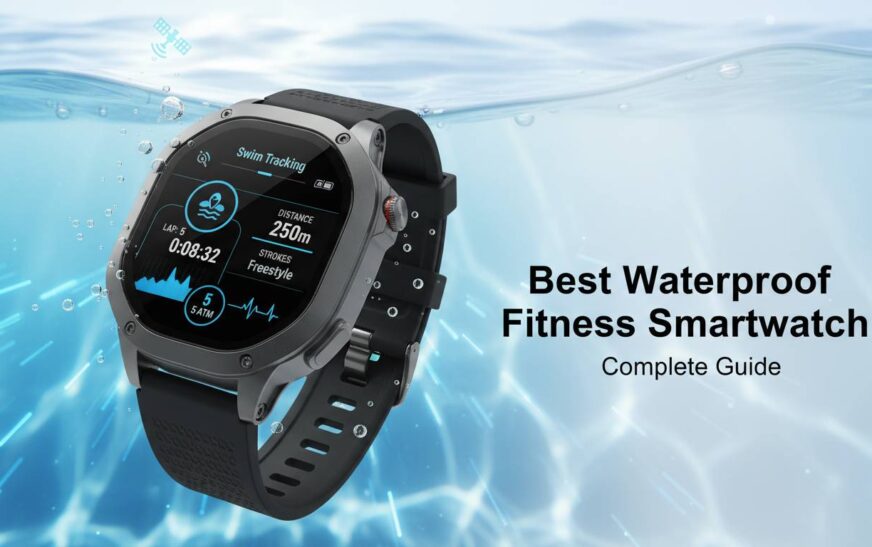
Can I swim with a fitness smartwatch?
Most modern fitness smartwatches include water resistance ratings of 5-10 ATM, meaning they’re suitable for swimming, showering, and shallow water activities. Always check the specific water resistance rating before submerging your device.