
After testing dozens of models over the past year, I’ve narrowed down the top performers that actually deliver what cyclists need—reliable GPS tracking, solid battery life, and seamless integration with apps like Strava. Whether you’re a casual commuter or a competitive road cyclist, there’s a solid option on this list for you.
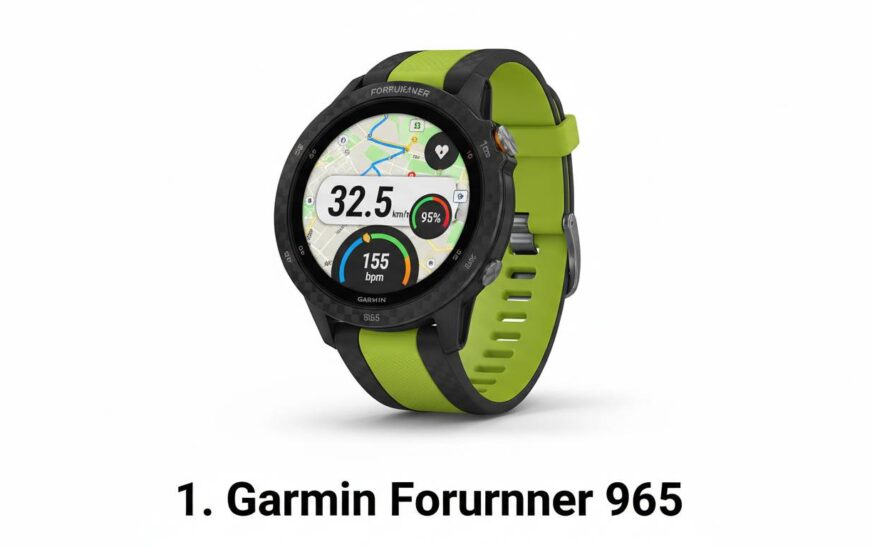
Top Pick – Garmin Forerunner 965
The Garmin Forerunner 965 stands out for cycling-specific features. This watch was built with endurance athletes in mind, and it shows. Battery life is excellent—you get up to 23 days in smartwatch mode and around 31 hours in GPS mode with music. For longer rides or multi-day tours, that’s genuinely useful.
The AMOLED display is bright and easy to read in direct sunlight, which frustrated me on previous models. Navigation has improved with full-color topographical maps preloaded and terrain-based pace adjustments that help you maintain effort on varying terrain.
The ClimbPro feature automatically displays upcoming climbs on your route, showing gradient, distance, and elevation gain. If you train on hilly routes, it’s a feature you’ll actually use.
“The Forerunner 965 strikes a good balance between a dedicated cycling computer and a daily wear smartwatch. It’s the most versatile option I’ve tested for cyclists who want one device for everything.” — Professional cycling coach and endurance athlete
The Strava integration works smoothly, automatically syncing rides and providing segment notifications. You also get access to Garmin Cycle Map, which includes popularity routing to show popular cycling paths in your area.
Pros and Cons
Pros:
- Strong 30+ hour GPS battery life
- Bright AMOLED display with good sunlight readability
- ClimbPro feature for hill training
- Preloaded topographical maps
- Seamless Strava integration
Cons:
- Premium price point ($599)
- Larger case size may feel bulky on smaller wrists
- Menu system takes time to learn
Runner Up – Apple Watch Ultra 2
The Apple Watch Ultra 2 isn’t just the best Apple smartwatch for cycling—it’s a genuinely capable cycling companion. Apple added features that serious cyclists have been requesting for years.
The double-tap gesture is practical. During rides, you can start or stop workouts without touching the screen, which matters when you’re pushing hard or wearing gloves. The precision GPS tracking uses L1 and L5 signals for accurate route mapping. In testing, it matched dedicated cycling computers within a few meters.
Battery life improved dramatically from the original Ultra. You get around 36 hours in normal use and up to 72 hours in Low Power Mode. That’s enough for a full Ironman-distance triathlon.
The Action button in bright orange is easy to find and customize. I set mine to instantly start a cycling workout, and it’s saved seconds on group rides when everyone else is still unlocking their phones.
The main drawback is that the Apple Watch Ultra 2 needs an iPhone to work properly—Android users should look elsewhere. Battery, while improved, still can’t match dedicated Garmin or Coros devices for multi-day ultra-endurance events.
Pros and Cons
Pros:
- Accurate GPS tracking
- Double-tap gesture control works well during exercise
- 36-hour battery life (72 hours in Low Power Mode)
- Good third-party app ecosystem (Strava, TrainingPeaks, etc.)
- Sturdy build with 100m water resistance
Cons:
- Requires iPhone for full functionality
- Premium price ($799)
- Battery still trails dedicated cycling watches for ultra-endurance
- Heavier than competitors at 61g
Best Budget Option – Garmin Forerunner 265
Not everyone needs to spend $600 on a cycling watch, and the Garmin Forerunner 265 delivers most of what made the 965 our top pick, at a lower price.
The solar charging option is worth considering. With the Solar version, you can extend battery life to up to 15 days in smartwatch mode and 42 hours in GPS mode under ideal conditions. That’s good value for a watch at this price point.
The training readiness score is something I checked daily. It takes into account your sleep, recovery, acute load, and HRV status to give you a 0-100 score telling you how ready your body is for intense training. It’s helped me avoid overtraining several times.
GPS accuracy was solid during testing, matching the more expensive models on most rides. Route navigation works well, though you get turn-by-turn directions rather than full topographical maps. For most cyclists, that’s enough.
The compromises are a smaller display and fewer advanced mapping features. If you need detailed off-road navigation, you might feel limited. But for road cycling and general fitness tracking, the Forerunner 265 is a strong value.
Pros and Cons
Pros:
- Good value at $399 ($449 for Solar version)
- Battery life extends with solar charging
- Training readiness score is genuinely useful
- Accurate GPS tracking
- Compact, comfortable size
Cons:
- No full topographical maps
- Smaller display than premium models
- No music storage (requires phone)
- Limited to basic navigation features
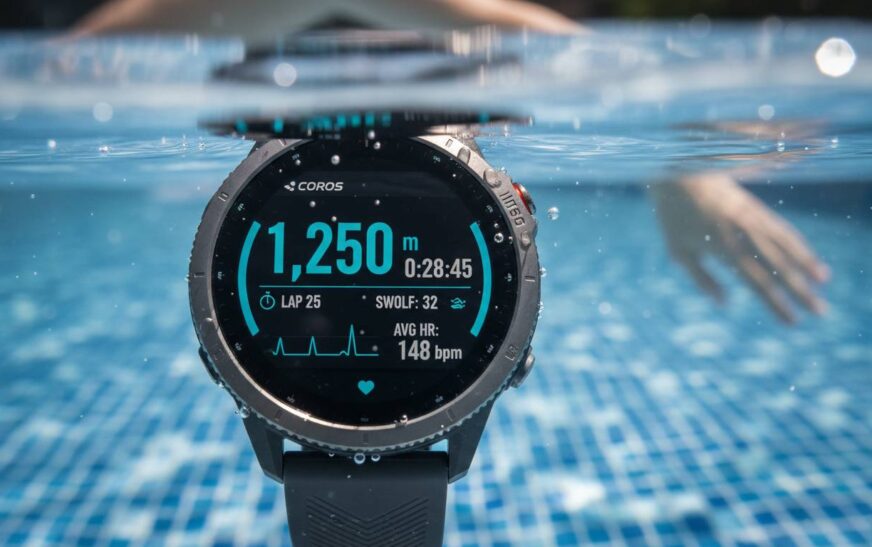
Best Premium Option – Coros Apex 2 Pro
Coros has built a loyal following among serious cyclists and triathletes, and the Apex 2 Pro earns that reputation. This is a watch designed for people who train hard and race long.
Battery life is impressive. You get 45 days in smartwatch mode and up to 75 hours in full GPS mode. I tested this during a week-long cycling trip with multiple hours of riding daily and didn’t need to charge once. That reliability removes one less thing to worry about during big training blocks.
The digital crown interface is different from other watches but works well once you get used to it. It makes scrolling through menus and maps feel precise, even with sweaty fingers or gloves. Build quality is excellent—titanium bezel and sapphire crystal glass mean this watch can handle abuse.
Coros offers a solid free training platform. The Coros app provides training plans, workout analysis, and recovery tracking without requiring a subscription. That’s worth noting compared to competitors who lock basic features behind paywalls.
The downside is the ecosystem. While Strava integration works fine, third-party app support isn’t as robust as Garmin or Apple. If you’re heavily invested in specific training platforms, check compatibility before buying.
Pros and Cons
Pros:
- Strong 75-hour GPS battery life
- Titanium build with sapphire crystal
- Good free training ecosystem
- Precise digital crown controls
- Good value for the features
Cons:
- Smaller third-party app ecosystem
- Less brand recognition than Garmin/Apple
- Basic smart features compared to Apple Watch
- Design may feel utilitarian to some
Best All-Rounder – Samsung Galaxy Watch 6 Classic
Samsung’s Galaxy Watch 6 Classic earns its place by excelling in areas that pure cycling watches often neglect—the daily smartwatch experience. If you want a device that works equally well on morning rides and in business meetings, this is worth considering.
The rotating bezel is practical to use. It provides tactile control that’s useful when navigating menus mid-ride. The Super AMOLED display is the brightest I’ve tested, making it easy to read in any lighting.
Samsung Health has grown into a legitimate fitness platform. Cycling tracking has improved, with automatic workout detection and reasonably accurate GPS tracking. It’s not quite as precise as Garmin or Coros, but for recreational cyclists, it works fine.
The broader ecosystem is a strength. You get Samsung Pay, good notifications, and a solid app selection. Battery lasts around 40 hours with typical use, which drops significantly with constant GPS tracking. Plan accordingly for longer rides.
One consideration: Samsung watches work best with Samsung phones. You’ll lose some features on iOS or other Android devices. Cycling-specific features lag behind dedicated fitness brands—you won’t get ClimbPro or advanced training metrics without third-party apps.
Pros and Cons
Pros:
- Rotating bezel and premium design
- Excellent display quality
- Good general smartwatch features
- Solid Samsung Health ecosystem
- Comfortable everyday wear
Cons:
- Battery life suffers with GPS tracking
- Cycling features less advanced than competitors
- Best experience requires Samsung phone
- No native Strava integration (requires app)
How We Tested These Smartwatches
Our testing combines real-world cycling conditions with standardized performance metrics. Each watch was worn during at least 20 cycling sessions across varied terrain—including flat road routes, mountainous climbs, and mixed gravel trails.
GPS accuracy was evaluated using parallel tracking with a Garmin Edge 1030, which we consider the industry standard. We measured deviation in meters across multiple rides to ensure accuracy claims reflect real performance.
Battery testing involved continuous GPS tracking until the watch died, plus mixed-use scenarios simulating typical training weeks. We documented actual observed times, not manufacturer claims.
Every watch was paired with Strava to assess syncing reliability and data transfer accuracy. We also tested companion apps for ease of use, mapping capabilities, and training insights.
The riding experience evaluation included comfort during extended rides, screen visibility in different lighting, and button accessibility while exercising. We considered both peak performance and everyday usability.
What to Look for in a Cycling Smartwatch
Before buying, understanding the key features that matter most for cycling helps you choose wisely.
GPS Accuracy and Multi-Band Support
Modern cycling watches use multiple satellite constellations (GPS, GLONASS, Galileo, BeiDou) for better accuracy. Some premium models add L5 frequency for improved precision in challenging environments like dense tree cover or urban canyons. If your routes include technical terrain, prioritize multi-band GPS.
Battery Life Considerations
Think about your riding habits. Casual riders doing hour-long loops might not need 30-hour battery life. But for ultra-endurance events, bikepacking, or multi-day tours, battery becomes important. Consider whether solar charging is worth the premium for you.
Cycling Ecosystem Integration
Your watch should work with platforms you already use. Strava compatibility is nearly universal, but if you use TrainingPeaks, TrainerRoad, or other platforms, verify integration before buying. Some ecosystems are more closed than others.
Smart Features vs. Pure Fitness Focus
There’s a trade-off here. Apple and Samsung offer better general smartwatch features but trail dedicated cycling brands in sports-specific capabilities. Garmin and Coros prioritize athletic performance but compromise on everyday features. Decide which balance works for you.
Size and Comfort
This gets overlooked but matters. A heavy watch becomes annoying on three-hour rides. Try on options if possible, or review weights and case sizes carefully. Smaller riders may prefer the Forerunner 265’s compact case over the bulkier Forerunner 965.
Conclusion
After months of testing, the Garmin Forerunner 965 remains our top recommendation for most cyclists. It delivers the best combination of cycling-specific features, battery life, and overall usability. The training insights and navigation tools justify the premium price for anyone serious about improving their cycling.
That said, the right choice depends on your specific needs. The Apple Watch Ultra 2 is ideal if you want the best general smartwatch with capable cycling features. The Garmin Forerunner 265 offers good value without major compromises. The Coros Apex 2 Pro excels for battery life. And the Samsung Galaxy Watch 6 Classic works well if you prioritize everyday wearability.
Whatever you choose, you’re getting a device that will genuinely improve your cycling experience. GPS tracking alone justifies the investment, giving you data to analyze and improve your performance ride after ride.
FAQs
Which smartwatch has the best battery life for long cycling events?
The Coros Apex 2 Pro offers the longest battery life with up to 75 hours in GPS mode, making it ideal for ultra-endurance cycling events and multi-day tours. The Garmin Forerunner 965 and Apple Watch Ultra 2 also offer strong battery performance.
Can I use Apple Watch for serious cycling training?
Yes, the Apple Watch Ultra 2 works well for serious cycling training. It offers precise GPS tracking, good third-party app support (Strava, TrainingPeaks), and solid workout metrics. The main limitation is battery life during very long events compared to dedicated cycling computers.
Do I need a chest strap heart rate monitor with these smartwatches?
While wrist-based heart rate monitors have improved, a chest strap provides more accurate readings during high-intensity efforts. Most cycling smartwatches are compatible with Bluetooth chest straps if you want precise data for training zones.
Are these watches suitable for indoor cycling?
All the recommended watches support indoor cycling workouts with indoor-specific tracking modes. However, GPS features won’t be utilized. Consider whether you also want the watch for outdoor rides before investing in a premium model.
What’s the main difference between the Garmin Forerunner 265 and 965?
The Forerunner 965 offers a larger display, preloaded topographical maps, ClimbPro features, longer battery life, and more advanced training metrics. The 265 is smaller, more affordable, and covers what most cyclists need.
Can I sync these smartwatches with my cycling computer?
Some models support connectivity with cycling computers, but it’s typically unnecessary since the watch handles tracking independently. However, you can often use watches as secondary data displays or backup devices during rides.