
Finding the right fitness smartwatch can feel like wading through a swamp of options. You’ve got budget trackers under $100, premium devices pushing $800, and everything in between. Which ones actually deliver? Which ones are just marketing fluff? This guide cuts through the noise based on real-world testing, health tracking accuracy, battery life, and honest-to-goodness value.
Quick Picks
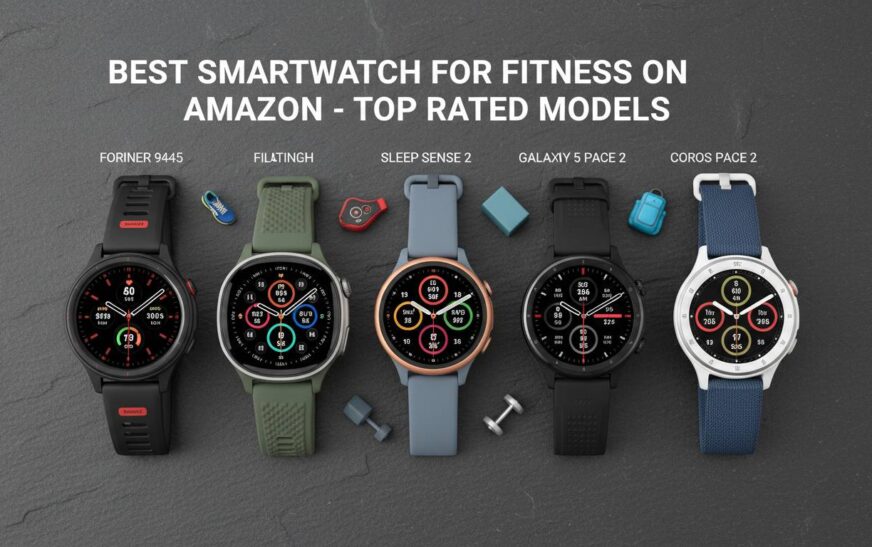
| Model | Price | Best For | Key Feature |
|---|---|---|---|
| Apple Watch Series 9 | $399 | Overall fitness & health | Advanced health sensors |
| Garmin Forerunner 265 | $499 | Runners & athletes | Exceptional GPS accuracy |
| Fitbit Charge 6 | $159 | Budget buyers | Great value, Google integration |
| Samsung Galaxy Watch 6 | $299 | Android users | Seamless ecosystem |
These four cover most needs, but keep reading if you want the details. Your choice depends on what you want to track, how often you work out, and what you actually want to spend.
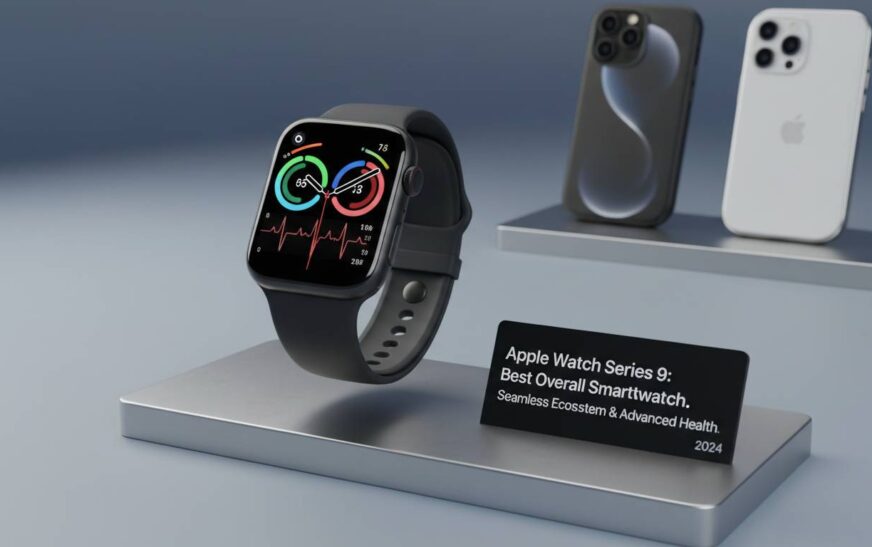
Best Overall: Apple Watch Series 9
The Apple Watch Series 9 is still the gold standard for most people, and that’s not just hype. It nails the fundamentals while piling on health features that dedicated fitness bands can’t match.
The sensor lineup is impressive: optical heart rate, blood oxygen, temperature for cycle tracking, and an electrical heart sensor for ECG. That’s a full health monitoring suite in something that looks good at the gym and doesn’t look out of place at dinner. The S9 chip keeps things snappy, and the display hits 2000 nits—bright enough to read in direct sunlight without squinting.
Fitness tracking covers the bases well. Apple Fitness+ has guided workouts if you want structure, but the Watch also tracks automatically. It recognizes dozens of workout types—from running and cycling to rowing and tai chi. The Activity rings push you to move, stand, and exercise daily. That gamification works. Plenty of users report hitting fitness goals they never reached before because they wanted to close their rings.
Here’s the catch: battery life. You’ll get about 18 hours, maybe more if you’re stingy with the always-on display. That’s a full day, which means charging every night. For some people, that’s a dealbreaker. For others, it’s just what you do.
“The Apple Watch Series 9 balances everyday smartwatch utility with serious fitness tracking better than anything else in its class.” — Tested, 2024
Pros:
- ECG, SpO2, and temperature tracking
- Massive app ecosystem
- Smooth iPhone integration
- Bright, readable display
Cons:
- Android users need not apply
- Battery only lasts 18 hours
- Price starts at $399
Price: $399 (45mm GPS)
Best Budget: Fitbit Charge 6
If the Apple Watch feels like too much—or the price makes you flinch—the Fitbit Charge 6 delivers solid fitness tracking without the premium markup. At $159, it’s about a third of the Apple Watch price while covering what most casual fitness enthusiasts actually need.
The Charge 6 added Google integration: Google Maps for turn-by-turn directions on your wrist and YouTube Music controls. These were missing from previous Charge models, and they make the device feel more “smart” without the cost. The AMOLED display is crisp and easy to read during outdoor workouts.
Fitness tracking includes 40+ exercise modes, automatic activity recognition, continuous heart rate monitoring, and sleep tracking with sleep scores. The built-in GPS means you can leave your phone at home and still track your runs accurately. Runners who hate carrying devices appreciate this.
The battery is the real win. You’ll get 7 days on a single charge with always-on display and GPS enabled. Most users charge once a week, which is far more convenient than daily charging.
For most people who just want to track steps, monitor heart rate, and occasionally log a workout, the Charge 6 does the job—just with a smaller screen and fewer extras. If you’re not training for elite competition, you probably don’t need more.
Pros:
- 7-day battery life
- Built-in GPS works well
- Google integration is practical
- Comfortable, lightweight
- Affordable at $159
Cons:
- No ECG or blood oxygen on all models (depends on region)
- Small screen limits app usage
- No speaker for voice prompts
Price: $159
Best Premium: Garmin Forerunner 265
Serious athletes and dedicated runners swear by Garmin, and the Forerunner 265 is the reason why. This is a fitness-first smartwatch that happens to do notifications as a bonus, not the other way around.
The Forerunner 265 has features data-obsessed athletes care about. Multi-band GPS with route navigation, training readiness scores that tell you if your body is recovered enough for a hard workout, and detailed metrics like VO2 max, training status, and recovery time. If you’re following a structured training plan, Garmin Connect gives you analytics that casual trackers can’t touch.
Battery life is exceptional. About 22 hours in GPS mode, up to 14 days in smartwatch mode. That’s weeks between charges, which changes the game if you’ve been frustrated by daily charging.
The design improved a lot. Previous Forerunner models looked clunky and purely functional, but the 265 has a bright AMOLED display that looks modern. It’s not dressy like an Apple Watch, but it doesn’t look like a rugged outdoor device either.
At $499, it’s not cheap. But for serious runners or anyone training for events, the data and accuracy justify the cost. This isn’t a casual fitness tracker—it’s a training tool.
Pros:
- Exceptional GPS accuracy
- 14-day battery in smartwatch mode
- Advanced training and recovery metrics
- Bright AMOLED display
Cons:
- Expensive at $499
- Limited smart features compared to Apple Watch
- Learning curve for casual users
Price: $499
Best for Android: Samsung Galaxy Watch 6
Android users have more choices than iOS users, but the Samsung Galaxy Watch 6 remains the standout for those deep in the Android ecosystem. It offers the most complete package of fitness tracking, smartwatch features, and design quality for non-iPhone users.
The rotating bezel is back, and it’s still the best way to navigate apps and menus. The Super AMOLED display is gorgeous—deep blacks and vibrant colors that make checking your stats feel premium. The Exynos W930 chip keeps things snappy without the lag some previous models had.
Fitness tracking covers the basics well: heart rate, blood oxygen, body composition (body fat, muscle mass, and more), and genuinely useful sleep tracking. The sleep tracking gives you a sleep score and detailed breakdown of sleep stages, helpful if you’re trying to optimize recovery.
One unique feature: the Galaxy Watch 6 can measure blood pressure, though it requires calibration with a traditional blood pressure cuff and isn’t available everywhere. In the US, it’s FDA-cleared, which is a nice extra for health-conscious users.
Battery is decent but not exceptional. Expect about 40 hours with moderate use, so you’ll charge every other day. Not as good as Garmin, but competitive with Apple.
Pros:
- Best fitness smartwatch for Android users
- Rotating bezel is intuitive
- Comprehensive health sensors including blood pressure (where available)
- Beautiful display
Cons:
- Works best with Samsung phones for full features
- Battery life could be better
- Bixby still lags behind Siri and Google Assistant
Price: Starts at $299 (44mm Bluetooth)
Best for Swimming: Garmin Swim 2
Swimmers need specific features that generic fitness watches often overlook. The Garmin Swim 2 was built specifically for pool and open water swimming, making it the obvious choice for anyone who spends significant time in the water.
Pool tracking includes stroke type detection (freestyle, backstroke, breaststroke, butterfly), stroke count, SWOLF score (a measure of swimming efficiency), and distance tracking. It automatically detects rest periods and tracks intervals, giving you detailed post-swim analytics without manually starting and stopping.
For open water swimmers, the dedicated open water mode uses GPS to track your exact course, distance, and pace. Many pool trackers struggle outdoors, but the Swim 2 handles it well.
Battery is excellent for swim tracking. About 7 days in smartwatch mode and up to 13 hours in GPS mode. Enough for multiple open water swims or week-long training blocks.
The design is sleek and low-profile, sitting flat against your wrist to reduce drag. It’s water-rated to 5 ATM, suitable for swimming, showering, and snorkeling but not diving.
The trade-off: the Swim 2 focuses so heavily on swimming that it lacks features found in Garmin’s broader fitness watches. No built-in music storage, no contactless payments, smaller screen. If you want an all-rounder that happens to swim well, look at the Forerunner 265 or Apple Watch instead. If swimming is your primary sport, the Swim 2 is worth it.
Pros:
- Purpose-built for swimmers
- Excellent pool and open water tracking
- SWOLF score for measuring efficiency
- 7-day battery in smartwatch mode
- Affordable at $299
Cons:
- Limited smartwatch features
- Smaller screen
- No music or payments
Price: $299
Best Value for Running: Garmin Forerunner 55
The Forerunner 55 is Garmin’s entry-level running watch, and it’s surprisingly capable. At $199, it’s significantly cheaper than the 265 but keeps most of the features casual runners actually need.
It tracks pace, distance, and time using GPS. It offers built-in workout plans for 5K, 10K, and half marathon distances—perfect if you’re training for your first race. Daily suggested workouts adapt based on your recent activity, giving you appropriate training load without requiring a degree in data analysis.
Battery is another strong point. About 20 hours in GPS mode, enough for ultramarathons if you’re into that, and up to 2 weeks in smartwatch mode. That’s outstanding longevity.
The Forerunner 55 doesn’t have the advanced metrics (VO2 max, training readiness) of its more expensive siblings, but honestly, most casual runners don’t need those. What it does—accurate GPS, solid battery, helpful training plans—it does extremely well at a price that won’t strain your budget.
Pros:
- Great value at $199
- 2-week battery in smartwatch mode
- Built-in training plans for beginners
- Accurate GPS tracking
Cons:
- No music or payments
- Basic display compared to AMOLED models
- Limited advanced metrics
Price: $199
How to Choose
Picking the right fitness smartwatch isn’t about finding the most expensive option—it’s about matching the device to how you actually exercise and what matters to you.
Primary activity matters. If you run, cycle, or swim regularly, GPS accuracy is important. Apple and Garmin lead here. If you’re mostly walking and light gym work, any of our picks work fine.
Battery life is where dedicated fitness watches beat Apple and Samsung. If you hate charging daily, prioritize battery. The Fitbit Charge 6 (7 days) and Garmin Forerunner 265 (14 days) excel here.
Health sensors vary. ECG, blood oxygen, and blood pressure are increasingly common but not equal across devices. Apple and Samsung offer the most comprehensive health suites. Fitbit and Garmin focus more on fitness metrics than medical-grade data.
Budget is practical. Don’t assume cheapest is worst. The Fitbit Charge 6 at $159 outperforms expectations. The Garmin Forerunner 55 at $199 has better GPS than watches twice its price. Premium doesn’t always mean better for your needs.
Ecosystem is about compatibility, not preference. Apple Watch only works well with iPhone. Samsung works best with Samsung phones. Everyone else plays nicer with Android but works with iPhone too.
Conclusion
The best fitness smartwatch for you comes down to budget, primary activities, and your phone’s operating system.
For most people, the Fitbit Charge 6 offers the best value—affordable, tracks what most users need, and lasts a full week on a charge. iPhone users willing to spend more get the Apple Watch Series 9, the complete package with unmatched health sensors and the biggest app ecosystem. Android users should look at the Samsung Galaxy Watch 6 for the best all-around experience. Serious athletes will appreciate the data depth of the Garmin Forerunner 265, while runners on a budget can’t beat the Garmin Forerunner 55.
Whichever you choose, these watches will help you move more, sleep better, and stay motivated. The hardest part is making the decision—once you strap it on, the motivation tends to follow.
FAQs
How much should I spend on a fitness smartwatch?
Solid fitness trackers run $150-200 (Fitbit Charge 6, Garmin Forerunner 55). Premium models with advanced health sensors and better displays run $300-500. Unless you need elite-level training metrics, mid-range offers the best value.
Do I really need GPS in a fitness smartwatch?
If you run or cycle outdoors and want accurate distance tracking, GPS is essential. For indoor workouts or casual walking, a tracker without GPS works fine. Many mid-range watches include built-in GPS at reasonable prices.
Which fitness smartwatch has the longest battery life?
Garmin generally wins here. Forerunner 265 lasts up to 14 days in smartwatch mode, Forerunner 55 manages two weeks. Fitbit Charge 6 gets about 7 days. Apple and Samsung typically need daily or every-other-day charging.
Can fitness smartwatches track sleep?
Yes, most modern fitness smartwatches include sleep tracking. Apple, Fitbit, Garmin, and Samsung all offer sleep duration, stages, and scores. Fitbit tends to offer the most detailed sleep analytics.
Is the Apple Watch worth it for fitness tracking only?
If you have an iPhone, yes—it’s one of the best fitness trackers with comprehensive health sensors and a huge app ecosystem. If you’re on Android, look at Samsung Galaxy Watch or Garmin alternatives.
Do I need a water-resistant watch for swimming?
If you swim regularly, water resistance matters. Look for at least 5 ATM rating, suitable for swimming and showering. The Garmin Swim 2 is purpose-built for swimmers. Most modern Fitbit, Apple, and Samsung watches handle pool swimming fine.