
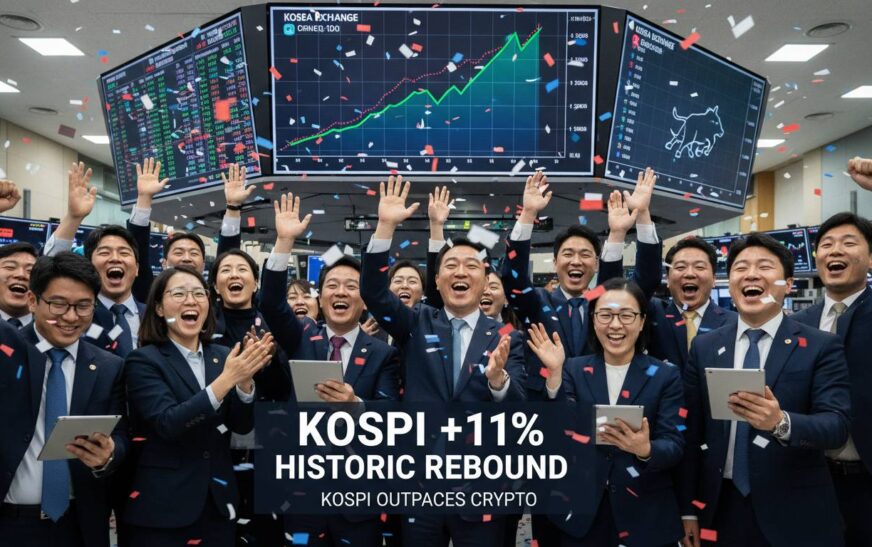
South Korea’s benchmark KOSPI index staged a dramatic comeback on March 5, 2026, soaring more than 11% in a single session—one of the most remarkable reversals in its history. This surge follows a record-setting plunge just a day earlier, underscoring the volatility and resilience of the Korean equity market. Meanwhile, cryptocurrencies, including Bitcoin, lagged behind, highlighting a renewed investor preference for traditional equities.
A Stunning Rebound in KOSPI
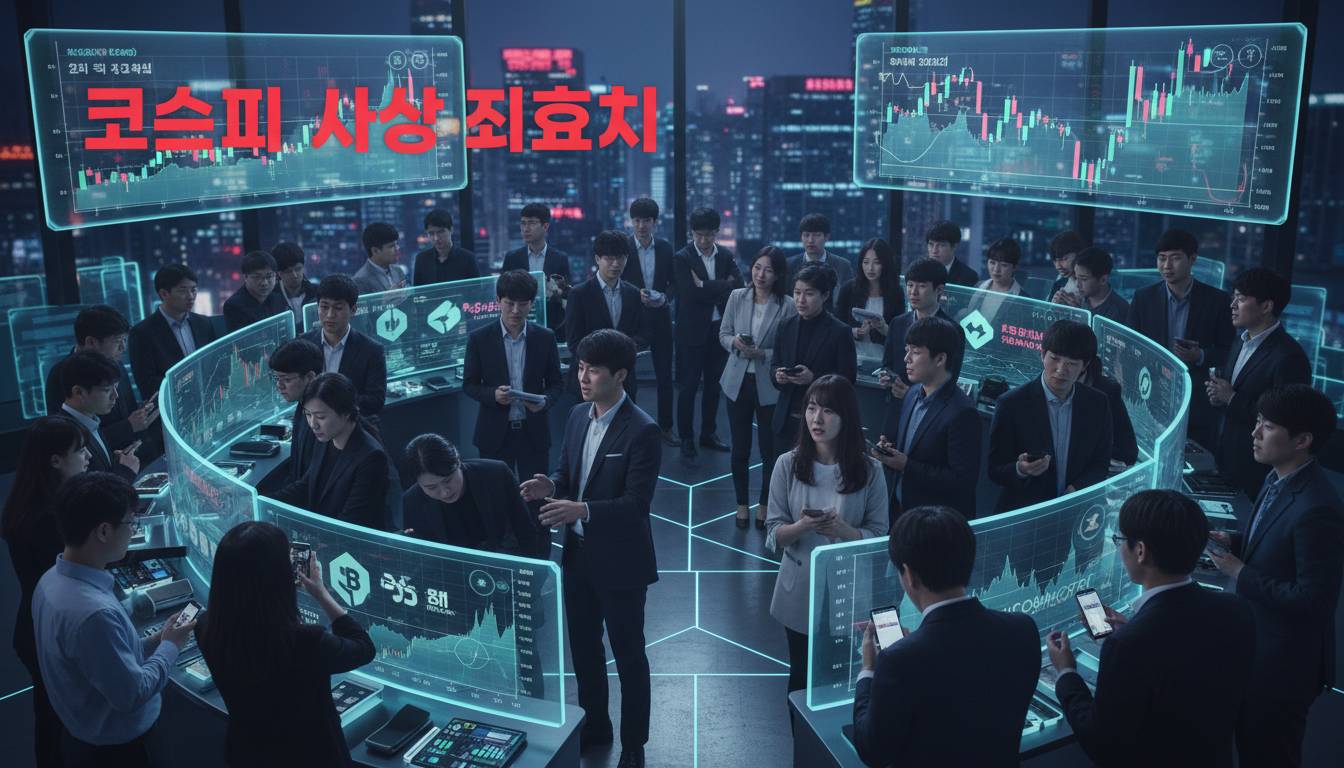
Just one day after suffering its worst single-session loss ever, the KOSPI rebounded with a force rarely seen. On March 5, the index surged over 11%, driven by a wave of buying from both foreign and retail investors. Foreign investors returned as net buyers of over 710 billion won by mid-morning, while retail investors added another 600 billion won.
This rebound comes in the wake of a sharp two-day selloff on March 3–4, during which the KOSPI and KOSDAQ fell 18.43% and 17.97%, respectively—making them the worst-performing major indices globally during that period.
Why the Crash—and the Comeback?
South Korea’s heavy reliance on Middle Eastern energy imports—over 70%—made it particularly vulnerable to geopolitical shocks. The recent U.S.–Israel strikes on Iran and fears of a Strait of Hormuz closure triggered panic selling.
The swift rebound suggests that investors viewed the selloff as an overreaction. Analysts from Mirae Asset set a near-term KOSPI recovery target of 5,800, while Kiwoom Securities noted that the two-day selloff may have already priced in the war risk premium.
Crypto’s Modest Gains Amid Equity Frenzy
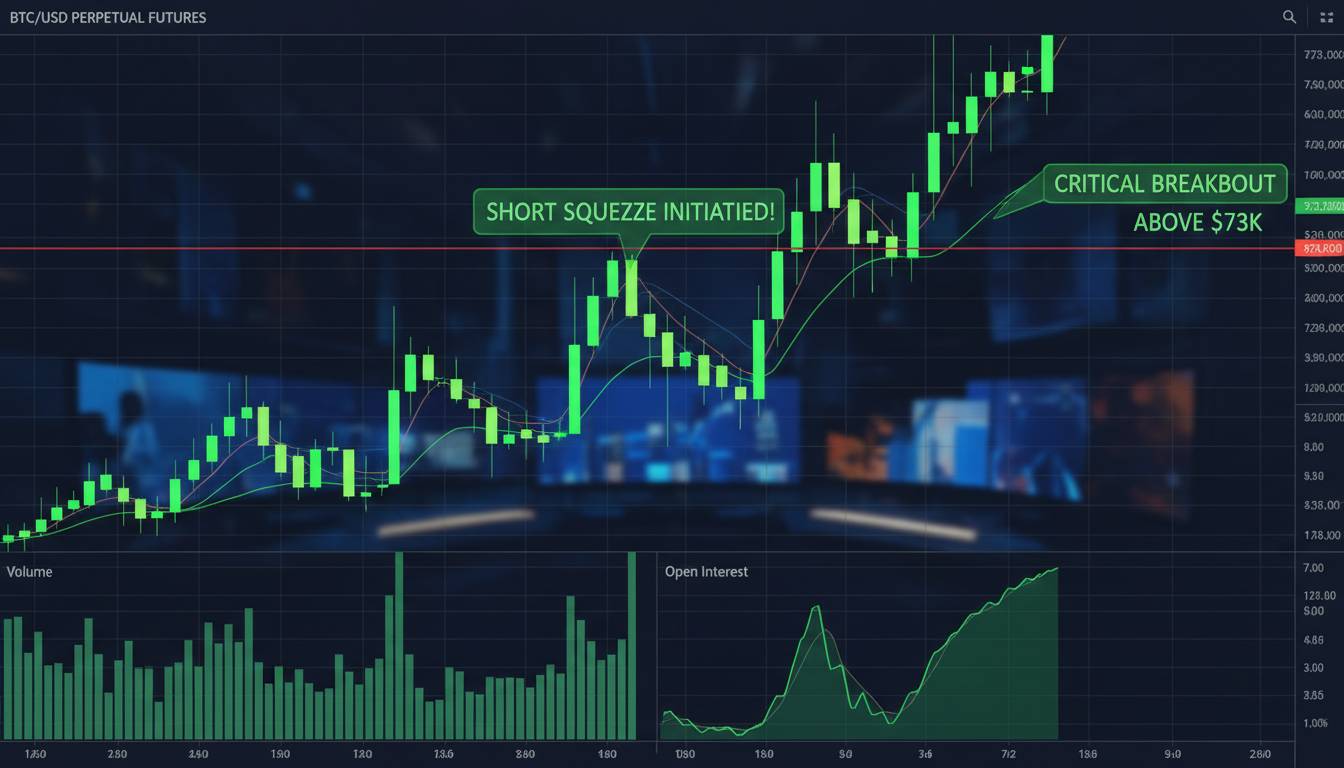
In contrast to equities, cryptocurrencies posted modest gains. Bitcoin rose approximately 6.4% in dollar terms, but only about 5% in won terms, as the Korean won strengthened from 1,505 to near 1,461 against the dollar—dampening crypto’s appeal as a currency hedge.
The equity market’s gravitational pull appears to be drawing capital away from digital assets. Crypto trading volumes in South Korea had already dropped by more than 80% during the KOSPI’s extended bull run, and the sharp equity rebound may further divert investor interest.
Significance for Markets and Investors
Market Sentiment and Risk Appetite
The dramatic swing in KOSPI reflects heightened sensitivity to geopolitical risk and underscores the speed at which sentiment can shift. The rebound suggests investors remain confident in South Korea’s economic fundamentals and corporate earnings potential.
Policy and Structural Implications
This episode highlights the importance of energy diversification and geopolitical risk management. It also underscores the role of domestic and foreign investor behavior in amplifying market moves.
Crypto vs. Equities: A Renewed Divide
The divergence between equities and crypto underscores a broader shift in investor preference. While crypto remains volatile and speculative, equities—especially in a market powered by AI and semiconductors—offer tangible growth stories and policy support.
What Lies Ahead?
- If geopolitical tensions ease, the KOSPI may continue its upward trajectory toward the 5,800 target set by Mirae Asset.
- Crypto markets may face further headwinds unless new narratives or catalysts emerge to reignite retail interest.
- Currency dynamics will remain a key factor in crypto performance, especially in markets like South Korea where the won’s movements can significantly impact returns.
Conclusion
South Korea’s KOSPI delivered a historic rebound—surging over 11% in a single session—just one day after its worst-ever loss. The rapid recovery, fueled by both foreign and retail investor inflows, highlights the market’s resilience and the underlying strength of its equity story. Meanwhile, cryptocurrencies lagged behind, with gains muted by currency dynamics and shifting investor sentiment. As geopolitical risks evolve, the KOSPI’s performance will remain a barometer of both domestic confidence and global risk appetite.
Frequently Asked Questions
What triggered the KOSPI’s 11% surge?
The rebound followed an unprecedented two-day selloff triggered by geopolitical tensions in the Middle East. Investors returned quickly, viewing the dip as an overreaction.
How did cryptocurrencies perform during this period?
Bitcoin rose about 6.4% in dollar terms but only around 5% in won terms, as the strengthening won reduced its appeal as a hedge.
Who drove the KOSPI rebound?
Both foreign and retail investors played key roles—foreign investors bought over 710 billion won, while retail investors added 600 billion won by mid-morning.
What are the near-term targets for KOSPI?
Mirae Asset set a near-term recovery target of 5,800, while Kiwoom Securities noted that the selloff may have already priced in the war risk premium.
Why did crypto lag behind equities?
Crypto’s gains were muted due to currency effects and shifting investor preference toward equities, which offered more tangible growth and policy support.
Could crypto rebound if equities falter?
Yes. If geopolitical tensions persist or equities lose momentum, capital may rotate back into crypto, especially if new narratives or catalysts emerge.