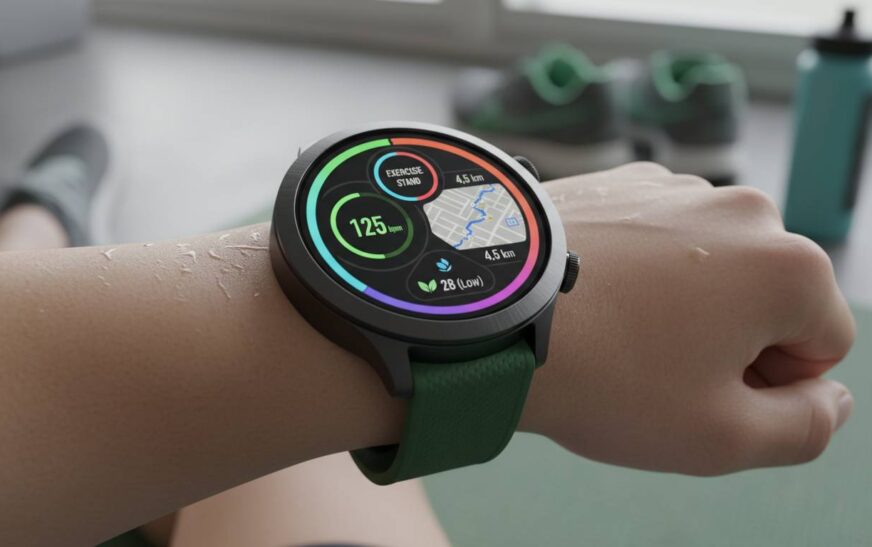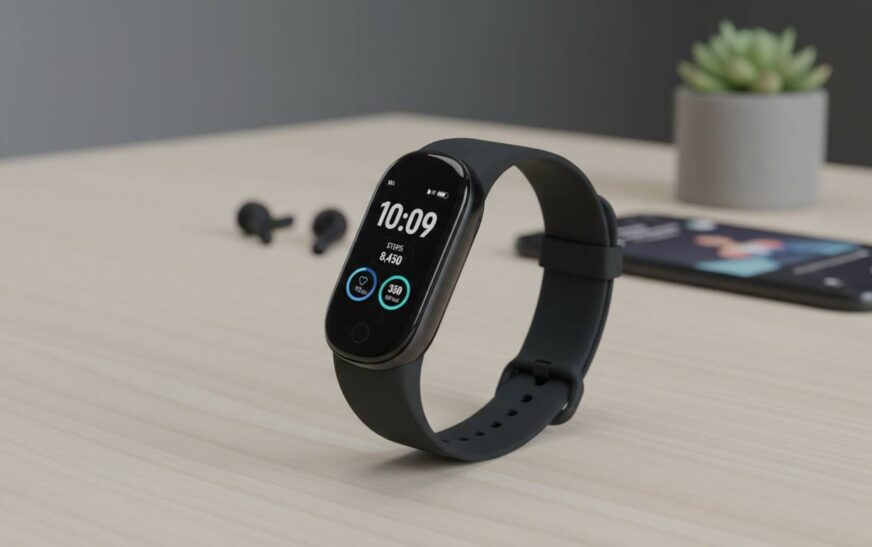

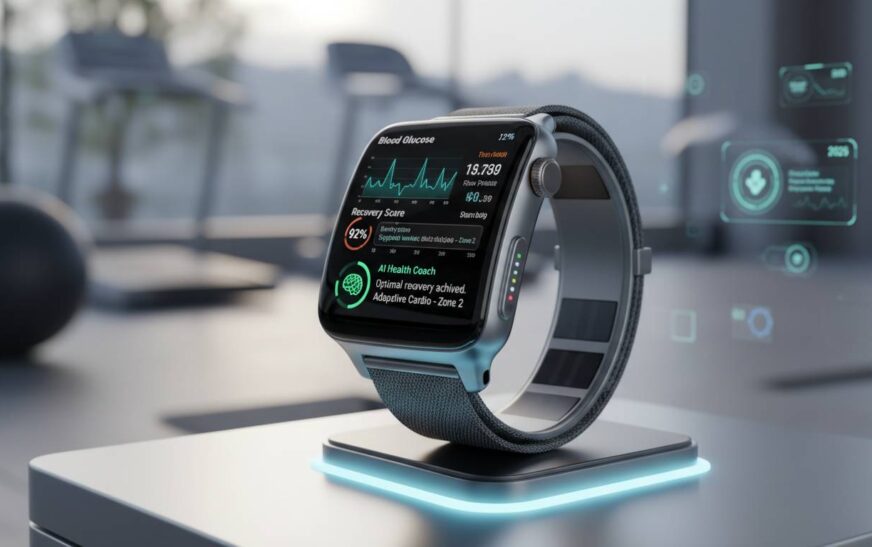
Smartwatches have moved beyond simple step counting. The latest devices track heart rhythm, analyze sleep stages, measure blood oxygen, and can even flag potential health issues before they become serious. Whether you’re training for something specific or just want more insight into how your body functions, the right watch can genuinely change how you think about your health.
After testing the newest releases from Apple, Garmin, Samsung, Fitbit, and others over several months, here’s my take on what actually works.
Apple Watch Series 10 – Best Overall
Apple’s latest flagship brings meaningful upgrades. The 46mm case gives you the biggest display yet, which matters when you’re trying to read metrics mid-workout. The titanium version weighs just 42 grams—lighter than before, and you notice the difference over a full day.
The sleep apnea detection is genuinely new, using the accelerometer to monitor breathing overnight and flag potential issues. It won’t replace a sleep study, but it might prompt you to ask your doctor about something you otherwise wouldn’t have noticed. You also get the ECG app, blood oxygen sensor, and always-on altimeter.
The depth and water temperature sensors make this actually useful for swimming and snorkeling, not just splashing around. Training load measurement helps runners and cyclists understand whether they’re overdoing it or can push harder.
Battery is still the weak spot. I got around 36 hours with normal use—better than older Apple Watches, but you’re charging every day or two. Low Power Mode stretches it to 72 hours if you sacrifice some features. Fast charging helps: 0 to 80% in about 45 minutes.
At $399, it’s expensive, but the Apple Health integration is genuinely useful if you already use an iPhone. Having everything in one place makes it easier to actually spot trends over time.
Garmin Forerunner 965 – Best for Serious Runners and Triathletes
If your thing is running, cycling, or triathlons, this is the watch to get. Garmin builds these for people who actually compete, and the features reflect that.
Multi-band GPS locks on fast and stays accurate even in tight urban areas or under trees. Battery life is absurd: up to 23 days in smartwatch mode, 31 hours with GPS running. You could do a 100-mile ultra without worrying about charging.
The training readiness score looks at sleep, recovery, HRV, and what you’ve been training lately to tell you whether you should go hard or take it easy. This alone has saved plenty of people from overtraining injuries.
Body Battery combines HRV, resting heart rate, and sleep into a daily energy score. I was skeptical at first, but after a few weeks, I found the predictions surprisingly accurate.
The 1.4-inch AMOLED screen is bright and easy to read in direct sun, fixing the old Garmin problem. Titanium bezel adds durability without much weight.
At $599, it’s $200 less than the similar Fenix 7 Pro while delivering nearly the same performance. For most athletes, the value is clear.
Samsung Galaxy Watch Ultra – Best Premium Android Option
Samsung’s most ambitious fitness watch yet, built to compete with Apple Watch Ultra while working better with Android.
The titanium case and 10ATM water resistance handle serious conditions—diving, mountaineering, whatever. The Functional Threshold Power metric tracks cycling performance, and personalized heart rate zones adjust based on your actual fitness, not just age formulas.
The AI energy score combines sleep, activity, and heart rate into a daily readiness rating. Sleep tracking has improved a lot, now offering consistency scores and tailored recommendations.
The double-pinch gesture to answer calls or control music is genuinely useful when you’re mid-workout and can’t touch the screen.
Battery goes up to 60 hours normally, 80 in power-saving mode. That’s solid for a premium smartwatch. Quick charge gives you 8 hours from 10 minutes.
At $699, it’s not for casual buyers. But if you want the most capable Android fitness watch and price isn’t the concern, this is it.
Fitbit Sense 2 – Best for Stress Management and Wellness
Fitbit has always leaned into holistic wellness, and the Sense 2 leans harder into mental health than most watches.
The cEDA sensor detects stress responses through skin conductivity changes. Over time it learns your patterns and can alert you when stress seems elevated, prompting breathing exercises or a break.
You get ECG and irregular heart rhythm notifications, SpO2 tracking during sleep, and skin temperature for health trends. The medical-grade heart monitoring is legit.
Battery life genuinely impresses at over 6 days with always-on display—way longer than Apple or Samsung. If you hate daily charging, this matters.
Google integration has improved since the acquisition: Maps, Assistant, YouTube Music all work now. But some bugs crept in during the transition, which is annoying.
At $249, it’s a good value if stress management matters more to you than raw sports performance.
Google Pixel Watch 3 – Best Google Ecosystem Integration
Google’s third try shows real improvement, fixing battery life and size complaints while adding useful fitness features.
The 45mm case fits larger wrists now, and the OLED screen is bright outdoors. Google’s machine learning has improved heart rate accuracy during hard exercise—it’s closer to dedicated fitness watches than before.
Running form insights analyze stride, cadence, vertical oscillation, and ground contact time using Google’s motion database. Serious runners can actually use this to improve without extra sensors.
Sleep tracking works well with Google Fit, auto-detecting naps and giving detailed stage analysis. Morning Brief summarizes recovery and suggests goals.
Missing the loss detection and recovery features from earlier Fitbit devices is a real loss for athletes. Google seems to be positioning this as a lifestyle device with fitness features, not a sports watch.
Battery hits about 24 hours with always-on, matching Apple but behind Garmin and Fitbit. If you’re deep in Google’s ecosystem, this works well.
Garmin Epix Pro – Best Premium Multisport Watch
Garmin’s premium option: sapphire crystal, titanium, and everything you could want in a daily-wear smartwatch.
Color TOPO maps come preloaded for multiple regions—valuable for hikers and travelers who want turn-by-turn navigation without a phone. The LED flashlight built into the watch face is surprisingly handy.
Training readiness and load focus help balance training and recovery. It tracks load over 7-day and 28-day periods, showing when you’re accumulating too much fatigue or have capacity for more.
Battery: up to 22 days in smartwatch mode, 31 hours with full GPS. The solar-charging sapphire edition extends this further.
The 51mm case is big, but Garmin offers 47mm and 42mm versions if you prefer smaller. Same features across sizes.
At $799 for the 51mm solar version, it’s expensive. But if you need everything this offers, alternatives don’t come close.
Whoop 4.0 – Best for Quantified Self Enthusiasts
Whoop takes a different approach: recovery optimization over activity tracking. The 4.0 keeps the band-style design that works well 24/7.
The daily Strain score measures cardiovascular exertion, while Recovery tells you whether your body is ready based on sleep, HRV, and resting heart rate. The idea is matching your activities to your recovery state.
The journal lets you log alcohol, caffeine, stress, supplements—then shows correlations with recovery over time. Some patterns are genuinely surprising.
Battery lasts about 5 days. No display means you always need your phone for details, which is either fine or annoying depending on your view.
At $239 annually with no upfront hardware cost, this appeals to people who want continuous physiological monitoring without the notification noise of regular smartwatches.
Amazfit GTR 4 – Best Budget Fitness Watch
Amazfit keeps delivering real value. The GTR 4 has features you’d find in watches costing twice as much, for a fraction of the price.
Dual-band GPS works well at this price point. Fourteen-day battery with always-on display means you forget about charging. Ceramic bezel and sapphire glass add durability without the premium cost.
Health tracking covers 24/7 heart rate, blood oxygen, stress, and sleep. The PAI system converts daily activity into one score encouraging consistent movement.
The Zepp app isn’t as polished as Apple Health or Garmin Connect, but it has the data and syncs with both ecosystems.
At about $199, you get core fitness tracking without spending hundreds.
Garmin Vivoactive 5 – Best Everyday Fitness Tracker
The Vivoactive 5 sits between fitness tracker and smartwatch—robust health monitoring in a slim, comfortable design.
On-wrist sleep coaching gives personalized recommendations based on your patterns and activity. It’s an active advisor, not just a passive tracker.
Body Battery, stress tracking, women’s health, hydration reminders—comprehensive wellness. Animated workouts guide you through exercises on the display.
Battery hits 11 days in smartwatch mode, one of the longest-lasting options with full smartphone notifications.
At $299, it’s for people who want fitness features without the bulk of dedicated sports watches.
How We Tested
Testing smartwatches means more than wearing them around. Our process spans weeks with controlled comparisons against medical-grade equipment.
Heart rate gets tested across activities—resting, walking, running at different intensities, cycling, lifting—comparing against chest strap monitors, which are more accurate than optical wrist sensors.
GPS accuracy comes from outdoor runs and rides against known distances, noting acquisition speed and performance in tough conditions.
Sleep tracking validates against user reports and dedicated sleep equipment where possible, checking whether stages match expectations.
Battery testing uses standardized scenarios: always-on with notifications, workout tracking with GPS, pure smartwatch mode.
We also consider real-world comfort, water resistance reliability, screen readability in different light, and companion app quality.
What to Look for in a Fitness Smartwatch
Heart Rate Monitoring – Optical sensors have improved, but accuracy still varies during intense movement. If precision matters for training, look at watches with multiple LEDs and skin temperature compensation. Garmin and Whoop lead during vigorous exercise; Apple and Samsung work well for moderate activities.
Sleep Tracking – Most premium watches now detect REM, light, and deep stages. Accuracy varies—treat these as estimates, not medical data. Fitbit and Garmin offer the most detailed analysis with recommendations that actually help.
GPS and Sports Tracking – Built-in GPS is standard, but quality differs. Multi-band GPS (Garmin, some Samsung) performs better in tough environments. Think about which sports you actually track—some watches favor running, others cycling or swimming.
Battery Life – This changes how you use the watch. Daily charging often means the watch sits on the nightstand during recovery days, missing data. If continuous monitoring matters, prioritize multi-day battery.
Health Sensors – Beyond heart rate and sleep, consider what you need: ECG for rhythm, SpO2 for blood oxygen, temperature for cycle tracking, altimeter for elevation.
Conclusion
The right smartwatch depends on your needs, budget, and what ecosystem you’re already in. iPhone users get the most polished experience with Apple Watch Series 10, with comprehensive health monitoring and good app support. Android users have strong options in Samsung Galaxy Watch Ultra and Google Pixel Watch 3—Samsung’s hardware or Google’s software integration.
For serious athletes, Garmin leads. Forerunner 965 is exceptional value for runners and triathletes; Epix Pro offers the most features for multisport adventurers. Vivoactive 5 works for people who want robust tracking without sports-watch complexity.
Budget buyers get good value from Amazfit GTR 4 and Fitbit Sense 2, both delivering core features at accessible prices. Whoop appeals to people focused specifically on recovery optimization.
The key isn’t picking the “best” overall—it’s choosing what you’ll actually use daily. Consider which features match your real patterns, not just what sounds impressive in marketing.
FAQs
Which smartwatch has the most accurate heart rate monitoring?
Garmin watches consistently rank among the most accurate during exercise, using multi-LED sensors and Firstbeat analytics. Chest straps still beat wrist sensors for serious training.
Is Apple Watch or Garmin better for fitness tracking?
Garmin offers more detailed sports metrics and better battery life, better for athletes. Apple provides a more polished smart experience with better apps. Your priority determines the choice.
How much should I spend on a fitness-focused smartwatch?
Expect $200-600 for comprehensive tracking. Budget options ($100-200) handle basics well. Premium devices ($600+) have advanced features most people won’t use. Mid-range around $300-400 often hits the sweet spot.
Can smartwatches detect health problems?
They can flag potential issues like irregular heart rhythms (ECG), low blood oxygen, and sleep apnea indicators. They’re not medical devices and can’t diagnose conditions. Always consult healthcare professionals for concerns.
Do I need a smartwatch if I have a fitness tracker?
Smartwatches add smartphone integration, apps, and more sophisticated health data beyond step counts. If you want notifications, navigation, or detailed metrics, a smartwatch is more complete.
How last do smartwatches typically last?
Quality smartwatches last 3-5 years with proper care. Battery degradation eventually reduces runtime, and software updates may stop after several years. Choosing a brand with good update support extends usable life.