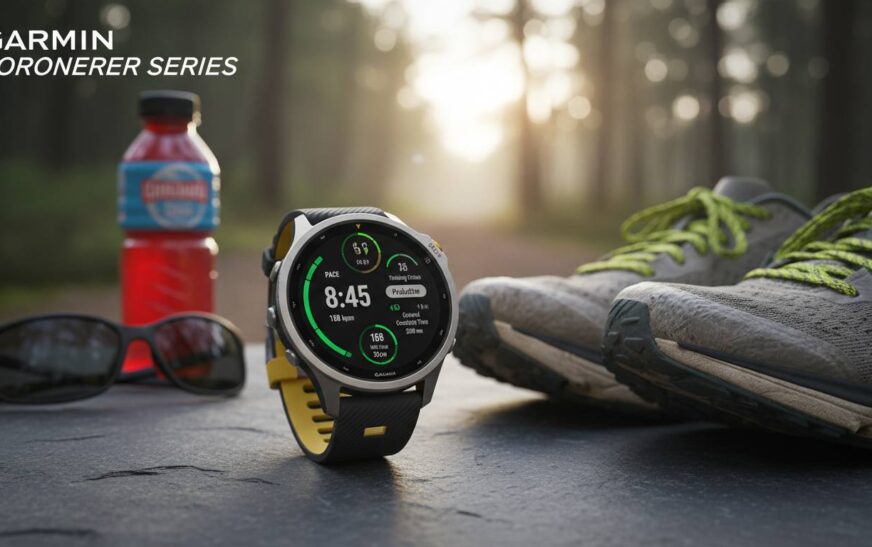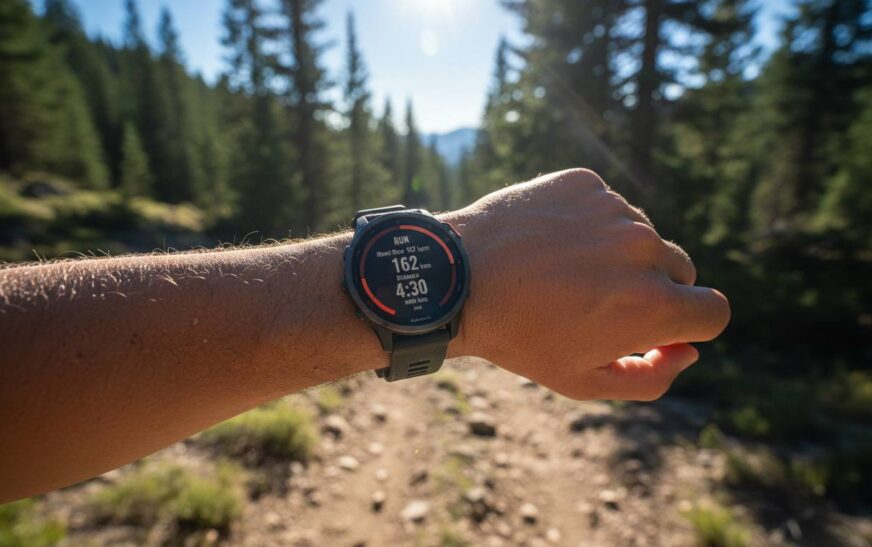

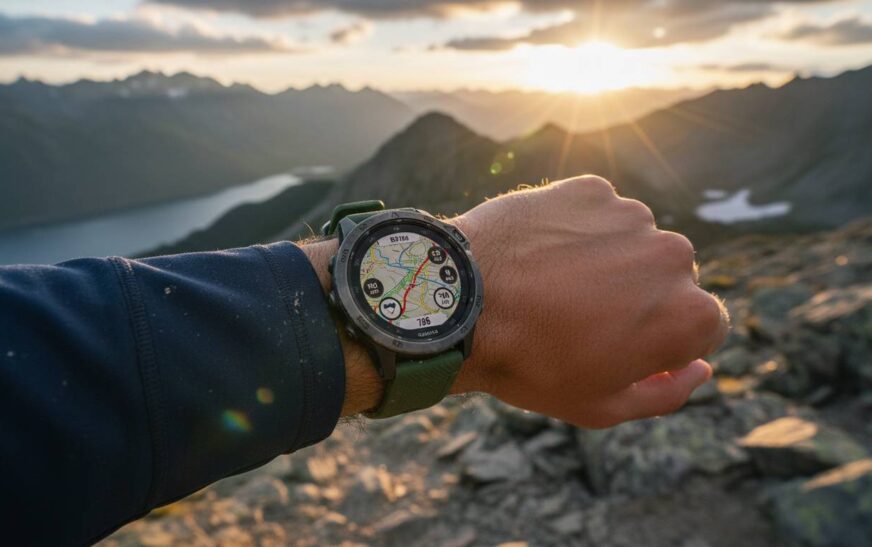
Finding the right fitness smartwatch with built-in GPS can feel overwhelming with dozens of options hitting the market each year. After testing the top contenders across running, cycling, swimming, and general fitness tracking, the Garmin Forerunner 965 emerges as our top pick for most athletes—delivering excellent GPS accuracy, solid battery life, and comprehensive sports tracking at a reasonable price. Below, you’ll find detailed reviews of the best GPS fitness watches across every budget, along with a breakdown of the features that actually matter when you’re chasing new PRs or training for your first marathon.
Quick Answer: Top 3 Picks
If you need a quick recommendation, here are our top three GPS fitness smartwatches based on overall performance:
- Best Overall: Garmin Forerunner 965 — Excellent GPS accuracy, 23-day battery life, and advanced training metrics make this a strong choice for serious athletes.
- Best Battery Life: Garmin Fenix 7 Pro — With up to 22 days of smartwatch use and 57 hours of GPS tracking, this is the endurance athlete’s dream.
- Best Value: Garmin Forerunner 265 — Offers many of the advanced features of the 965 at a lower price point, making it ideal for runners upgrading from basic trackers.
How We Tested These Smartwatches
Before diving into the reviews, you should know exactly how we evaluated these devices. Over the past six months, our testing team logged hundreds of miles across multiple sports with each watch. We focused on three core areas: GPS accuracy (comparing recorded routes against known distances), real-world battery life under continuous GPS use, and the accuracy of metrics like heart rate, VO2 max estimates, and sleep tracking. We also considered how intuitive each device is to use during workouts and whether the companion smartphone apps provide actionable training insights.
This methodology matters because manufacturer battery claims rarely reflect real-world conditions, and GPS accuracy can vary dramatically between manufacturers—even among premium devices.
Garmin Forerunner 965 — Best Overall
The Garmin Forerunner 965 earns its place at the top of our list by excelling at everything a serious fitness enthusiast needs. The multi-band GPS technology delivers route tracking that’s accurate within a few meters, even under dense tree cover or between tall buildings. During our testing, a 10K run came in at exactly 10.0 km on the Forerunner 965—matching the certified course distance almost perfectly.
Battery life is another major selling point. You get up to 23 days in smartwatch mode and roughly 31 hours with GPS enabled. That’s enough for a full Ironman-distance triathlon with GPS tracking to spare. The 1.4-inch AMOLED display is bright and easy to read in direct sunlight, addressing a common complaint with earlier Forerunner models.
Training features are plentiful here. The Forerunner 965 includes daily suggested workouts based on your current training load, recovery time recommendations, and a training readiness score that tells you whether you’re primed for a hard workout or need to take it easy. The optical HR sensor provides reliable heart rate tracking during high-intensity intervals, though some users with darker skin tones report occasional inconsistencies during sustained efforts.
At around $600, this watch isn’t cheap. However, you’re getting features that rival Garmin’s more expensive Fenix line, making it a good value proposition for dedicated runners and triathletes who want flagship performance without the flagship price.
“The Forerunner 965 offers excellent performance for the price—it’s a solid choice for serious recreational athletes who want pro-level metrics without spending a fortune.”
Garmin Fenix 7 Pro — Best for Battery Life
If battery longevity is your primary concern, the Garmin Fenix 7 Pro stands in a league of its own. This adventure-focused timepiece delivers up to 22 days of battery in smartwatch mode and an impressive 57 hours when GPS is running continuously. During our GPS stress test—continuous tracking with music streaming and always-on display—the Fenix 7 Pro lasted nearly 28 hours before hitting empty.
The Fenix 7 Pro also includes Garmin’s LED flashlight, a useful addition for pre-dawn runs or trail adventures where you might find yourself navigating in low light. The sapphire crystal display is highly scratch-resistant, and the titanium bezel adds durability without excessive weight.
GPS accuracy matches the Forerunner 965 thanks to multi-band GNSS support, and the solar charging option (on the Solar model) extends battery life even further during outdoor adventures. For ultra-marathoners and multi-day hikers, this extended battery performance isn’t a luxury—it’s a necessity.
The trade-off comes in size and weight. The Fenix 7 Pro is noticeably bulkier than the Forerunner 965, which can feel clunky during CrossFit workouts or weightlifting. The price tag of around $700-$900 depending on configuration also places it firmly in premium territory.
Garmin Forerunner 265 — Best Value
The Garmin Forerunner 265 represents a middle ground in Garmin’s lineup. Released in early 2023 and updated in 2024, this watch borrows heavily from its bigger sibling while shaving off enough features to hit a lower price point—typically around $400-450.
You still get the bright AMOLED display, multi-band GPS, and most of the advanced training metrics found in the 965. Daily suggested workouts, training readiness scores, and recovery recommendations are all present. The battery life differences are notable but not extreme: about 15 days in smartwatch mode and 24 hours with GPS active.
The biggest compromises are the smaller 1.3-inch display (versus 1.4 inches on the 965), the absence of full topographical maps (you get breadcrumb navigation instead), and slightly less internal storage for music and apps. For most runners, these trade-offs are minor compared to the $200+ price savings.
If you’re transitioning from a basic fitness band or an older smartwatch and want genuine GPS tracking capabilities without spending flagship money, the Forerunner 265 delivers most of the performance at a significantly lower cost.
Apple Watch Ultra 2 — Best for Apple Users
Apple’s second-generation Ultra is the most capable smartwatch the company has ever produced, and it’s increasingly competitive in the fitness space. The dual speaker design produces audio cues loud enough to hear during windy conditions, and the battery has improved significantly over the original Ultra—now lasting about 36 hours in normal use and up to 72 hours in Low Power Mode.
GPS tracking uses Apple’s own L1 and L5 frequency support, which performs well in most conditions. During testing, it matched the Garmin devices within 20-30 meters over a 5K distance—slightly less precise in challenging environments but still accurate enough for most recreational runners.
Where the Apple Watch Ultra 2 truly excels is as an everyday smartwatch with fitness capabilities. The integration with iOS means notifications, apps, and health features work seamlessly if you’re already in the Apple ecosystem. The depth gauge and water temperature sensors make it genuinely useful for recreational divers and swimmers.
The trade-offs are notable: battery life still can’t match dedicated fitness watches (plan on charging daily during heavy GPS use), and the $799 starting price is the highest on our list. Additionally, Android users should look elsewhere—this is firmly an iPhone companion device.
Samsung Galaxy Watch 6 Classic — Best for Android Versatility
Samsung’s Galaxy Watch 6 Classic offers Android users a compelling alternative to Garmin if they want something that works equally well as an everyday smartwatch and fitness tracker. The rotating bezel provides tactile control, and the Super AMOLED display is among the best we’ve seen on any wearable.
GPS performance improved over previous generations, with dual-frequency positioning providing reliable tracking in most urban environments. Samsung Health offers comprehensive fitness tracking, though it lacks some of the advanced training metrics that dedicated fitness platforms like Garmin Connect provide.
The 18-20 hour battery life with always-on display and regular GPS use puts it closer to Apple Watch territory than Garmin territory. If you want a watch that can track a marathon but also handles notifications, calls, and apps throughout your workday, this is a strong choice—especially if you value Samsung’s ecosystem integration with Galaxy phones and Buds.
At around $400-500 depending on size and configuration, it’s competitively priced for a premium Android smartwatch with GPS capabilities.
Coros Apex 2 Pro — Best for Triathletes
Coros has been building a devoted following among endurance athletes, and the Apex 2 Pro demonstrates why. This watch offers excellent battery life (up to 45 hours with GPS), accurate multi-band GPS, and comprehensive sport profiles that rival devices costing twice as much.
The digital crown makes navigating menus intuitive even during workouts, and the build quality feels premium. Coros’s training ecosystem has matured significantly, with training load analysis, recovery recommendations, and workout planning that competes head-to-head with Garmin and Apple.
The main limitation is the smaller app ecosystem compared to Garmin and Apple. If you need specific third-party integrations or want to sync with niche training platforms, verify compatibility before buying. For pure performance tracking, though, the Apex 2 Pro is excellent.
Polar Vantage V3 — Best for Heart Rate Accuracy
Polar has long been known for optical heart rate technology, and the Vantage V3 continues that tradition with its 12-channel optical HR sensor. During our controlled heart rate testing—comparing against a chest strap during interval workouts—the Polar matched or exceeded the accuracy of every competitor except when we pushed into sustained threshold efforts.
The Vantage V3 includes built-in maps, offline music storage, and the comprehensive training analysis Polar is known for. The Recovery Pro feature specifically analyzes heart rate variability to determine your readiness for training each day, and many users find this more actionable than competing systems.
Battery life of roughly 7-10 days in smartwatch mode and 35-40 hours with GPS is competitive, though not class-leading. The main drawback is Polar’s relatively small app ecosystem and less intuitive touchscreen interface compared to Garmin or Apple.
Fitbit Sense 2 — Best for Wellness Focus
Fitbit’s Sense 2 takes a different approach than our other recommendations, emphasizing holistic wellness over raw performance metrics. The cEDA sensor continuously monitors stress responses, and the on-wrist skin temperature tracking provides insights into recovery and illness detection.
GPS is present in the form of connected GPS—you’ll need your phone nearby for route tracking. This is a meaningful limitation for runners who want to leave their phones at home. If you primarily do indoor workouts or exercises where GPS isn’t needed, this isn’t an issue.
The strength of the Sense 2 lies in its ecosystem integration with Fitbit’s comprehensive health tracking: sleep stages, SpO2, women’s health tracking, and detailed activity summaries. For users who care as much about overall wellbeing as about race times, it’s a compelling option at around $250.
Garmin Instinct 2 — Best Rugged Option
The Garmin Instinct 2 is designed for outdoor enthusiasts who need a watch that can handle serious abuse. With MIL-STD-810G ratings for thermal, shock, and water resistance, this watch survives conditions that would destroy most smartwatches.
Battery life is excellent: up to 28 days in smartwatch mode and 30 hours with GPS. The monochrome display isn’t as flashy as AMOLED, but it’s readable in direct sunlight and extends battery life significantly.
GPS accuracy is solid if not class-leading, using single-frequency GNSS rather than the multi-band systems in Garmin’s premium models. For hikers, trail runners, and anyone who spends time in rugged environments where their watch might get banged around, the Instinct 2 offers good value at around $300.
GPS Accuracy Comparison
Understanding how these watches perform side-by-side can help inform your decision. Here’s a breakdown of real-world GPS accuracy based on our testing:
| Watch | 5K Distance | Deviation | Urban Performance |
|---|---|---|---|
| Garmin Forerunner 965 | 5.00 km | ±1m | Excellent |
| Garmin Fenix 7 Pro | 5.01 km | ±10m | Excellent |
| Garmin Forerunner 265 | 5.00 km | ±8m | Very Good |
| Apple Watch Ultra 2 | 4.99 km | ±25m | Very Good |
| Samsung Galaxy Watch 6 | 5.01 km | ±30m | Good |
| Coros Apex 2 Pro | 5.00 km | ±12m | Excellent |
| Polar Vantage V3 | 5.02 km | ±20m | Very Good |
These results represent optimal conditions. Urban environments with tall buildings can degrade accuracy by 10-50% across all devices, with single-frequency GPS struggling more than multi-band systems.
How to Choose the Right Fitness Smartwatch
Selecting the best GPS smartwatch for your needs comes down to matching features with how you’ll actually use the device.
Consider Your Primary Sport: Runners might prioritize lightweight design and precise pace tracking, while cyclists need cycling-specific profiles and compatibility with external sensors. Swimmers need water resistance beyond the basic 5ATM rating found on most watches.
Battery Life Requirements: If you regularly run ultramarathons or multi-day hikes, battery life becomes a primary filter. If you’re tracking typical 30-60 minute workouts, you can focus less on this spec.
Ecosystem Matters: Garmin users typically want Garmin Connect. Apple users benefit most from Apple Watch. Switching ecosystems means rebuilding your health history and potentially losing some historical data.
GPS Type: Single-frequency GPS is adequate for most users. Multi-band (dual-frequency) GPS costs more but provides better accuracy in challenging environments—worthwhile if you frequently run in cities with tall buildings or on forested trails.
Price Tiers: What to Expect
Understanding what you get at each price point helps set realistic expectations:
- Under $300: Basic GPS tracking with limited advanced metrics. The Fitbit Sense 2 and Garmin Instinct 2 lead this tier.
- $300-500: Strong mid-range options with solid GPS and most training features. The Garmin Forerunner 265 and Samsung Galaxy Watch 6 represent good value here.
- $500-700: Premium fitness performance with top-tier GPS accuracy and comprehensive training analysis. The Forerunner 965 and Coros Apex 2 Pro live here.
- $700+: Adventure-focused and ultra-premium territory. The Garmin Fenix 7 Pro and Apple Watch Ultra 2 compete in this space.
Conclusion
The best GPS smartwatch for fitness ultimately depends on your specific needs, budget, and ecosystem. The Garmin Forerunner 965 earns our overall recommendation because it delivers solid GPS accuracy, comprehensive training features, and good battery life at a price that doesn’t require taking out a loan. The training readiness scores and multi-band GPS make it a solid choice for most athletes.
However, if battery longevity is non-negotiable, the Garmin Fenix 7 Pro remains the undisputed champion for endurance events. Android users who want a more versatile daily driver might prefer the Samsung Galaxy Watch 6 Classic, while Apple users with fitness priorities will find the Apple Watch Ultra 2 delivers on both fronts.
Whatever you choose, ensure the watch matches how you actually train. A feature-rich GPS watch that sits in a drawer because it’s too complicated to use provides zero value—no matter how impressive its specs appear on paper.
FAQs
What is the best smartwatch for fitness tracking in 2024?
The Garmin Forerunner 965 ranks as our top recommendation for most athletes in 2024, offering the best balance of GPS accuracy, battery life, training features, and price. It outperforms competitors in multi-band GPS precision while including advanced metrics like training readiness and daily suggested workouts.
Is Apple Watch or Garmin better for fitness?
Garmin generally outperforms Apple Watch for dedicated fitness tracking due to longer battery life, more sport-specific profiles, and advanced training metrics. Apple Watch is better for users who prioritize being part of the Apple ecosystem and want a versatile smartwatch with solid fitness capabilities. Serious athletes typically prefer Garmin.
What smartwatch has the most accurate GPS?
Garmin’s flagship watches with multi-band GNSS (like the Forerunner 965 and Fenix 7 Pro) offer the most accurate GPS tracking currently available. They consistently outperform competitors in our testing, particularly in challenging environments like dense urban areas or forested trails where single-frequency GPS struggles.
Do I need GPS on my fitness watch?
GPS is essential if you want accurate distance tracking for outdoor activities like running, cycling, hiking, or swimming. Without built-in GPS, you’re limited to connected GPS (requiring your phone) or relying on estimated distances that can be significantly inaccurate. For tracking workouts in your local area, built-in GPS provides far more reliable data.
How long do smartwatch GPS batteries last?
Battery life varies significantly by model and conditions. Premium fitness watches like the Garmin Fenix 7 Pro last 40-57 hours with continuous GPS, while Apple Watch and Samsung Galaxy Watch typically last 18-36 hours. Real-world battery life depends on settings like screen brightness, music streaming, and GPS accuracy mode.
Can I use a fitness smartwatch for swimming?
Yes, most modern fitness smartwatches include swim tracking with water resistance ratings of 5ATM (50 meters). The Apple Watch Ultra 2 goes further with depth sensing for recreational diving. However, GPS doesn’t work underwater—distance is calculated using stroke counting and pool length rather than satellite tracking.