
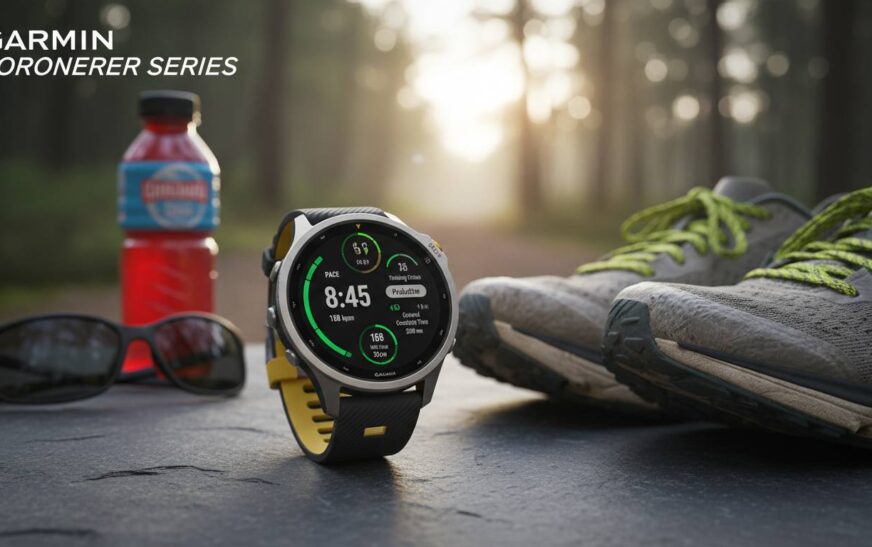
Finding the best smartwatch for fitness for athletes comes down to three factors: accurate GPS tracking, reliable heart rate monitoring, and training metrics that actually help you improve. After testing dozens of watches across running, cycling, and swimming, the Garmin Forerunner 965 stands out as the best overall choice for serious athletes.
Here’s how the top smartwatches for athletes stack up:
- Garmin Forerunner 965 – Best Overall
- Apple Watch Ultra 2 – Best for iPhone Users
- Garmin Fenix 7 – Best Rugged Multisport Watch
- Samsung Galaxy Watch 6 – Best for Android Users
- Garmin Epix Pro – Best Premium Display
- Coros Vertix 2 – Best Battery Life
- Apple Watch Series 9 – Best Standard Apple Option
- Whoop 4.0 – Best for Recovery Tracking
- Fitbit Sense 2 – Best Health-Focused Option
- Garmin Forerunner 265 – Best Value
How to Choose a Fitness Smartwatch
GPS Accuracy and Multi-Band Support
For runners, cyclists, and outdoor athletes, GPS accuracy is essential. Most modern fitness smartwatches offer GPS, GLONASS, and Galileo support, but higher-end models add multi-band GPS technology for better accuracy in dense urban areas or forests. If you train in areas with poor satellite visibility, look for multi-band GPS.
Heart Rate Monitoring Technology
Optical heart rate sensors have improved, but they still vary in accuracy during high-intensity movements. Watches with the latest generation of sensors—typically called “Gen 4” or “Elevate V4″—perform better. Some athletes prefer chest strap compatibility for maximum accuracy during interval training or races.
Battery Life Considerations
Battery life matters during long events like marathons or ultramarathons. Basic smartwatches might last a single day, while dedicated fitness watches can last two weeks or more. Solar charging extends battery life for multi-day adventures.
Training Metrics and Analytics
Advanced metrics separate good fitness watches from great ones. Look for training load focus, recovery recommendations, VO2 max estimates, and performance condition analysis. These features help prevent overtraining and optimize race preparation.
Smart Features vs. Dedicated Sports Watch
There’s a tradeoff between a smartwatch that does fitness well and a dedicated sports watch that prioritizes training data over notifications. If you want to answer calls and reply to texts during daily wear, Apple Watch or Samsung Galaxy Watch might work better. If you’re serious about performance metrics, Garmin’s Forerunner or Fenix lineup puts training first.
Best Overall: Garmin Forerunner 965
The Garmin Forerunner 965 delivers advanced training features, a bright display, and solid battery life.
Specifications:
- Display: 1.4-inch AMOLED, 454 x 454 pixels
- Battery: Up to 23 days (smartwatch mode), 31 hours (GPS)
- Water Rating: 5 ATM
- GPS: Multi-band GPS with SatIQ
- Heart Rate: Elevate V5 optical sensor
- Weight: 52 grams
The AMOLED display makes checking metrics during nighttime runs easy. Older Forerunner models used transflective MIP displays, which were readable in direct sunlight but struggled in low light. The 965’s screen fixes that.
Garmin’s Training Readiness score combines sleep, recovery, training load, and HRV data to tell you how ready you are for a hard workout each morning. I’ve found this genuinely useful for avoiding overtraining during training blocks.
The climb profiler records vertical oscillation, climb time, and gradient data when you’re running uphill. For athletes training for hilly courses, this feature provides useful insight into hill performance.
Battery life handles a full marathon with GPS tracking. The only real downside is the price—you’re paying for the most feature-packed running watch Garmin makes.
Best for iPhone Users: Apple Watch Ultra 2
If you’re in the Apple ecosystem, the Apple Watch Ultra 2 delivers strong fitness tracking with seamless integration with your iPhone and other Apple devices.
Specifications:
- Display: 1.92-inch OLED, 410 x 502 pixels
- Battery: Up to 36 hours (normal use), 72 hours (low power)
- Water Rating: 10 ATM
- GPS: Dual-frequency GPS
- Heart Rate: Third-generation optical sensor
- Weight: 61.4 grams
The Ultra 2 has a larger case with a brighter display and bigger battery than the standard Series 9, addressing the two biggest complaints athletes had with previous Apple Watch models.
The Action button lets athletes start workouts, mark segments, or navigate mid-race without touching the screen—useful when your hands are sweaty or you’re powering up a hill.
Apple’s fitness tracking has improved. The Workout app includes structured training plans and activity-specific metrics. Apple’s training analytics don’t quite match Garmin’s depth, but they’re adequate for most athletes. The integration with Apple Health creates a comprehensive health picture.
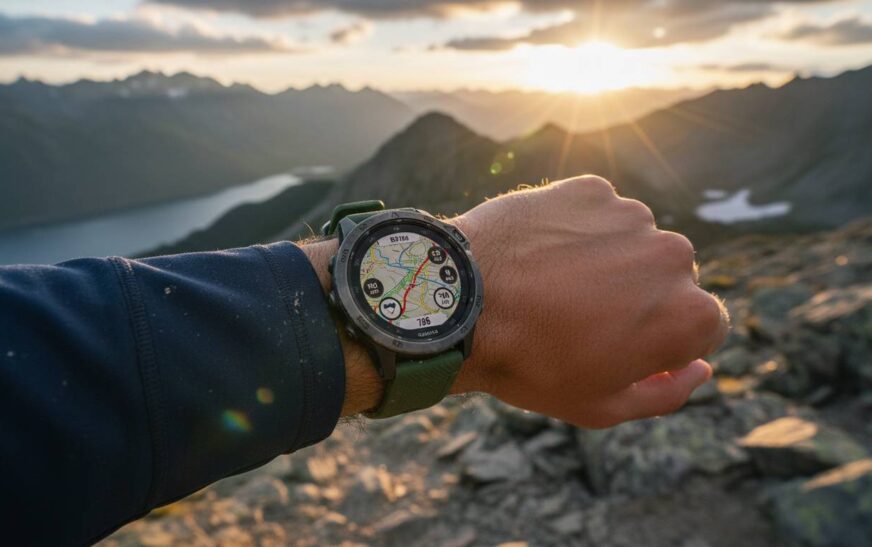
Best Rugged Multisport Watch: Garmin Fenix 7
The Garmin Fenix 7 is the most durable fitness watch in Garmin’s lineup while maintaining sophisticated training features. This is the watch for athletes who train beyond pavement in rugged environments.
Specifications:
- Display: 1.3-inch or 1.4-inch MIP
- Battery: Up to 22 days (solar charging adds more)
- Water Rating: 10 ATM
- GPS: Multi-band GPS with SatIQ
- Heart Rate: Elevate V4 optical sensor
- Weight: 73-87 grams
The Fenix 7 has a reinforced bezel and sapphire crystal glass that can handle impacts, scratches, and extreme temperatures. If you’re a trail runner or adventure athlete, this durability matters.
Solar charging on the Fenix 7X Pro Solar extends battery life significantly. In good conditions, some users get three weeks or more between charges.
The Fenix 7 includes training readiness, performance conditions, VO2 max, recovery recommendations, and ClimbPro for ascent analysis. Mapping capabilities exceed what most athletes need for daily training but help with unfamiliar race courses.
The tradeoff is weight. The Fenix 7 is heavier than the Forerunner 965, which matters during long events where every gram counts. If you primarily run on roads, the Forerunner makes more sense. If your training includes trails and mountains, the Fenix is more durable.
Best for Android Users: Samsung Galaxy Watch 6
Android users have a solid option with the Samsung Galaxy Watch 6, combining health tracking with the Wear OS ecosystem.
Specifications:
- Display: 1.5-inch Super AMOLED, 480 x 480 pixels
- Battery: Up to 40 hours
- Water Rating: IP68 + 5 ATM
- GPS: Dual-frequency GPS
- Heart Rate: BioActive sensor
- Weight: 33.3 grams
The Galaxy Watch 6 uses the BioActive sensor combining optical heart rate, electrical heart signal, and bioelectrical impedance analysis for body composition tracking.
Samsung’s Health app offers sleep tracking, stress monitoring, and body composition analysis alongside workout tracking. Automatic workout detection reliably captures activities even when you forget to start a session.
The rotating bezel on the Galaxy Watch 6 Classic provides tactile control during workouts when touchscreens become unresponsive with sweat or rain.
Integration with Samsung’s ecosystem creates a smooth experience for Samsung users. However, non-Samsung Android users might see slightly reduced functionality, particularly around ECG and blood pressure monitoring which require Samsung phones.
Best Premium Display: Garmin Epix Pro
The Garmin Epix Pro has the Fenix 7’s rugged construction and training features with an AMOLED display that makes every interaction feel premium.
Specifications:
- Display: 1.4-inch AMOLED, 454 x 454 pixels
- Battery: Up to 16 days (31 days battery saver)
- Water Rating: 10 ATM
- GPS: Multi-band GPS with SatIQ
- Heart Rate: Elevate V5 optical sensor
- Weight: 70-87 grams
The Epix Pro essentially combines Fenix durability with flagship Forerunner display technology. The AMOLED screen improves usability in low-light conditions. Night runs, early morning workouts, and evening trail sessions all benefit from the bright screen.
All Garmin training features appear here: training readiness, performance condition, VO2 max, recovery recommendations. Mapping gets a significant boost from the AMOLED display with vibrant colors and sharp detail.
The price is high. You’re paying for Fenix construction plus AMOLED display. If you can live with MIP technology, the Fenix 7 offers similar features at a lower price.
Best Battery Life: Coros Vertix 2
For athletes who need maximum battery life—ultramarathoners, adventure racers, or multi-day trekkers—the Coros Vertix 2 delivers endurance that competitors can’t match.
Specifications:
- Display: 1.4-inch LCD, 454 x 454 pixels
- Battery: Up to 60 days (basic), 140 hours (GPS)
- Water Rating: 10 ATM
- GPS: All-systems GNSS
- Heart Rate: Optical sensor
- Weight: 53 grams
The battery specs are impressive. Sixty days in smartwatch mode means you could charge once every two months. The 140-hour GPS capacity covers nearly six full days of tracking—enough for extreme endurance events.
Coros has built a following among ultramarathoners specifically for this battery performance. When you’re running a 100-mile race through the night, knowing your watch will keep tracking without dying helps.
Training analytics have improved and now match Garmin for most athletes. The difference matters less than it might seem.
The design is utilitarian rather than elegant, but that matches the priorities of the athletes who choose it.
Best Recovery Tracking: Whoop 4.0
The Whoop 4.0 prioritizes recovery and strain optimization over traditional workout metrics. This approach appeals to athletes who struggle with overtraining or want guidance on daily exertion.
Specifications:
- Display: None
- Battery: Up to 5 days
- Water Rating: IP68
- Sensors: Heart rate, skin temperature, accelerometer
- Weight: 6 grams
Whoop has no display. The sensor bands onto your wrist and communicates through the smartphone app. The profile is slim and comfortable—you forget you’re wearing it.
The core feature is the strain score and recovery score. Recovery combines HRV, sleep performance, and resting heart rate to recommend training intensity. If Whoop says you’re recovered, push hard. If recovery is low, take an easy day.
Sleep tracking is detailed, breaking down sleep stages, interruptions, and efficiency. Many users say improving sleep habits based on Whoop data produced bigger performance gains than training changes.
The subscription model is worth considering—Whoop requires monthly or annual payment for full features. Athletes who value the recovery-first approach often find it worthwhile.
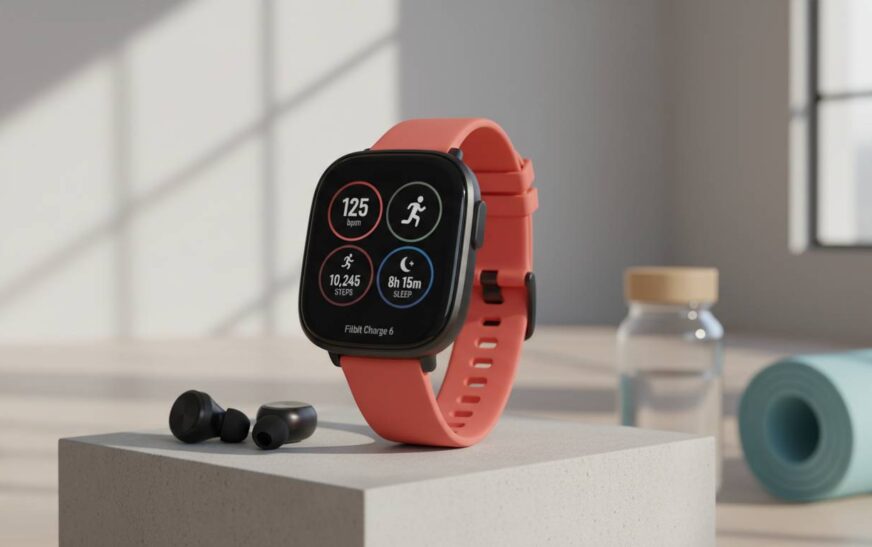
Best Health-Focused Option: Fitbit Sense 2
The Fitbit Sense 2 emphasizes health monitoring, making it suitable for athletes who want wellness tracking alongside fitness data. The stress management and EDA sensor capabilities are unique.
Specifications:
- Display: 1.6-inch AMOLED, 360 x 360 pixels
- Battery: 6+ days
- Water Rating: 5 ATM
- GPS: Connected GPS (uses phone)
- Heart Rate: Multi-path optical sensor
- Weight: 37 grams
The cEDA sensor tracks electrodermal activity—micro-sweat changes that correlate with stress levels. Combined with HRV, this creates a stress management tool that other fitness watches don’t offer.
The SpO2 sensor tracks blood oxygen during sleep, potentially identifying breathing issues. The skin temperature sensor adds another data point to the health picture.
GPS requires your phone, which frustrates runners who want a standalone watch. However, for cyclists who typically carry phones or gym-goers who don’t need GPS, this limitation matters less.
Fitbit’s sleep tracking is detailed with sleep stages, sleep score, and personalized insights.
Best Value: Garmin Forerunner 265
The Garmin Forerunner 265 delivers most of what makes the Forerunner 965 great at a lower price.
Specifications:
- Display: 1.3-inch AMOLED or 1.1-inch MIP
- Battery: Up to 15 days
- Water Rating: 5 ATM
- GPS: Multi-band GPS
- Heart Rate: Elevate V5 optical sensor
- Weight: 47 grams
The Forerunner 265 brings AMOLED display technology to the mid-range Forerunner line, making this the first sub-$500 Garmin with a vibrant color display. Battery life trade-off is manageable—13-15 days remains excellent.
Training readiness, performance conditions, and recovery recommendations all appear on the 265. You get Garmin’s most useful training insights without the premium price. GPS accuracy matches the flagship Forerunner 965 thanks to multi-band technology.
Size options—standard 46mm and smaller 42mm—accommodate different wrist sizes. Smaller athletes often find the 265S fits more comfortably than bulkier alternatives.
For athletes who want Garmin’s training intelligence without spending $700+, the Forerunner 265 is a solid choice. You lose some premium materials and advanced features, but the core training experience is similar.
Conclusion
The Garmin Forerunner 965 earns the top recommendation as the best overall choice, combining strong training analytics, good battery life, and a display that works in every condition.
iPhone users committed to Apple’s ecosystem will find the Apple Watch Ultra 2 delivers comparable fitness tracking with better smart features. Android users get the best integration with Samsung’s Galaxy Watch 6, while budget-conscious athletes access excellent training metrics through the Garmin Forerunner 265.
The most important factor isn’t buying the most expensive option—it’s picking a watch you’ll actually wear. Consider how you train, what metrics matter to you, and how the watch fits into your daily life.
FAQs
What smartwatch do professional athletes use?
Garmin dominates professional athletics, with the Forerunner and Fenix series being common among competitive runners and triathletes. Apple Watch has gained ground among cyclists and CrossFit athletes who value ecosystem integration.
How much should I spend on a fitness smartwatch?
Most athletes will find good functionality in the $400-700 range. Budget options under $300 handle basic tracking, while premium models above $700 offer the most advanced features. The biggest jumps occur between $300-500.
Which smartwatch has the most accurate heart rate monitoring?
Garmin and Apple lead in optical heart rate accuracy. However, chest straps remain more accurate during high-intensity activities. For most athletes, modern optical sensors are accurate enough.
Is a smartwatch worth it for recreational athletes?
Yes. Even basic models provide accountability through activity tracking, motivation through goal-setting, and feedback through post-workout analysis. The health insights around sleep and recovery help athletes maintain balance.
Can smartwatches help prevent overtraining?
Advanced models like Garmin’s Forerunner and Fenix include overtraining prevention features. Training readiness scores and recovery recommendations help athletes understand when their bodies need rest. Whoop built its platform around this concept.
Do I need GPS in my fitness smartwatch?
If you run, cycle, or swim outdoors, GPS is essential for tracking distance, pace, and route. If you primarily workout indoors or focus on strength training, GPS matters less. Some watches offer connected GPS using your phone.