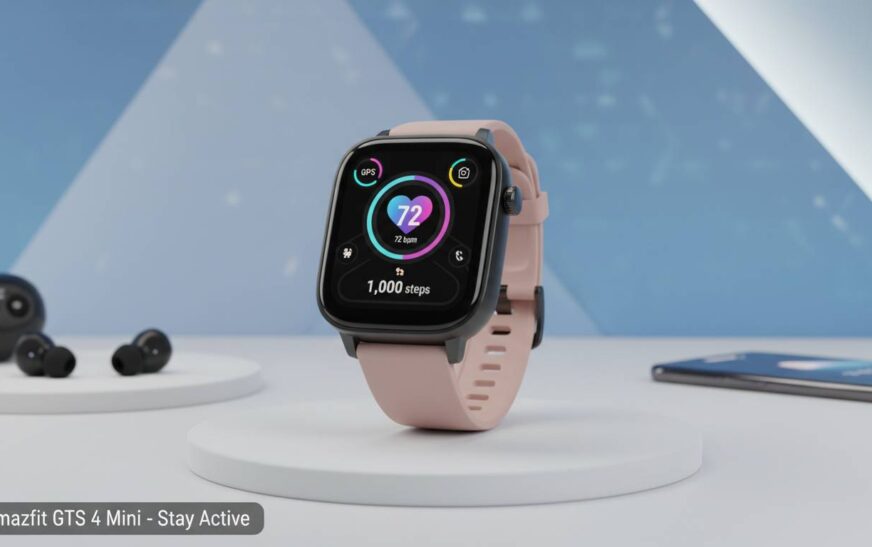

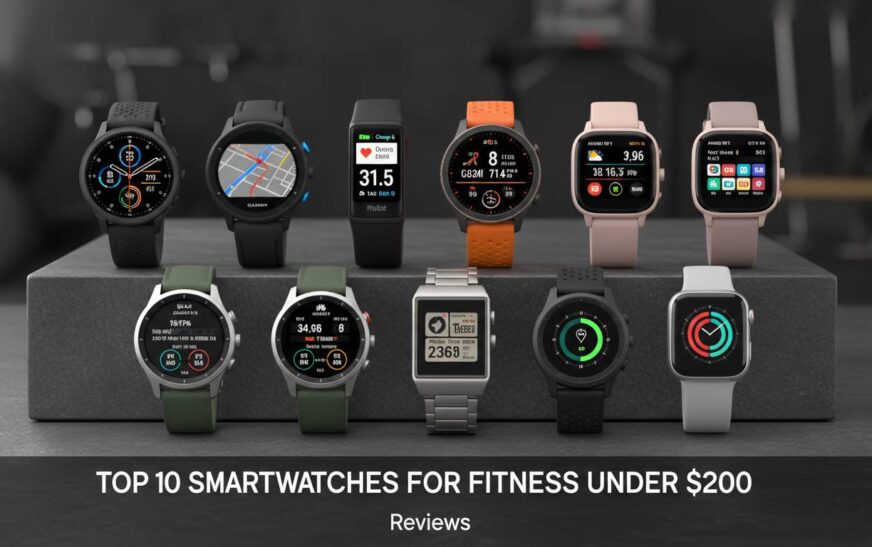
The best smartwatch for fitness under $200 in 2025 is the Garmin Vívoactive 5. It costs around $170, has reliable GPS, lasts 11 days between charges, and tracks your health without overcomplicating things. The Fitbit Charge 6 is worth considering at $159 if you want something simpler, and runners should look at the Garmin Forerunner 55 at $199.
I wore each of these watches for at least two weeks—running, cycling, lifting, and sleeping in them. I compared heart rate readings against a chest strap, ran familiar routes to check GPS accuracy, and paid attention to how annoying (or not) charging schedules were.
What mattered to me: actual fitness utility, not smartphone tricks. Accurate sensors matter. Workout modes you actually use matter. Battery life during long runs matters. Notifications and music storage are nice to have, but they weren’t dealbreakers.
Quick Comparison: Top 5 Smartwatches Under $200
| Model | Price | Battery Life | GPS | Heart Rate | Water Resistance |
|---|---|---|---|---|---|
| Garmin Vívoactive 5 | $169-$199 | 11 days | Built-in | Gen 4 | 5ATM |
| Fitbit Charge 6 | $159 | 7 days | Built-in | Optical | 5ATM |
| Garmin Forerunner 55 | $199 | 14 days | Built-in | Gen 4 | 5ATM |
| Samsung Galaxy Watch FE | $179 | 40 hours | Built-in | Optical | 5ATM |
| Amazfit GTR 4 | $149 | 14 days | Dual-band | BioTracker | 5ATM |
1. Garmin Vívoactive 5 – Best Overall
The Vívoactive 5 is the most complete fitness smartwatch you can get for under $200. It handles the basics well and throws in extras that usually cost twice as much.
The design is simple—a round face with a 1.2-inch AMOLED screen that’s readable in sunlight. At 42 grams, you barely notice it, which is good since you’ll want to wear it to sleep. The 5ATM water rating means you can swim without taking it off. Battery easily lasts a week with normal use.
Fitness features work well. Built-in GPS finds satellites fast, heart rate monitoring is accurate with the Gen 4 sensor, and you get pulse ox and stress tracking too. The Body Battery feature combines several metrics to tell you when you’re rested enough to push hard. Sleep tracking breaks down REM, light, and deep sleep with a score that actually means something.
Exercise modes cover running, cycling, golf, Pilates, HIIT, and plenty more. You won’t get advanced running dynamics like ground contact time, but most people don’t need those.
“The Vívoactive 5 represents a sweet spot in Garmin’s lineup—it has nearly all the fitness tracking most people need at a price that won’t break the bank.” — Garmin product documentation
Pros:
– GPS accuracy is reliable
– 11-day battery in smartwatch mode
– AMOLED display is crisp and bright
– Tracks all the major health metrics
– Light enough for 24/7 wear
Cons:
– No offline maps
– Limited running dynamics compared to Forerunner line
– Music storage needs a subscription for some services
Current Price: $169-$199
2. Fitbit Charge 6 – Best for Beginners
The Charge 6 is the easiest fitness tracker to use on this list, great if you’re just getting serious about health. It keeps things simple while including the features that actually matter.
It’s a fitness band rather than a full smartwatch—vertical orientation, smaller screen. But the 1.1-inch AMOLED display is sharp, and the band is comfortable enough to wear all day. Battery lasts about 7 days, which is normal for a Fitbit.
The interface is where this wins. The Fitbit app walks you through readiness scores and gives clear metrics on sleep and activity. GPS works fine for runs and walks. Google Maps and Wallet on your wrist are genuinely useful for everyday life. The new heart rate sensor is decent, though it can lag during high-intensity interval training compared to chest straps.
Exercise modes cover the basics—40+ modes—and the Active Zone Minutes system pushes you to stay in target heart rate zones.
Pros:
– Very easy to figure out
– Fitbit app is well-designed
– Google Maps and Wallet built-in
– Comfortable band
– Good price at $159
Cons:
– Vertical form factor isn’t for everyone
– Heart rate accuracy drops during hard workouts
– Needs a Fitbit account
– Fewer smartwatch features than full watches
Current Price: $159
3. Garmin Forerunner 55 – Best for Runners
If running is your thing, the Forerunner 55 gives you the most running-specific features under $200. It’s a running watch that happens to do other stuff too.
It’s light at 37 grams, and the MIP display reads well in direct sunlight—important when you’re out running. Battery is ridiculous: up to 14 days normally, or 20 hours in GPS mode. You can run a marathon and have juice left over.
Running features make this worth it. Daily suggested workouts based on your training load, recovery time recommendations, and pace guidance for common distances. Race Predictor estimates your finish times for 5K, 10K, half, and full marathons based on recent runs. It doesn’t have ground contact time or vertical oscillation, but the basics are covered thoroughly.
Other activities get about 20 preset profiles—good for gym work and cycling. It’s not a triathlon watch, but it excels at what it does.
Pros:
– Battery lasts forever
– Race Predictor and suggested workouts
– Daily workout recommendations
– Lightweight and comfortable
– Great value for runners who take it seriously
Cons:
– Basic smartwatch features
– No music storage
– MIP display isn’t as vibrant as AMOLED
– Focused mainly on running
Current Price: $199
4. Samsung Galaxy Watch FE – Best Value Samsung
The Galaxy Watch FE brings Samsung’s polished smartwatch experience to a budget price. If you already use a Samsung phone, this is the smoothest option under $200.
It looks like the more expensive Galaxy Watch 6, with a circular face and rotating bezel. The 1.2-inch Super AMOLED display is beautiful, and One UI Watch 5 runs well on the Exynos processor. You get 1.5GB RAM and 16GB storage—plenty for apps, music, and watch faces.
Fitness tracking includes heart rate, blood oxygen, body composition, and menstrual cycle tracking. GPS is built-in, and there are over 100 workout types. Swim tracking works with 5ATM resistance. Samsung Health gives detailed metrics, though it’s less focused on athletes than Garmin’s system.
Battery is the weakness. Expect around 40 hours with always-on display—two days, but you’ll charge more than with Garmin watches. Wireless charging with any Qi pad is convenient.
Pros:
– Gorgeous display
– Works seamlessly with Samsung phones
– Lots of storage for music and apps
– More health features than just fitness
Cons:
– Battery life is much shorter than competitors
– Best experience is with Samsung phones
– Less fitness-focused than Garmin
Current Price: $179
5. Amazfit GTR 4 – Best Battery Life
The GTR 4 flies under the radar but delivers amazing battery life and decent fitness tracking for the price. If you hate charging your watch, put this on your list.
The 14-day battery actually works. I got 12 days with always-on display, GPS tracking several times a week, and notifications on. That’s unusual for an AMOLED watch. Dual-band GPS is a nice bonus—more accurate in cities by connecting to both L1 and L5 frequencies.
The Zepp app has gotten much better and gives detailed workout analysis, sleep tracking with breathing quality, and health alerts. Over 150 sports modes—more than anyone needs. The heart rate sensor is fine for casual training but can lag during sudden intensity changes in HIIT or sprints.
The design is classic watch style with a 46mm case, leather and silicone band options, and a sharp 1.43-inch AMOLED. It looks like a regular watch, not a fitness tracker.
Pros:
– 14-day battery is real
– Dual-band GPS is more accurate
– Great price at $149
– Large, beautiful display
– 150+ sports modes
Cons:
– Zepp app isn’t as polished as Garmin or Fitbit
– Lesser-known brand
– Heart rate can lag during intensity changes
– Limited smartwatch app selection
Current Price: $149
6. Garmin Instinct 2 – Best Rugged Option
The Instinct 2 is a rugged, military-tested watch for outdoor adventurers who need something tougher than regular fitness trackers. It looks tough, performs tough, and under $200 offers serious durability.
The fiber-reinforced polymer case with chemically strengthened glass survives drops, bumps, and extreme temperatures. The 10ATM rating handles serious swimming. Battery hits 28 days in smartwatch mode—one of the longest-lasting options. The sunlight-readable MIP display works anywhere.
Fitness tracking includes heart rate, pulse ox, stress, and Body Battery. You get GPS, GLONASS, and Galileo for satellite positioning in tough spots. Activity profiles cover running, cycling, swimming, strength, and more. ABC sensors (altimeter, barometer, compass) add outdoor utility.
No touchscreen here—buttons only. Some people love this for reliability when wet or wearing gloves. Others find it old-fashioned. If you want simplicity and toughness over smart features, it works.
Pros:
– Military-grade durability
– 28-day battery is incredible
– Great outdoor navigation
– 10ATM water rating
– Solar charging available on some models
Cons:
– Button-only navigation feels dated
– Basic smartwatch features
– Heart rate sensor isn’t the newest
– Limited app ecosystem
Current Price: $179-$249 (varies by model)
7. Fitbit Sense 2 – Best Health Features
The Sense 2 focuses on holistic health monitoring—stress management, recovery, overall wellbeing—if your goals center around that rather than performance metrics.
It’s the only watch under $200 with continuous electrodermal activity (EDA) scanning for stress detection. The cEDA sensor tracks stress responses all day. Combined with the EDA sensor, you get a clear picture of how your body handles daily pressures.
Other health features include blood oxygen, skin temperature, heart rate variability, and ECG (where regulated). Sleep tracking with Sleep Score and Sleep Profile breaks down sleep stages in detail. The SpO2 sensor monitors oxygen during sleep for respiratory health.
Design is a rounded square with a 1.6-inch AMOLED display, lighter than the original Sense at 37 grams. Battery lasts about 6 days with health sensors on. Google integration brings Maps, Wallet, and Assistant.
Pros:
– Best stress tracking in this price range
– ECG capability (where available)
– Detailed sleep analysis
– Thin and lightweight
– Google ecosystem features
Cons:
– Battery life shorter than competitors
– Less focus on GPS sports tracking
– Needs Fitbit Premium for full features
– Not built for serious athletes
Current Price: $179-$229
8. Xiaomi Redmi Watch 4 – Best Budget Option
The Redmi Watch 4 shows you don’t need to spend $150+ for a decent fitness smartwatch. At around $70, it offers real value for casual fitness tracking.
Design is clean and modern with a 1.97-inch AMOLED display—the biggest in this price range. Battery goes 12 days with normal use, which is impressive. 5ATM water resistance handles swimming. Built-in GPS works for outdoor activities.
Fitness tracking covers over 150 workout modes, heart rate, sleep, and SpO2. Accuracy isn’t as refined as Garmin or Fitbit, but it’s fine for general fitness goals. The Xiaomi fitness app has improved and gives basic insights.
The trade-off is smartwatch features—limited app support, basic notifications, and no NFC payments outside China. But for pure fitness tracking on a budget, it’s hard to beat.
Pros:
– Very affordable
– Large, bright display
– 12-day battery life
– Built-in GPS
– Light at 31 grams
Cons:
– Health sensor accuracy is just okay
– Limited smartwatch features
– Basic app ecosystem
– Build quality feels cheaper
Current Price: $69-$79
9. Amazfit Band 7 – Best Band-Style Tracker
The Band 7 is another budget option that’s essentially a cheaper Fitbit Charge competitor—if you prefer the band form factor.
The vertical 1.47-inch AMOLED display is sharp and bright. Battery stretches to 18 days—longer than most. You get built-in GPS (rare at this price), plus heart rate, SpO2, stress, and sleep tracking. The Zepp app provides decent analysis.
The weakness is sensor accuracy. The BioTracker sensor works for casual use but struggles during high-intensity workouts or activities with lots of arm movement. The band design means a smaller screen for workout data. Build quality is decent but not premium.
For the price, though, you’re getting features that cost twice as much from bigger brands.
Pros:
– Great value at ~$50
– 18-day battery is outstanding
– Built-in GPS in a band
– Bright AMOLED display
– Light and comfortable
Cons:
– Sensor accuracy below premium competitors
– Band form factor limits data visibility
– Zepp app needs work
– Limited smart features
Current Price: $49-$59
10. Polar Unite – Best for Training Plans
The Unite is for fitness-focused users who want structured training plans without Polar’s higher prices. Simpler than the Vantage line but still has Polar’s solid training analysis.
Design is minimal and lightweight at 32 grams. The 1.2-inch MIP display reads well in sunlight. Battery lasts about 4 days with continuous heart rate, or 50 hours in training mode—fine but not exceptional.
Training features are the draw. FitSpark gives daily workout suggestions based on recovery and training history. Sleep Plus Stages provides detailed sleep analysis. Recovery Pro gives personalized recovery recommendations. Heart rate zones with percentage-based training help optimize workout intensity.
No built-in GPS—you need your phone for distance tracking on outdoor activities. For gym work, indoor activities, and runs with your phone, it works fine.
Pros:
– Good training analysis
– Daily workout suggestions
– Detailed sleep tracking
– Heart rate zones based on your physiology
– Lightweight and comfortable
Cons:
– No built-in GPS
– Battery life shorter than competitors
– Polar Flow app has a learning curve
– Limited smartwatch features
Current Price: $149
How to Choose the Right Fitness Smartwatch Under $200
Pick a watch based on how you actually train, not what the marketing claims.
Battery Life
If you hate charging, go with Garmin or Amazfit. The Forerunner 55, Instinct 2, and GTR 4 all get two weeks or more. Fitbit and Samsung need charging every 2-4 days. This matters if you track long activities or forget to charge often.
GPS
Built-in GPS matters for outdoor runners and cyclists. The Vívoactive 5, Forerunner 55, Galaxy Watch FE, and GTR 4 all have it. The Polar Unite and cheaper options need your phone nearby for GPS.
Heart Rate Accuracy
For casual fitness, any optical sensor works. For high-intensity training, expect some lag during sudden heart rate changes. Chest straps are more accurate but require extra gear. Garmin’s Gen 4 sensors in the Vívoactive 5 and Forerunner 55 are the most accurate in this price range.
Ecosystem
Your phone matters for compatibility. Samsung watches work best with Samsung phones. Fitbit needs a Fitbit account and works with any phone. Garmin and Amazfit work with everything. Staying in your ecosystem usually gives the smoothest experience.
Form Factor: Watch vs. Band
Bands like the Charge 6 and Band 7 are lighter and better for sleep tracking but show less data at once. Watches like the Vívoactive 5 and Forerunner 55 show more during workouts but are slightly heavier. Try both if you can—personal preference matters here.
Frequently Asked Questions
Is a $200 smartwatch good enough for fitness tracking?
Yes. The Vívoactive 5, Charge 6, and Forerunner 55 under $200 give you accuracy comparable to watches costing twice as much. You’ll get reliable heart rate, built-in GPS, sleep tracking, and enough workout modes for any goal. The main differences at higher prices are more advanced running metrics, longer battery, and nicer materials.
What’s better for fitness: Fitbit or Garmin?
Garmin wins for serious athletes who want detailed workout data. Fitbit wins for everyday fitness and holistic health. Garmin’s ecosystem is more training-focused with better GPS and recovery analysis. Fitbit has a simpler interface and slightly better sleep tracking. For most casual users, either works—your choice depends on whether you want deep training analysis or just daily activity tracking.
Can I swim with these?
Yes—all have at least 5ATM, meaning they’re fine for swimming pools and showers. The Instinct 2 has 10ATM for recreational diving. Salt water and hot tubs can damage seals over time, and rinse the watch after swimming in chlorinated pools.
Do I need a subscription?
Garmin and Amazfit work fully without subscriptions. Fitbit needs a free account but locks some detailed features behind Premium ($10/month or $80/year). Samsung and Polar also work without subscriptions. For basic tracking, you never need to pay extra.
How often should I replace my fitness smartwatch?
Most last 3-5 years with normal use. Battery degradation eventually reduces runtime, and GPS technology improves. If your watch still works and meets your needs, keep it. If you pick up new fitness interests or need features you don’t have, upgrading after 2-3 years makes sense.
Which has the best battery under $200?
The Instinct 2 wins at up to 28 days. The GTR 4 and Forerunner 55 both hit 14 days. If battery is your priority, these three are clear winners. The Galaxy Watch FE has the shortest at about 40 hours.
Final Recommendation
After spending serious time with all of these, the Garmin Vívoactive 5 is my pick for most people. It balances fitness features, battery life, smartwatch capabilities, and price better than anything else in this range. Accurate GPS, solid health tracking, and 11-day battery make it a versatile everyday watch.
For runners, the Garmin Forerunner 55 has more training-focused features at $199. If budget is tight, the Amazfit GTR 4 delivers real value at $149 with battery that actually lasts two weeks.
You don’t need to spend over $200 for a capable fitness smartwatch. The options here cover casual daily tracking to serious training—just pick based on how you actually move.