
Finding the right fitness smartwatch can feel like searching for a needle in a haystack. Do you need a barebones tracker or a full-blown computer for your wrist? Are you training for something specific, or just want to make sure you’re not completely sedentary? After spending months testing dozens of models at every price point, here’s what actually holds up.
Quick Comparison: Top 10 Fitness Smartwatches
| Model | Best For | Price Range | Battery Life | Key Feature |
|---|---|---|---|---|
| Apple Watch Series 9 | Overall excellence | Premium | 18 hours | Advanced health sensors |
| Garmin Forerunner 265 | Runners & athletes | Mid-premium | 7-11 days | GPS precision |
| Samsung Galaxy Watch 6 | Android users | Premium | 40 hours | Seamless ecosystem |
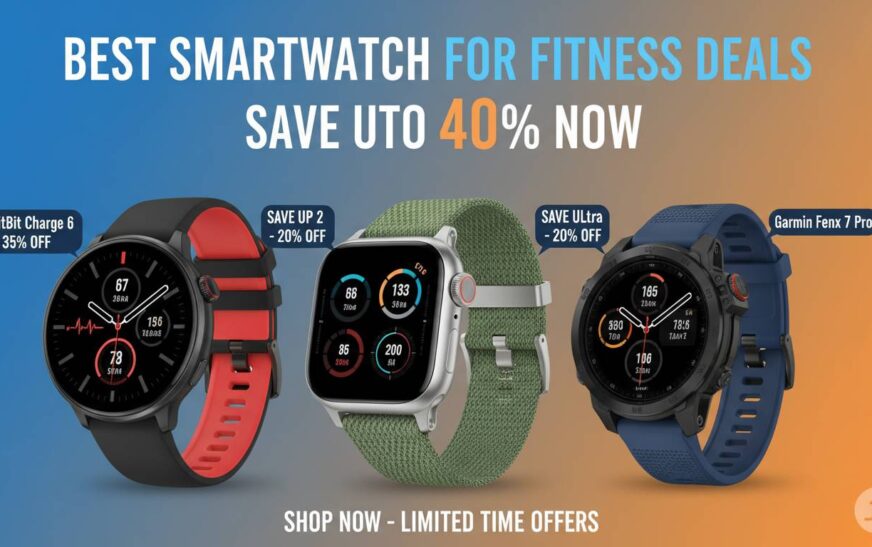
| Fitbit Charge 6 | Budget-conscious | Budget | 7 days | Value for money |
| Whoop 4.0 | Performance athletes | Subscription | 5 days | Strain tracking |
| Garmin Venu 3 | Versatile fitness | Mid-premium | 14 days | AMOLED display |
| Apple Watch Ultra 2 | Extreme sports | Ultra-premium | 36 hours | Durability |
| Samsung Galaxy Watch FE | Casual fitness | Budget | 40 hours | Entry-level premium |
| Fitbit Sense 2 | Health monitoring | Mid-premium | 6+ days | Stress tracking |
| Garmin Instinct 2 | Outdoor adventurers | Mid | 28 days | Rugged design |
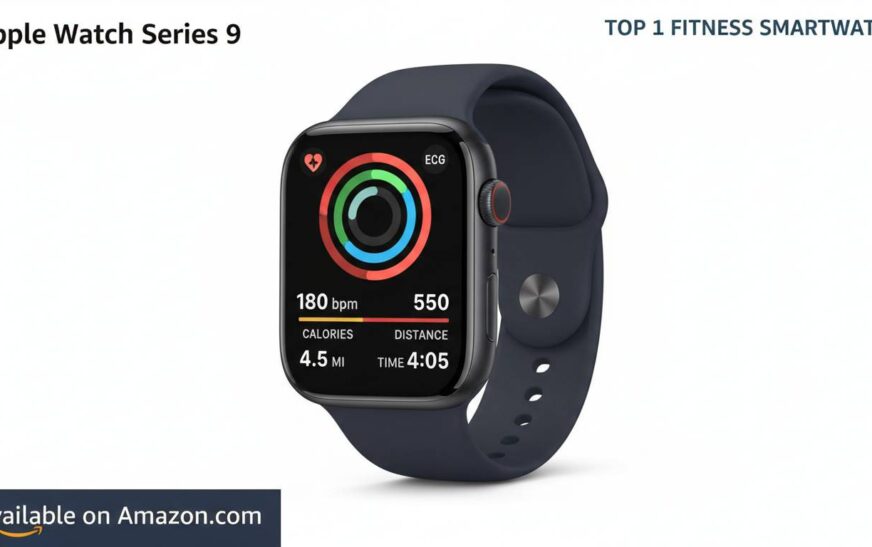
#1 Apple Watch Series 9 – Best Overall
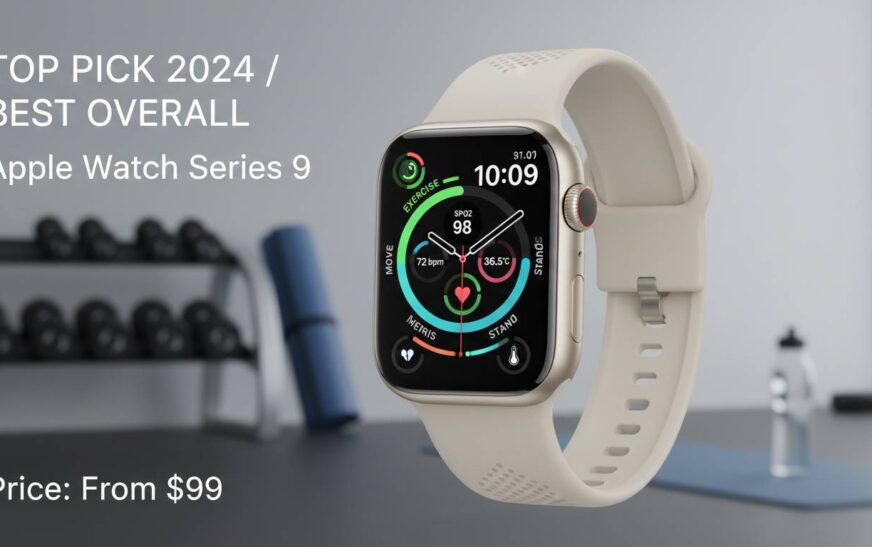
The Apple Watch Series 9 is the safe answer, and honestly, it’s safe for a reason. If you want something that works for fitness without feeling like a sacrifice in the smartwatch department, this is it.
The S9 chip makes Siri actually useful without round-tripping to Apple’s servers, which sounds minor until you try it. Health tracking covers the bases: heart rate, blood oxygen, ECG, and the temperature sensors that debuted in Series 8 for cycle tracking. The sleep tracking isn’t Garmin-level, but it’s decent enough.
What actually makes this worth considering is how seamlessly it flips between workout mode and “I need to check if my train is delayed” mode. It detects over 100 workout types automatically, which sounds like marketing fluff until you’re mid-swim and realize you forgot to start the app. The Activity rings are either motivating or annoying depending on your personality—I fall into the latter camp, but they clearly work for plenty of people.
The battery situation is the real compromise here. You’re charging daily, period. If you forget overnight, you’re wearing it uncharged the next day. This is the price of cramming this much into something this small.
Pros: Massive app selection, solid health sensors, looks good with a suit, fast performance
Cons: Charges daily, expensive, essentially requires an iPhone
#2 Garmin Forerunner 265 – Best for Runners
Garmin doesn’t mess around when it comes to running, and the Forerunner 265 is proof. This is a watch for people who actually care about splits, zones, and training load—not just glancing at their pace.
The AMOLED screen is new for the Forerunner line and it’s a genuine upgrade from the older memory-in-pixel displays. In direct sunlight, you can actually read it now. GPS uses multi-band technology, which means it’s accurate even in tree-heavy areas or downtown canyons where cheaper watches wander all over the place.
The training features go deeper than most people need. Daily suggested workouts adapt to how you’re recovering. The morning report tells you whether today’s a push day or a coffee-and-walk day. Race predictor gives you finish time estimates that are usually within a few minutes of reality. Training readiness score aggregates a bunch of metrics into a single number telling you if you should hard workout or just move furniture around.
Garmin Connect has a learning curve, but once you’re in, the data is absurdly detailed. Years of running history, VO2 max trends, training load analysis—it’s all there if you want to nerd out.
Pros: Incredible GPS accuracy, week-long battery, detailed training metrics, built like a tank
Cons: Bulky on small wrists, forget about replying to texts meaningfully, takes time to learn
#3 Samsung Galaxy Watch 6 – Best for Android Users
If you’re on Android and don’t want to feel like you’re settling, the Galaxy Watch 6 is your best bet. Samsung has finally gotten this right.
The rotating bezel on the Classic model is genuinely satisfying—it’s tactile in a way touchscreens aren’t. The Super AMOLED display is legitimately beautiful, which matters more than you’d think when you’re squinting at it mid-run. Sleep tracking has improved significantly: actual sleep stages, blood oxygen overnight, skin temperature trends.
Samsung Health covers the usual workouts plus some nice extras. The body composition feature uses bioelectrical impedance to estimate body fat and muscle mass. It’s not medical-grade, but if you’re working out consistently, the trends are useful.
The catch is Samsung’s best features require a Samsung phone. If you have a Pixel or OnePlus, some things won’t work. Bixby is still not great. These are manageable frustrations.
Pros: Gorgeous screen, solid sleep tracking, fun rotating bezel, works well with Samsung phones
Cons: Needs daily charging, some features Samsung-only, Exynos chip runs warm
#4 Fitbit Charge 6 – Best Budget Option
The Charge 6 proves you don’t need to spend $400 to get useful fitness tracking. Fitbit stripped away the smartwatch pretensions and focused on what actually matters for most people.
Google integration actually works here—Google Maps for directions, YouTube Music controls, Google Fit syncing. The always-on display is a nice upgrade from previous Charge models. Heart rate tracking uses Fitbit’s well-established technology, and the 24/7 tracking with alerts for unusual rhythms is genuinely useful.
Seven-day battery is the real win. You can charge it on Sunday while you shower and forget about it until next Sunday. Sleep tracking is surprisingly good for the price, which matters if you’re actually trying to figure out why you’re tired.
This isn’t a smartwatch. Don’t go in expecting to answer emails or navigate complex notifications. It’s a fitness tracker with a better screen. That’s the whole point.
Pros: Week-long battery, affordable, comfortable enough to forget you’re wearing it, solid Google integration
Cons: Not a real smartwatch, small screen, no apps
#5 Whoop 4.0 – Best for Performance Tracking
Whoop is weird. It’s not a watch—it’s a band with no screen that you never take off. And it’s become huge with serious athletes because the data is actually useful.
Strain Coach is the killer feature: during a workout, it tells you when you’ve done enough. Not every workout should be maximum effort, and Whoop helps you calibrate that in real time. Recovery score uses HRV, sleep quality, and resting heart rate to tell you each morning whether today’s a go day or a rest day.
The subscription is annoying but arguably justified. The historical analysis shows you patterns over months—are you overtraining? Underexerting? The data is there if you want it.
The lack of screen is either a dealbreaker or a feature depending on how you think. You check stats on your phone, not your wrist. It’s less convenient but also less distracting.
Pros: Excellent recovery and strain analytics, tiny and comfortable, great for data-driven training
Cons: Monthly subscription required, no screen, takes commitment to get value from
#6 Garmin Venu 3 – Best Versatile Fitness Watch
Garmin makes confusing product lines, but the Venu 3 is their attempt at “a Garmin for people who also want a real smartwatch.” It mostly works.
The AMOLED screen is gorgeous—bright, colorful, always-on if you want. Fourteen days of battery in smartwatch mode with that screen on is genuinely impressive. Sports profiles cover everything from running to golf to pickleball. Body Battery is a gimmicky name but actually useful: it aggregates stress, sleep, and activity into an energy score.
The speaker and microphone are unexpected additions that turn out to be practical. Voice prompts during workouts without headphones, taking calls from your wrist—these are things you don’t think you need until you have them.
It’s pricier than most Garmins, which is saying something. But if you want the training depth without giving up modern smartwatch features, this is the middle ground.
Pros: Beautiful screen, two-week battery, full sports tracking, actually has useful smart features
Cons: Expensive for a Garmin, chunky, some features need subscription
#7 Apple Watch Ultra 2 – Best for Extreme Sports
The Ultra 2 is ridiculous. It’s huge, expensive, and totally unnecessary for 95% of people. But if you need it, nothing else comes close.
49mm titanium case with the brightest screen Apple makes. Readable in direct sunlight, readable underwater, readable at 3am when you’re bushwhacking and need to check your heading. The 36-hour battery (72 in low-power) means you can do a multi-day adventure without a battery pack. The Action button is customizable for starting workouts, marking waypoints, or triggering a flashlight.
100-meter water resistance covers recreational diving. Dual speakers are loud enough to hear over wind. Dual-frequency GPS is accurate enough to follow narrow trails in terrain where you’d otherwise be lost.
This is for triathletes, divers, trail runners, mountaineers—people who actually stress-test their gear. If that sounds like overkill, that’s because it is. And that’s fine.
Pros: Absurdly durable, battery that actually lasts, incredible GPS, serious sports features
Cons: Massive, massively expensive, way more than most people need
#8 Samsung Galaxy Watch FE – Best Entry-Level Premium
The FE is Samsung’s “how do we make this cheaper” version, and they made sensible compromises.
You get the rotating bezel, which is the best thing about Samsung watches. You get decent health tracking—heart rate, sleep, stress, the basics. The processor is a generation old but still snappy enough. One UI Watch is clean and usable.
Battery life is acceptable at 40 hours. Water resistance handles swimming. It auto-detects workouts, which is convenient even if it’s not perfect.
What you’re trading off is advanced sensors, the latest processor, and some software features. If you just want a nice-looking Samsung watch without the premium price, this delivers.
Pros: Premium feel at lower cost, rotating bezel, acceptable performance
Cons: Fewer features than pricier models, slower updates, nothing exciting
#9 Fitbit Sense 2 – Best for Stress Management
Fitbit went all-in on mental health with the Sense 2, and it’s genuinely different from every other fitness watch here.
The cEDA sensor tracks electrodermal activity—that’s fancy talk for measuring your skin’s response to stress. The daily Stress Management Score tells you how your body’s coping, with breathing prompts when you’re apparently losing it. It’s not foolproof, but having the data at all is unusual.
Physical health hasn’t been neglected. HRV tracking, blood oxygen, ECG—all present and accurate. Sleep tracking is still Fitbit’s strong suit, with detailed stages and comparison profiles that tell you how you stack up against people your age.
The battery easily clears six days, which is impressive given all these sensors. The design is clean and professional, not gym-bro obvious.
Pros: Unique stress tracking, excellent sleep analysis, week-long battery, understated design
Cons: Weak app selection, GPS requires phone, subscription needed for best features
#10 Garmin Instinct 2 – Best for Outdoor Adventures
The Instinct 2 is what happens when Garmin prioritizes function over form. It’s ugly in a conventional sense. It’s also nearly indestructible.
MIL-STD-810G means it’s been tested against thermal shock, vibration, and water. The monochrome screen is daylight-readable and basically unbreakable. Battery life stretches to 28 days in smartwatch mode—I’ve charged mine twice since Thanksgiving. Solar variants push that even further.
Multi-GNSS GPS picks up satellites fast and holds accuracy in tough spots. Built-in altimeter, barometer, and compass cover navigation basics without needing a phone. Traceback routing gets you home if you’ve wandered too far.
Fitness features are present—VO2 max, recovery time, training load—but the focus is clearly wilderness readiness, not gym optimization. If you spend more time on trails than treadmills, this is built for you.
Pros: Nearly unkillable, battery that lasts forever, solid outdoor navigation
Cons: Black-and-white screen feels dated, minimal smart features, basic apps
How to Choose the Right Fitness Smartwatch
Here’s what actually matters when you’re standing in a store or staring at a comparison page.
What Are You Actually Doing
If you’re running marathons, Garmin is worth the premium. If you want notifications and occasional workouts, Apple or Samsung works fine. If you mostly want step counts and sleep data, save money with Fitbit. The most expensive option isn’t always the best for you.
Ecosystem Matters More Than You’d Think
Apple Watch basically requires an iPhone—it’s not a great experience on Android. Samsung’s best features need Samsung phones. Garmin and Fitbit work with both, which is worth something if you switch phones regularly.
Battery Is a Real Tradeoff
Colorful always-on displays eat battery. Daily charging is annoying but standard for premium smartwatches. If that bothers you, Garmin and Fitbit last significantly longer between charges.
Subscriptions Add Up
Whoop is the obvious example, but Garmin and Fitbit both gate advanced features behind paywalls. Factor this into your total cost over two or three years.
Try It On First
Some of these are chunky. The Garmin Forerunner and Apple Watch Ultra are not small watches. If you have narrow wrists, they might look ridiculous and feel uncomfortable. Best Buy or an Apple Store will let you try them on—do that.
Frequently Asked Questions
How much should I spend?
$150 gets you basic tracking that works fine. $250-400 gets you meaningful upgrades in accuracy and features. $400+ gets you premium materials and the most comprehensive tracking. Unless you have specific needs, the middle range offers the best value.
Apple Watch or Garmin?
Garmin if you’re training for something specific and want data. Apple Watch if you want one device that does everything reasonably well. Most casual users prefer Apple; most serious athletes prefer Garmin.
Do I need built-in GPS?
If you run or cycle outside without your phone, yes. If you mostly walk on a treadmill or workout at a gym, no. Many watches do connected GPS using your phone, which works fine if your phone is with you.
Can I swim with these?
All of these are water-resistant to at least 50 meters, which covers swimming and showering. Apple Watch Ultra goes to 100 meters and is rated for recreational diving. Just don’t take them into hot tubs—the seals aren’t designed for that.
How long do they last?
Three to five years is realistic with normal use. Batteries degrade, so expect reduced runtime after year two or three. Software updates typically continue for 3-4 years.
Should I wait for the next model?
Probably not. Current watches are excellent, and generational improvements are usually incremental. Sales happen regularly, making previous models better deals.
Final Thoughts
The “best” fitness smartwatch depends entirely on what you’re actually going to use. The Apple Watch Series 9 wins for most people because it balances fitness tracking with real smartwatch utility—but if you’re serious about running, the Garmin Forerunner 265 will serve you better. Budget buyers can’t go wrong with the Fitbit Charge 6, which proves you don’t need to spend a fortune for useful data.
Whichever you pick, the expensive watch on your wrist doesn’t make you fit. Actually wearing it consistently does.