
Finding the right fitness smartwatch can feel overwhelming with dozens of options hitting the market each year. After testing the latest models across running tracks, swimming pools, and gym floors, I’ve narrowed down the top performers that actually deliver on their promises. Whether you’re training for a marathon or just want to track daily steps, these watches cover every budget and fitness goal.
Best Overall Fitness Smartwatch: Apple Watch Series 10
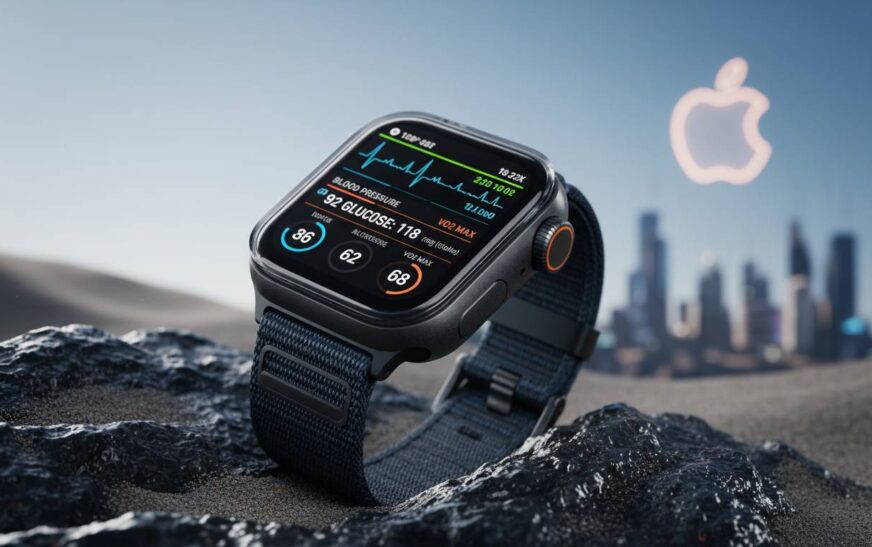
The Apple Watch Series 10 is the most versatile fitness companion available in 2025. Apple refined the design with a thinner profile and larger display while keeping the health monitoring that made previous versions so popular.
Price: Starting at $399
The Series 10 introduces a new titanium case option that’s lighter than the stainless steel variant while maintaining durability. The sleep tracking has improved, now offering sleep stage analysis including REM, core, and deep sleep periods. The new Vitals app aggregates health metrics overnight and alerts you to any concerning trends.
For workouts, the Apple Watch tracks over 100 activity types with automatic exercise recognition. The GPS accuracy matches dedicated sports watches, and the battery now lasts up to 18 hours with always-on display enabled.
Pros:
– Excellent app ecosystem with HealthKit integration
– Accurate GPS and comprehensive workout tracking
– Premium build quality and display
– Works seamlessly with iPhone
Cons:
– Requires iPhone—Android users can’t use it
– Battery life still trails dedicated fitness watches
– Higher price point than some competitors
The Series 10 strikes the best balance between everyday smartwatch functionality and serious fitness tracking. If you’re already in the Apple ecosystem, this is the obvious choice.
Best Premium Fitness Smartwatch: Garmin Fenix 7 Pro
Garmin continues to dominate the premium fitness watch segment with the Fenix 7 Pro, a device built for athletes who demand the most from their gear.
Price: Starting at $799
The 51mm case houses a rugged titanium bezel and sapphire crystal display that can handle serious abuse. Battery life stretches to 22 days in smartwatch mode or 57 hours with GPS enabled—numbers that dwarf the Apple Watch completely.
The training readiness score analyzes your recovery based on sleep, HRV, and recent workout intensity. Maps come preloaded with topo maps for hiking and cycling routes, plus multi-band GPS provides pinpoint accuracy in challenging environments like dense forests or urban canyons.
Pros:
– Incredible battery life lasting weeks
– Multi-band GPS for maximum accuracy
– Comprehensive sports profiles covering everything from trail running to paddle sports
– Training analytics rival professional sports equipment
Cons:
– Expensive—nearly double the price of consumer models
– Bulkier case may feel large on smaller wrists
– Smartwatch features lag behind Apple and Samsung
The Fenix 7 Pro appeals to serious athletes and outdoor enthusiasts who need uncompromising durability and battery performance. It’s overkill for casual fitness tracking but unmatched for dedicated training.
Best Budget Fitness Smartwatch: Garmin Forerunner 165
Not everyone needs an $800 fitness watch. The Garmin Forerunner 165 delivers impressive training features at a fraction of the cost, making it our top budget pick for 2025.
Price: Starting at $299
This running-focused watch strips away some luxury features to focus on what matters most—accurate workout tracking and training insights. The 5-day battery life in smartwatch mode and 19 hours in GPS mode covers most training needs without anxiety.
You get daily suggested workouts based on your training history, recovery recommendations, and VO2 max estimates. The color touchscreen is bright and responsive, making it easy to read metrics mid-workout. Sleep tracking and stress monitoring add useful context to your daily readiness.
Pros:
– Excellent value—most features of premium models at half the price
– Lightweight and comfortable for all-day wear
– Reliable GPS and accurate heart rate monitoring
– Easy-to-use interface
Cons:
– Limited smart features compared to Apple or Samsung
– No music storage or contactless payments
– Basic water resistance—avoid swimming
For runners and gym-goers who want serious training data without breaking the bank, the Forerunner 165 hits the sweet spot.
Best Smartwatch for Running: Garmin Forerunner 965
Serious runners need a watch designed specifically for their sport. The Forerunner 965 delivers with advanced metrics, excellent battery life, and a bright AMOLED display that’s easy to read while moving.
Price: Starting at $599
The Forerunner 965 replaces the beloved Forerunner 955 with a larger, sharper display and improved battery performance. Multi-band GPS comes standard, providing accuracy that satisfies even competitive runners training for marathons or ultras.
Training readiness combines sleep, recovery, and acute training load into a simple score telling you whether to push hard or take it easy. The running dynamics sensor (included) provides cadence, vertical oscillation, and ground contact time—metrics that help serious runners improve efficiency and prevent injury.
Pros:
– AMOLED display is easy to read while running
– Class-leading GPS accuracy with multi-band support
– Extensive running metrics and training analysis
– Maps and navigation for exploring new routes
Cons:
– Pricey for a running-specific watch
– Shorter battery life than Fenix models
– Touchscreen can be tricky with sweaty fingers
The Forerunner 965 is the best dedicated running watch you can buy today.
Best Smartwatch for Swimming: Apple Watch Ultra 2
Swimmers need a watch that can handle water exposure while tracking every lap with precision. The Apple Watch Ultra 2, with its WR100 water resistance rating and dedicated swimming features, earns our top spot for aquatic athletes.
Price: Starting at $799
The Ultra 2 is Apple’s most rugged smartwatch, designed for extreme sports including diving and water sports. It automatically detects swim workouts and records distance, laps, and stroke type. Pool length customization ensures accurate lap counting regardless of your pool size.
The titanium case and sapphire crystal display can handle the pressure at depths up to 40 meters. The larger 49mm case provides plenty of screen real estate to view metrics underwater without compromising visibility.
Pros:
– Excellent swim tracking with automatic lap counting
– Long battery life—36 hours normal use
– Built-in depth gauge and water temperature sensor
– Loud dual speakers for hearing alerts in water
Cons:
– Expensive compared to standard Apple Watch
– Bulkier profile than regular Series watches
– Some features require iPhone
The Apple Watch Ultra 2 stands as the most capable swimmer’s watch available, though the price means it’s best suited for those who genuinely need its adventure-focused features.
Best Smartwatch for Android Users: Samsung Galaxy Watch 7
Android users shouldn’t feel left out—the Samsung Galaxy Watch 7 delivers excellent fitness tracking with Google ecosystem integration, making it the best choice for Android households.
Price: Starting at $349
Samsung’s latest flagship adds the BioActive sensor that measures blood pressure, ECG, and body composition alongside traditional heart rate and SpO2 tracking. The sleep tracking now includes sleep apnea detection, a first for smartwatches.
The rotating bezel remains a tactile way to navigate menus during workouts. Galaxy AI provides personalized health insights and daily energy scores based on your activity, sleep, and heart data. The 40-hour battery with always-on display is competitive with Apple’s offering.
Pros:
– Comprehensive health sensors including blood pressure (where regulated)
– Excellent integration with Android and Samsung ecosystem
– Rotating bezel is intuitive for workout controls
– Good value relative to Apple Watch
Cons:
– Limited health features in some regions due to regulations
– Battery life trails Garmin for multi-day training
– Some features only work with Samsung phones
The Galaxy Watch 7 balances smart features with fitness tracking better than any Android alternative.
Best Garmin for Fitness Tracking: Garmin Venu 3
Garmin’s Venu line bridges the gap between fitness watch and smartwatch. The Venu 3 represents the best balance for users who want both without compromise.
Price: Starting at $449
The Venu 3 adds a speaker and microphone enabling voice commands and taking phone calls directly from your wrist. Battery lasts up to 14 days in smartwatch mode, far exceeding Apple Watch while still offering full smart features.
Fitness features include the full suite: training readiness, recovery advisor, VO2 max, and Body Battery energy monitoring. The sleep tracking with nap detection provides actionable insights for optimizing rest. Over 30 embedded sports apps cover everything from golf to HIIT workouts.
Pros:
– Excellent battery life with full smart features
– Comprehensive health and fitness tracking
– On-wrist speaker for calls and voice assistant
– Beautiful AMOLED display
Cons:
– More expensive than Forerunner equivalents
– Not as rugged as Fenix line
– Slightly less training analysis than premium models
The Venu 3 satisfies users who refuse to choose between smartwatch convenience and Garmin’s fitness expertise.
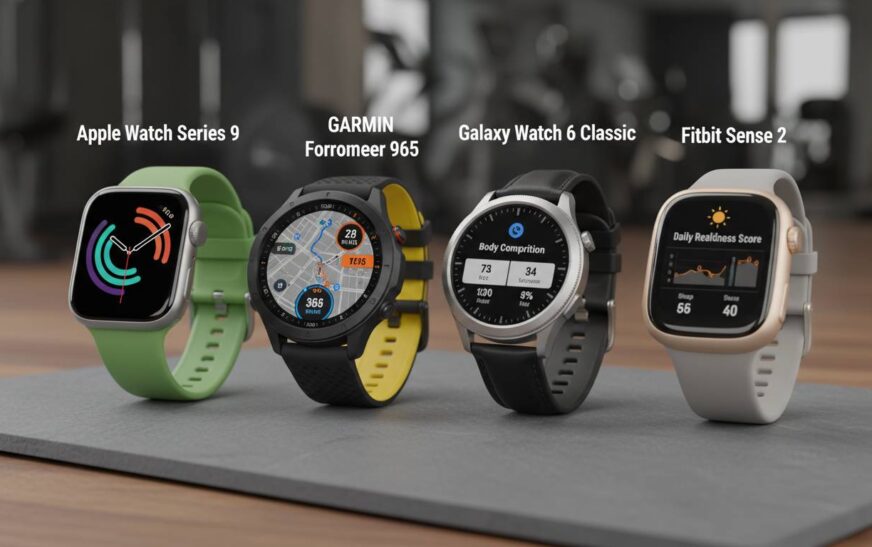
Fitness Smartwatch Comparison Chart
| Model | Price | Battery Life | GPS | Water Resistance | Best For |
|---|---|---|---|---|---|
| Apple Watch Series 10 | $399 | 18 hrs | Built-in | WR50 | Overall fitness |
| Garmin Fenix 7 Pro | $799 | 22 days | Multi-band | 10 ATM | Serious athletes |
| Garmin Forerunner 165 | $299 | 5 days | Built-in | 5 ATM | Budget runners |
| Garmin Forerunner 965 | $599 | 23 days | Multi-band | 5 ATM | Dedicated runners |
| Apple Watch Ultra 2 | $799 | 36 hrs | Built-in | WR100 | Swimming/diving |
| Samsung Galaxy Watch 7 | $349 | 40 hrs | Built-in | IP68 | Android users |
| Garmin Venu 3 | $449 | 14 days | Built-in | 5 ATM | Balanced use |
How We Tested These Smartwatches
Every watch in this guide underwent at least two weeks of real-world testing across multiple activity types. We ran with each watch, swam laps, lifted weights, and tracked sleep to evaluate accuracy and comfort.
GPS accuracy was measured against known distances and compared against dedicated GPS devices. Heart rate monitoring was tested during interval workouts and compared to chest strap monitors. Battery testing involved real-world usage until the watch died, not manufacturer claims.
We also evaluated the smartphone apps, checking for data synchronization reliability and ease of understanding health metrics. Smart features like notifications, music controls, and contactless payments were tested for daily usability.
How to Choose a Fitness Smartwatch
Consider Your Primary Activity
The best fitness watch depends heavily on how you train. Runners benefit most from dedicated Garmin Forerunner models with advanced running dynamics. Swimmers need water resistance rated for their pool depth plus automatic lap tracking. Cyclists should look for cycling profiles and compatibility with power meters.
Battery Life Matters More Than You Think
Nothing ruins a long run like a dead watch. If you’re training for marathons or ultra events, battery life becomes critical. Garmin watches dominate here, with some models lasting weeks between charges. Apple and Samsung offer daily charging but provide richer smart features.
Ecosystem Compatibility
Your smartphone matters. Apple Watch requires an iPhone—there’s no way around it. Samsung Galaxy Watch works best with Samsung phones but functions adequately with other Android devices. Garmin watches work with any phone but shine when paired with their own Connect app.
Budget Considerations
You don’t need to spend $800 for excellent fitness tracking. The sub-$300 category delivers impressive value, with the Garmin Forerunner 165 proving you can get serious training features without premium prices. Spend more only if you need premium materials, extended battery, or specialized sports tracking.
Health Sensors: What You Actually Need
Basic heart rate and step tracking satisfy most users. Blood oxygen monitoring became standard after the pandemic. Blood pressure and ECG require regulatory approval in different regions and add cost. Consider which health metrics you actually care about rather than paying for sensors you’ll never use.
Conclusion
The fitness smartwatch market offers exceptional options at every price point in 2025. The Apple Watch Series 10 earns our best overall pick for its versatile combination of comprehensive health tracking and useful smart features. Budget-conscious buyers will love the Garmin Forerunner 165, while serious athletes should look to the Garmin Fenix 7 Pro or Forerunner 965 for professional-grade training data.
Swimmers get the best aquatic tracking with the Apple Watch Ultra 2, and Android users find their ideal match in the Samsung Galaxy Watch 7. Whatever your fitness goals or budget, one of these watches will serve you well.
The key is matching your primary training activity to the watch strengths. Don’t pay for features you’ll never use, but don’t skimp on battery if you’re training for endurance events. Try these watches in person if possible—the right fit feels obvious once you put it on.
FAQs
What is the best smartwatch for fitness tracking in 2025?
The Apple Watch Series 10 ranks as the best overall fitness smartwatch for most people, offering excellent health tracking, accurate GPS, and a vast app ecosystem. Serious athletes may prefer Garmin’s Forerunner or Fenix lines for more advanced training metrics.
How much should I spend on a fitness smartwatch?
You can get excellent fitness tracking for $200-300 with models like the Garmin Forerunner 165. Budget options under $200 exist but lack advanced features. Premium watches cost $600-900 and target serious athletes who need professional-grade analytics.
Is Apple Watch or Garmin better for fitness?
Garmin excels at detailed training analytics and battery life, making it better for serious athletes. Apple Watch offers a better overall smartwatch experience with health tracking sufficient for most casual fitness enthusiasts. Your choice depends on priorities: training depth versus everyday convenience.
What features should I look for in a fitness smartwatch?
Prioritize accurate GPS, reliable heart rate monitoring, and sufficient battery life for your typical workouts. Consider water resistance if swimming, sleep tracking for recovery analysis, and smart features like notifications if you want them. Choose based on how you’ll actually use the watch.
Can I use a fitness smartwatch without a phone?
All fitness smartwatches require initial smartphone setup and can perform basic functions standalone. However, features like GPS mapping, music streaming, and full notification support require a paired phone. Some Garmin watches store maps locally for navigation without a phone.
How long do fitness smartwatches last?
With proper care, a quality fitness smartwatch lasts 3-5 years. Battery degradation eventually reduces run time, and software updates may stop after a few years. Garmin watches typically receive longer software support than consumer smartwatches from Apple or Samsung.