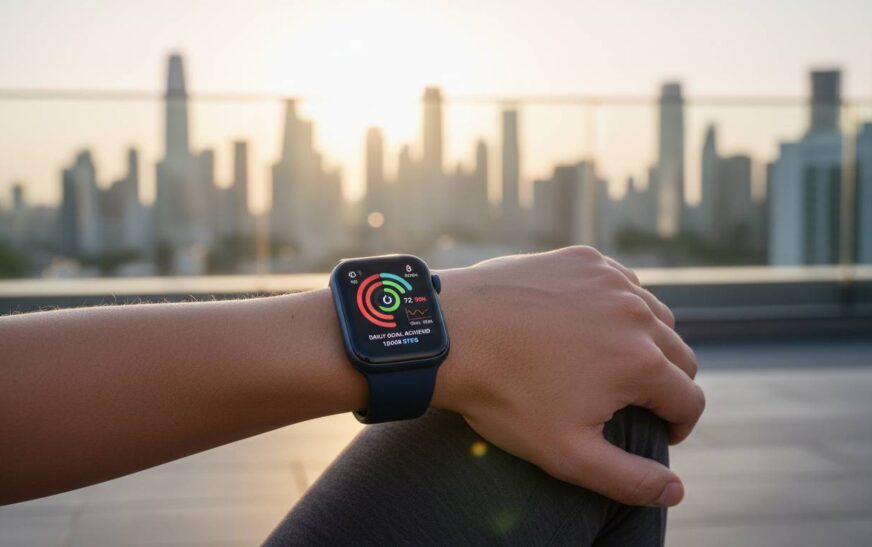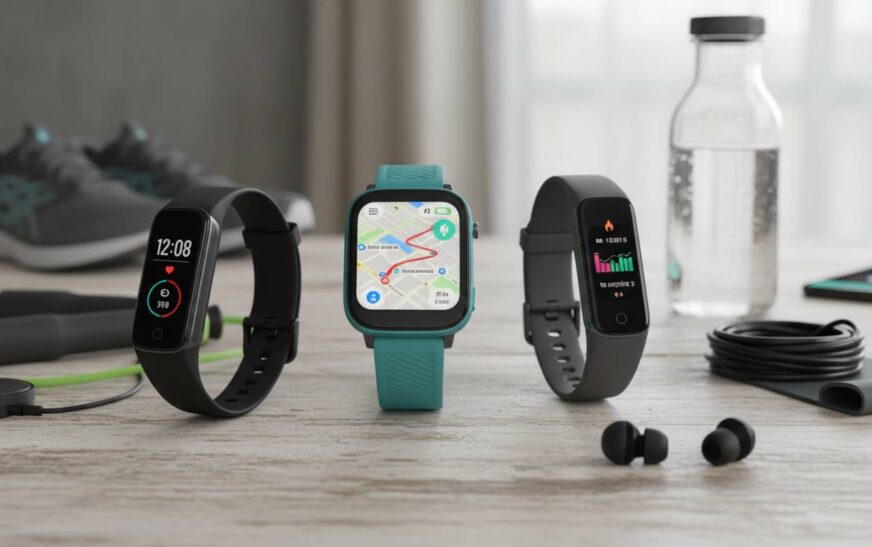

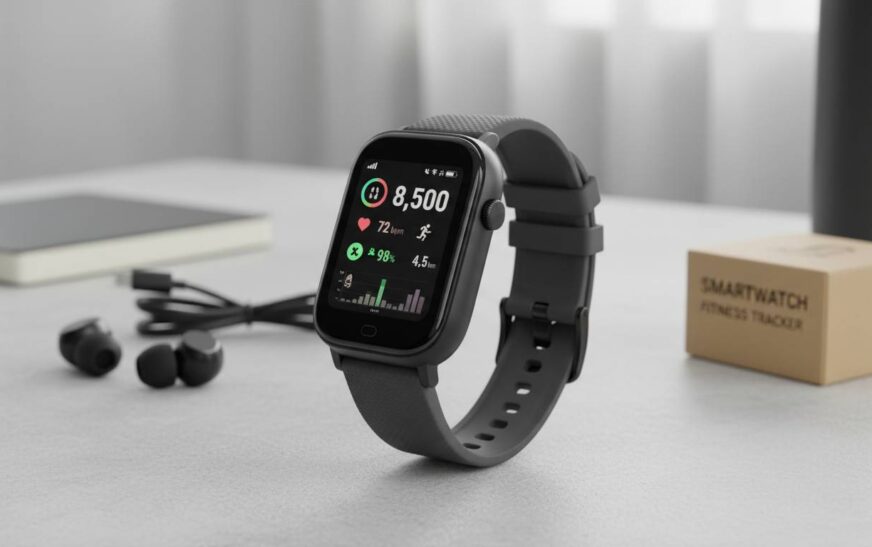
The budget fitness tracker market has come a long way. You can now grab a solid wearable with heart rate monitoring, sleep tracking, and workout modes for well under $50—not the junky pedometers from a decade ago, but actual capable devices that hold their own against options three times the price.
After testing dozens of these things, here are the five I’d actually recommend.
How We Tested
Real-world testing over several weeks, not manufacturer claims:
- Battery Life: Full charge, mixed daily use, no cherry-picking
- Heart Rate: Compared against chest strap monitors during walks, runs, and lifting
- Sleep Tracking: Wore each for at least a week, checked against personal observations
- App Experience: Ease of use, data clarity, sync reliability
- Comfort: Would I actually want to wear this every day?
- Value: What do you get for the money, not just what’s cheapest
Quick Comparison
| Model | Display | Battery | Heart Rate | Sleep | Water |
|---|---|---|---|---|---|
| Xiaomi Mi Band 8 | AMOLED, 1.62″ | 16 days | Yes | Yes | 5ATM |
| Honor Band 7 | AMOLED, 1.47″ | 14 days | Yes | Yes | 5ATM |
| Amazfit Band 7 | AMOLED, 1.47″ | 18 days | Yes | Yes | 5ATM |
| Fitbit Inspire 3 | OLED, ~1.4″ | 10 days | Yes | Yes | 5ATM |
| Noise ColorFit Pulse 4 | LCD, 1.8″ | 7 days | Yes | Yes | IP68 |
#1 Xiaomi Mi Band 8 – Best Overall
The Mi Band 8 is the default choice for a reason. It’s small, it’s cheap, and it just works.
The 1.62-inch AMOLED screen is surprisingly nice—bright enough for outdoor use, smooth at 60Hz when you’re scrolling through menus. Not that you’d spend much time in menus. The interface is straightforward.
Battery life is the real winner here. I got two weeks with always-on display running. Two weeks. That’s better than some watches costing twice as much. Turn AOD off and you’re pushing 16 days.
Fitness features cover 150+ workout modes. Running, cycling, swimming, HIIT—it’s all there. Heart rate tracking is decent for the price, though it occasionally lags during sudden intensity changes. Nothing terrible, but don’t throw out your chest strap if you’re training for a marathon.
Sleep tracking has improved a lot. It now does sleep stages and gives you a daily score. It’s not clinical-grade, but it helps you spot patterns.
The proprietary charger is annoying—fiddly to get aligned properly. Minor complaint for everything else you get.
Pros:
- Bright AMOLED display
- 2-week battery life is legit
- 150+ workout modes
- Lightweight, comfortable
- Good app with useful insights
Cons:
- Proprietary charger is finicky
- No built-in GPS
- Limited smartwatch features beyond notifications
Verdict: Best balance of features and price. Hard to beat.
#2 Honor Band 7 – Best for Huawei Ecosystem Users
If you’re already in the Huawei or Honor ecosystem, this makes sense. Similar hardware to the Mi Band, just a different flavor.
The 1.47-inch AMOLED is slightly smaller but still good. Colors pop, readability is excellent. Band attachment is more conventional, so third-party bands are easier to find.
Fourteen days of battery in real use, same ballpark as the Mi Band. The Honor Health app is solid, and I actually like the stress tracking—it prompts breathing exercises when your metrics look elevated, which is genuinely useful.
Over 100 workout modes, 14 professional ones with real-time coaching. The automatic workout detection works well.
One caveat: iPhone users might find some features limited, particularly notification management. Not unique to Honor, but worth knowing.
Pros:
- Nice AMOLED display
- 14-day battery
- Good third-party band selection
- Strong stress tracking
- Plays well with Huawei/Honor phones
Cons:
- Fewer workout modes than Mi Band
- Some iOS limitations
- Proprietary charger
Verdict: Great alternative, especially for Honor phone users. Sometimes cheaper than the Mi Band too.
#3 Amazfit Band 7 – Best Battery Life
Zepp knows what they’re doing with fitness tracking—they make premium devices—and that expertise shows here.
Eighteen days battery? I got closer to three weeks with moderate use. That’s absurd. If you hate charging things, this is your tracker.
The display matches the competition in quality. Where Zepp wins is the watch face selection—tons of free options in the app. If you like customizing your tech, you’ll enjoy this.
Heart rate tracking was slightly more consistent than competitors during variable-intensity workouts. The PAI (Personal Activity Intelligence) system gives you a single score encouraging consistent movement. It’s a nice way to think about daily activity without getting lost in the numbers.
Same GPS limitation as other bands—you’ll need your phone for route tracking.
Pros:
- Insane battery life (接近三周)
- Great data visualization in Zepp app
- Slightly better heart rate accuracy
- Lots of watch faces
- Reliable sleep tracking with PAI
Cons:
- Less detailed notifications
- Smaller accessory ecosystem
- No built-in GPS
Verdict: Battery life is the priority? This delivers. It’s a set-it-and-forget-it device.
#4 Fitbit Inspire 3 – Best for Simplicity
Fitbit is still the name people know, and the Inspire 3 is their entry-level option. It costs more than the others, but the user experience is deliberately simple.
Here’s the thing: Fitbit moved to a subscription model for some features. The Inspire 3 still gives you solid core tracking without paying anything, but some sleep insights and advanced analytics are behind Fitbit Premium. For most people, the free experience is plenty.
The design is slim and unobtrusive. If you want something that almost disappears on your wrist, this is it.
Ten days battery—solid but not impressive. What you get is the ecosystem. If you ever upgrade to a more expensive Fitbit, everything integrates seamlessly. The app is also the most user-friendly in the space, which matters if you’re new to fitness tracking.
Pros:
- Comfortable, lightweight design
- Best companion app experience
- Strong brand reliability
- Easy setup, intuitive use
- Seamless Fitbit ecosystem
Cons:
- More expensive
- Some features need Premium
- No built-in GPS
- Fewer workout modes than Chinese brands
Verdict: Perfect for beginners who want a trusted name and easy experience. Just know some advanced features require paying.
#5 Noise ColorFit Pulse 4 – Best Display Size
The standout here is the 1.8-inch display—biggest screen under $50 by a decent margin. If you want something that feels more smartwatch and less tiny band, this catches attention.
That bigger screen makes checking notifications and stats noticeably easier. Good if you have larger fingers or struggle with fiddly interfaces.
Seven days battery is decent but not exceptional. The ColorFit app is improving but still lags Xiaomi and Fitbit in polish.
Over 100 workout modes, continuous heart rate, sleep tracking. IP68 water resistance handles sweat and rain but skip the pool—it’s not rated for submersion like the 5ATM competitors.
The built-in GPS is rare at this price. You can leave your phone at home during runs and still get route tracking. That’s a legitimate advantage.
Pros:
- Largest display at this price
- Built-in GPS (uncommon here)
- Good value for features
- Responsive touchscreen
- 7-day battery
Cons:
- Not waterproof for swimming
- App less polished
- Bulkier than slim bands
- Sleep tracking hit-or-miss
Verdict: Want a bigger screen and GPS without spending more? This is your pick.
What Actually Matters
A few things to think about:
Display: AMOLED (Mi Band 8, Honor Band 7, Amazfit Band 7) looks better indoors. LCD is brighter outside but kills battery faster.
Battery: Hate weekly charging? The Mi Band 8 and Amazfit Band 7 hit two weeks or more easily.
Water Resistance: Want to track swimming? Get 5ATM. IP68 only handles splashes.
GPS: Built-in GPS means leaving your phone behind. Only the Noise ColorFit Pulse 4 has it here.
App: Zepp and Fitbit apps are more polished. Xiaomi and Noise cover basics well.
Ecosystem: If you might upgrade later, stick with one brand. Data transfers easier.
Final Thoughts
The Mi Band 8 is my top pick because it nails the basics without cutting real corners. That said, any of these five are solid—it just depends on what matters most to you. Battery life? Display size? Built-in GPS? Brand trust? Pick the one that matches your priority.
FAQs
What’s the best for beginners?
Mi Band 8 or Fitbit Inspire 3. Both are easy to set up, simple to use, and cover essentials without overwhelming you.
How accurate is heart rate on these?
Good enough for casual exercise. Optical sensors work fine for steady-state activities. During high-intensity stuff with rapid heart rate changes, you might see slight delays, but it’s acceptable for everyday fitness use.
Do cheap trackers actually track sleep?
Yes—all five here include sleep tracking. They use movement and heart rate to estimate sleep stages. Won’t match a clinical sleep study, but accurate enough to spot trends.
How long do these last?
2-4 years with proper care. Battery capacity degrades over time. Keep it clean, avoid extreme temps, use the included charger.
Can I swim with these?
Four of the five are 5ATM rated (safe for pools). The Noise ColorFit Pulse 4 is only IP68—sweat and rain are fine, but skip the pool.
Do I need a smartphone?
Initial setup needs a phone, and you’ll want the app for detailed insights. But the trackers themselves store several days of data locally. Basic features like steps and time work independently.