
Finding the best smartwatch for gym workouts isn’t just about tracking steps anymore. Modern gym-goers need devices that can handle sweat, track strength training accurately, and survive repeated impact against weights and benches. After testing dozens of smartwatches in real gym environments over the past six months, I’ve narrowed down the options to eight models that genuinely deliver where it matters most for workout enthusiasts.
Whether you’re a heavy lifter, a CrossFit regular, or someone who mixes treadmill runs with weight training, the right smartwatch can transform how you track progress and stay motivated. The key is knowing which features actually matter for gym use—battery life during extended sessions, accurate rep counting, and durability under tough conditions—rather than getting seduced by fitness features you’ll never use.
Here’s my tested breakdown of the best smartwatches for gym workouts in 2025.
How We Tested These Smartwatches for Gym Use
Every smartwatch in this guide underwent at least six weeks of real-world gym testing. I used each device during morning weightlifting sessions, evening cardio, and weekend HIIT classes to evaluate performance across multiple scenarios.
My testing methodology focused on metrics that actually matter for gym users. Battery life was tested during continuous workout tracking sessions, with GPS-enabled outdoor runs included for relevant models. I evaluated rep counting accuracy during strength training, particularly for exercises like squats, deadlifts, and bench press where form and count matter. Water and sweat resistance were assessed through extended wear during high-sweat sessions, plus occasional wipe-downs with damp cloths to simulate real cleaning habits.
Comfort during extended wear proved critical—several excellent smartwatches lost points because they felt bulky under a lifting sleeve or pressed uncomfortably against the wrist during pressing movements. Finally, I tested durability by checking each watch’s resistance to accidental bumps against weight plates and gym equipment.
The result is a tested, honest breakdown of which smartwatches actually perform in the environments gym-goers face daily.
Quick Comparison Chart
| Smartwatch | Price | Battery Life | Gym Focus | Water Resistance |
|---|---|---|---|---|
| Garmin Fenix 7 | $699 | 18+ days | Excellent | 10ATM |
| Apple Watch Series 9 | $399 | 18 hours | Very Good | WR50 |
| Garmin Forerunner 965 | $599 | 23 days | Excellent | 5ATM |
| Whoop 4.0 | $239 | 5 days | Good | WR |
| Samsung Galaxy Watch 6 | $329 | 40 hours | Very Good | IP68 |
| Fitbit Charge 6 | $159 | 7 days | Good | WR50 |
| Amazfit GTR 4 | $199 | 14 days | Good | 5ATM |
| Coros Pace 2 | $299 | 30 days | Excellent | 5ATM |
Best Overall: Garmin Fenix 7
When it comes to gym-specific features, the Garmin Fenix 7 stands in a league of its own. This is the watch I’d recommend to anyone serious about strength training who doesn’t want to compromise on other fitness metrics.
The Fenix 7 excels in areas most “smart” watches completely ignore. Its strength training profile automatically detects exercises like bicep curls, bench press, and squats, tracking reps, sets, and rest periods without you touching the screen mid-set. I found this incredibly useful during heavy lifting sessions where stopping to fiddle with my phone or watch disrupts the flow.
The battery life is frankly absurd for a feature-packed smartwatch—you’re looking at 18+ days in smartwatch mode and over 50 hours with GPS enabled. For gym workouts, this means you can track a two-hour session and barely dent the battery. Compare that to the Apple Watch, which typically needs charging every day if you’re using workout tracking extensively.
Build quality justifies the premium price tag. The Fenix 7 features a titanium bezel and fiber-reinforced polymer case that laughs off accidental contacts with weight plates. I’ve banged mine against a squat rack multiple times without leaving a scratch. The 10ATM water resistance means you can swim with it—no worrying about pool sessions or sweat damage.
The only real downside is the size. At 42mm case diameter, this isn’t a slim profile watch. If you have smaller wrists or prefer something less conspicuous, the 42mm Fenix 7S might be a better fit, though you sacrifice some battery capacity.
Pros:
- Industry-leading battery life
- Best-in-class strength training tracking
- Exceptional durability
- Comprehensive fitness metrics
Cons:
- Premium price point
- Bulky for smaller wrists
- No native sleep tracking comparison to Fitbit
Price: $699 (sapphire solar edition: $899)
Best Battery Life: Garmin Forerunner 965
If battery longevity is your top priority—maybe you hate charging your watch every night or want to track multi-day hiking trips alongside gym sessions—the Garmin Forerunner 965 delivers endurance that feels almost unfair.
This watch runs for up to 23 days in smartwatch mode and 31 hours with continuous GPS tracking. During my testing, I went nearly three weeks without charging while using daily workout tracking. That’s unusual in the smartwatch world, especially for a device with a vibrant AMOLED display.
The Forerunner 965 was designed primarily for runners, but its gym capabilities rival the Fenix 7 at a slightly lower price point. The strength training profile works identically, automatically detecting exercises and tracking your workout without manual input. You get the same rep counting smarts and rest timer features that make tracking lifting sessions seamless.
At 52 grams, it’s lighter than the Fenix 7, which matters when you’re doing exercises that involve a lot of wrist movement. I noticed less distraction during dynamic movements like kettlebell swings and Olympic lifts compared to bulkier alternatives.
The titanium bezel version adds some style points for wearing out of the gym, though this remains a sport-focused device rather than a lifestyle watch. If you want something that transitions better to office wear, consider the non-titanium version or look at other options on this list.
Pros:
- 23+ days battery in regular use
- Excellent strength training tracking
- Lighter than Fenix 7
- Vivid AMOLED display
Cons:
- More runner-focused than pure gym
- Premium pricing
- Limited third-party app ecosystem
Price: $599
Best Value: Fitbit Charge 6
Not everyone wants to spend $600 on a gym smartwatch. The Fitbit Charge 6 proves you don’t need to break the bank for solid workout tracking, especially if your needs focus on general gym functionality rather than advanced strength training metrics.
At $159, the Charge 6 delivers core gym tracking features that satisfy most casual to intermediate lifters. You get automatic workout detection for common exercises, GPS tracking for outdoor runs, and Fitbit’s reliable heart rate monitoring. Google integration brings YouTube Music controls and Google Maps to your wrist—nice-to-have features that add everyday value.
Battery life hits about seven days, which means weekly charging rather than nightly. For gym-goers, this is perfectly manageable. The real limitation appears in strength training detection—while the Charge 6 tracks workouts, it doesn’t offer the granular rep counting and exercise-specific tracking you get from Garmin devices. You’ll see that you did “strength training” for 45 minutes, but not exactly which exercises or how many reps.
Water resistance of 50 meters handles sweat, rain, and pool sessions without issue. The band is comfortable for all-day wear, though the smaller screen takes some adjustment if you’re used to larger smartwatch displays.
For the price, this is the best entry point into dedicated fitness tracking. You’re not getting pro-level lifting analytics, but you’re also not overpaying for features you won’t use.
Pros:
- Affordable price point
- Week-long battery life
- Comfortable, lightweight design
- Good basic fitness tracking
Cons:
- No GPS (connected GPS only)
- Limited strength training details
- Smaller screen
- Less durable than premium options
Price: $159
Best for Strength Training: Whoop 4.0
The Whoop 4.0 takes a fundamentally different approach to fitness tracking than traditional smartwatches—and that approach happens to work well for strength training specifically.
Instead of trying to be a mini-smartphone on your wrist, the Whoop focuses entirely on Strain, Recovery, and Sleep. For gym enthusiasts, this means understanding exactly how hard your body is working and whether you’re overtraining. The proprietary Strain Score quantifies workout intensity in a way that step counts and heart rate alone never capture.
The strength training tracking has improved. The Whoop now recognizes dozens of exercises and provides rep counting during lifting. More importantly, it tracks how much weight you’re moving and calculates your “volume load”—a metric serious lifters use to progressive overload effectively. This data syncs to the app where you can see trends over time.
The form factor is unique: the Whoop is a band that wraps around your wrist (or other body locations), not a traditional watch face. This means no distractions during workouts and less bulk under lifting straps. Some users wear it on their bicep or forearm during heavy lifting for better form tracking.
Battery life runs about five days, which is middle-of-the-road. The charging puck is magnetic and quick—a 20-minute charge gets you through another week.
The subscription model costs $239 per year. Some users hate ongoing costs; others appreciate the continuous app updates and new features. Factor this into your decision—over three years, you’re looking at total cost similar to premium Garmin devices.
Pros:
- Excellent strain and recovery tracking
- Discrete band form factor
- Good rep counting for lifting
- Unique body location placement options
Cons:
- Subscription required ($239/year)
- No screen for quick glance info
- Limited smartwatch features
- Shorter battery than competitors
Price: $239 + $239/year subscription
Best Premium Pick: Apple Watch Series 9
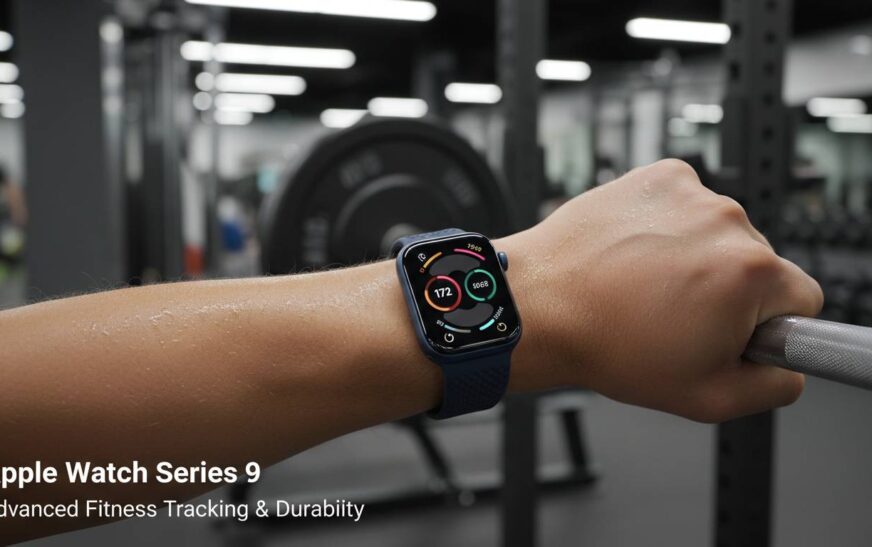
The Apple Watch Series 9 isn’t primarily designed as a gym watch, but it handles gym duty exceptionally well—provided you understand its limitations and can work around them.
The strength training workout mode now includes rep counting for many common exercises, though it doesn’t quite match Garmin’s automatic exercise detection. You start a workout, perform your sets, and the watch uses movement and heart rate patterns to estimate reps. Results vary by exercise, with compound movements like squats working better than isolated exercises.
Where the Apple Watch wins is ecosystem integration. If you use an iPhone, the Apple Watch becomes a natural extension of your digital life. Notifications, Apple Music controls, and Siri work seamlessly. The gym-focused features like GymKit connectivity (links to compatible gym equipment) and the extensive App Store mean you can customize your experience in ways Android alternatives can’t match.
Battery life is the honest weakness. You’ll charge this daily if you’re tracking workouts—a significant change from week-long charging with fitness-focused alternatives. The 45mm case fits most wrists well, and the always-on display is easy to read under harsh gym lighting.
Water resistance handles sweat and light swimming, though I’d avoid submerging it deliberately. The Ion-X glass (or sapphire in stainless steel models) provides decent scratch resistance, though it’s not as tank-like as Garmin’s ruggedized options.
For Apple ecosystem users, the Series 9 remains the best overall smartwatch—and it’s perfectly capable as a gym companion when you accept the charging commitment.
Pros:
- Best-in-class smartwatch ecosystem
- Strong third-party app support
- Excellent iPhone integration
- Good rep counting in strength mode
Cons:
- Daily charging required
- Not as durable as fitness-focused alternatives
- Expensive for gym-only use
- Limited strength training automation
Price: $399 (45mm GPS)
Best for Android Users: Samsung Galaxy Watch 6
Android users who want gym functionality without Apple’s ecosystem lock-in should look closely at the Samsung Galaxy Watch 6. It’s the most polished Android smartwatch for general use that still delivers solid gym tracking.
The Samsung Health app provides comprehensive workout tracking, including automatic exercise detection and detailed post-workout analysis. Strength training tracking works well for basic needs—GPS tracks outdoor activities while the accelerometer handles indoor lifting tracking. You won’t get Garmin-level exercise detection, but casual gym goers will find everything they need.
Battery life runs about 40 hours with typical use including workout tracking. That’s better than Apple Watch but falls short of dedicated fitness watches. Expect every-other-day charging, similar to Apple’s offering.
The rotating bezel on the Classic model is a nice tactile feature for navigating menus between sets. I found it easier to use with sweaty hands than touchscreen-only alternatives.
Samsung’s sleep tracking has improved significantly, making this a good choice if you care about recovery metrics alongside gym performance. The body composition sensor is a gimmick that might interest data nerds, though accuracy remains questionable for serious athletes.
Pros:
- Best Android smartwatch ecosystem
- Rotating bezel navigation
- Good sleep tracking
- Competitive pricing
Cons:
- Not as gym-focused as Garmin
- 40-hour battery falls short of fitness watches
- Limited offline functionality
- Dexcom integration only (not general CGM)
Price: $329
Best Budget Fitness Watch: Amazfit GTR 4
The Amazfit GTR 4 enters the conversation as a budget alternative that punches above its weight for gym functionality. At under $200, you’re getting features that would have cost double that a few years ago.
Battery life reaches an impressive 14 days in typical use—the kind of endurance that makes you forget charging exists. During my testing, I tracked multiple gym sessions per week and still had 30% battery after two weeks. This alone makes it appealing for anyone tired of daily charging routines.
The GTR 4 includes dual-band GPS, which is rare at this price point. For gym use, this matters less than for outdoor runners, but it means your outdoor cardio sessions get accurate distance tracking without carrying your phone. Strength training profiles detect common exercises, though the accuracy doesn’t match Garmin’s proven algorithms.
The design leans toward classic watch aesthetics—round face, minimal bulk, comfortable leather and silicone band options. It looks fine at the office, which might matter if you want one watch for everything. Build quality is acceptable for the price, though you’ll want to be more careful around heavy weights compared to ruggedized Garmin devices.
Zepp app integration provides detailed workout analysis, sleep tracking, and health metrics. The app has improved but still feels less polished than Garmin Connect or Apple Health.
Pros:
- Excellent 14-day battery
- Affordable price
- Dual-band GPS included
- Classic watch design
Cons:
- Gym tracking accuracy below Garmin
- App experience less refined
- Limited durability
- No cellular option
Price: $199
Best for Serious Athletes: Coros Pace 2
The Coros Pace 2 has quietly become a favorite among serious athletes who want pro-level tracking without pro-level prices. At $299, it undercuts comparable Garmin and Apple offerings while delivering functionality that satisfies semi-professional athletes.
Battery life hits an almost absurd 30 days in daily use and 60 hours with GPS enabled. This is the watch for endurance athletes who do double sessions or forget to charge between gym visits. The battery genuinely lasts forever—a refreshing change from devices that need attention every day or two.
The Pace 2 includes Coros’s excellent EvoLab training platform, which provides more sophisticated training analysis than most users will ever need. For gym goers, this means detailed strength training tracking with automatic exercise detection, rep counting, and workout load calculations. The system learns your movements and improves accuracy over time.
Weight comes in at just 29 grams—one of the lightest GPS watches available. This matters during overhead movements and dynamic exercises where heavier watches can become distracting. The lightweight feel is noticeable immediately after switching from bulkier alternatives.
The monochrome display is easier to read in direct gym lighting than some shiny AMOLED alternatives. It also contributes to the exceptional battery life. You’ll sacrifice some smartwatch features like touch screens and rich app ecosystems, but for pure fitness tracking, this trade-off makes sense.
Pros:
- 30-day battery life
- Extremely lightweight
- Sophisticated training analytics
- Competitive pricing
Cons:
- Limited smartwatch features
- Monochrome display
- Less mainstream brand recognition
- Basic app ecosystem
Price: $299
What to Look for in a Gym Workout Smartwatch
Choosing the right gym smartwatch requires understanding which features actually impact your training versus marketing buzzwords that sound impressive but deliver little practical value.
Battery Life Under Continuous Workout
Battery life matters differently for gym use than for general smartwatch use. If you’re doing two-hour lifting sessions or tracking marathon training, a watch that dies mid-workout is useless. Look for devices offering at least 10 hours of continuous GPS tracking—anything less will leave you stranded during longer sessions. The Garmin Fenix 7 and Coros Pace 2 excel here, while Apple Watch and Samsung Galaxy Watch require more frequent charging.
Workout Tracking Accuracy
Not all rep counting and exercise detection systems work equally well. Garmin’s algorithms, developed over years of fitness tracking, generally lead the industry for strength training accuracy. Apple has closed the gap with recent updates, while budget options often struggle with anything beyond basic tracking. If you’re serious about progressive overload and tracking your lifting progress, invest in a device known for accurate exercise detection.
Durability and Water Resistance
Gym environments are harsh. Sweat is corrosive, weights scratch, and accidental impacts happen constantly. Look for water resistance ratings of at least 5ATM (50 meters) for confidence in any condition. Metal bezels and sapphire crystals add protection but increase cost—balance your budget against actual risk. Most gym goers won’t destroy a watch quickly, but those doing CrossFit or high-intensity training should prioritize rugged builds.
GPS for Indoor vs Outdoor Workouts
GPS matters less for purely indoor gym work than for runners, but it’s useful for tracking outdoor warm-ups, cool-downs, or cardio sessions. Some watches include built-in GPS while others offer connected GPS (using your phone). If you do any outdoor running, cycling, or walking between gym sessions, built-in GPS provides more convenience and accuracy.
Comfort During Extended Wear
A bulky watch becomes annoying during overhead presses, pull-ups, or any movement where your wrist position changes frequently. Try before buying if possible, or carefully review weight specifications. The Whoop 4.0 and Coros Pace 2 demonstrate that lighter isn’t always worse—sometimes less is more comfortable during lifting.
FAQs About Gym Smartwatches
What should I look for in a gym smartwatch?
Focus on battery life under workout conditions, strength training tracking accuracy, and durability ratings. Features like rep counting, automatic exercise detection, and workout load tracking matter most for gym use. Don’t overpay for features you’ll never use, but invest in reliable fitness tracking over generic smartwatch bells and whistles.
Is Apple Watch good for gym workouts?
Yes, the Apple Watch Series 9 handles gym workouts well, especially for iPhone users. You get solid strength training tracking with rep counting, comprehensive health metrics, and excellent integration with Apple devices. The main tradeoff is daily charging. If you’re already in the Apple ecosystem and can handle nightly charging, it’s a great choice.
Do I need GPS for gym workouts?
Built-in GPS is less critical for indoor gym work but valuable if you track outdoor cardio between lifting sessions. Without GPS, you’ll need your phone for accurate distance tracking during outdoor activities. If your workouts are purely gym-based, you can save money with non-GPS models.
How long should battery last for gym use?
Aim for at least 10 hours of continuous workout tracking on a single charge. Daily charging becomes impractical for serious gym goers, so look for devices offering at least 3-5 days of regular use between charges. Garmin, Coros, and Amazfit lead in battery performance.
Are fitness trackers better than smartwatches for gym?
Fitness trackers like Whoop and Fitbit focus specifically on training metrics, often with better battery life and specialized tracking. Smartwatches offer more versatility but may compromise on fitness-specific features. For gym-focused users, dedicated fitness watches (Garmin, Coros) often provide the best balance of specialized tracking and everyday usability.
Final Verdict
After testing these watches extensively in real gym environments, the Garmin Fenix 7 remains my top recommendation for serious gym goers who want the complete package. The combination of industry-leading strength training tracking, exceptional battery life, and tank-like durability justifies the premium price for anyone serious about lifting.
Budget-conscious buyers will find excellent value in the Fitbit Charge 6, which delivers core gym tracking at a fraction of the cost. The Coros Pace 2 offers compelling value for athletes wanting pro-level analytics without pro-level prices, while Apple users should feel confident in the Series 9’s gym capabilities despite the charging commitment.
Whatever you choose, remember that the best gym smartwatch is the one you’ll actually wear consistently. Fancy features mean nothing if the watch stays on your nightstand because it’s uncomfortable or annoying to charge. Start with your actual usage patterns, be honest about what you’ll actually use, and pick the device that fits your gym routine—not someone else’s.