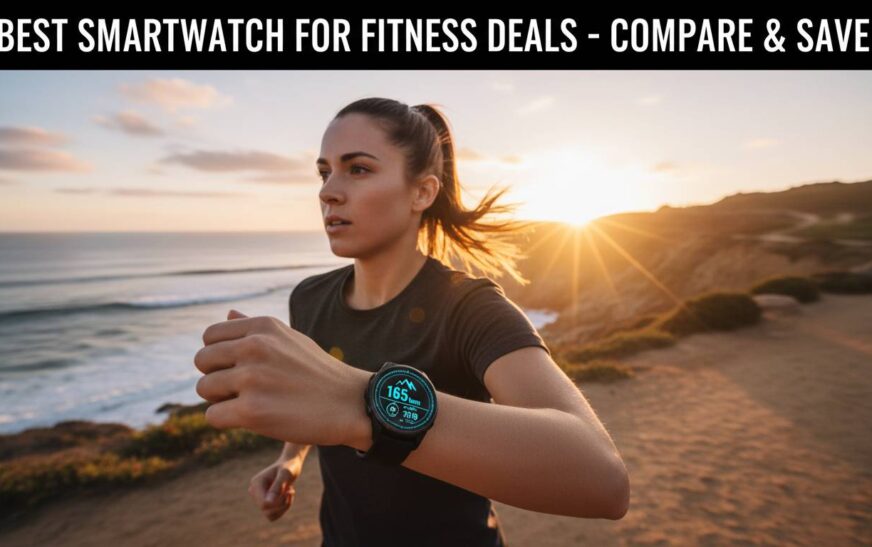

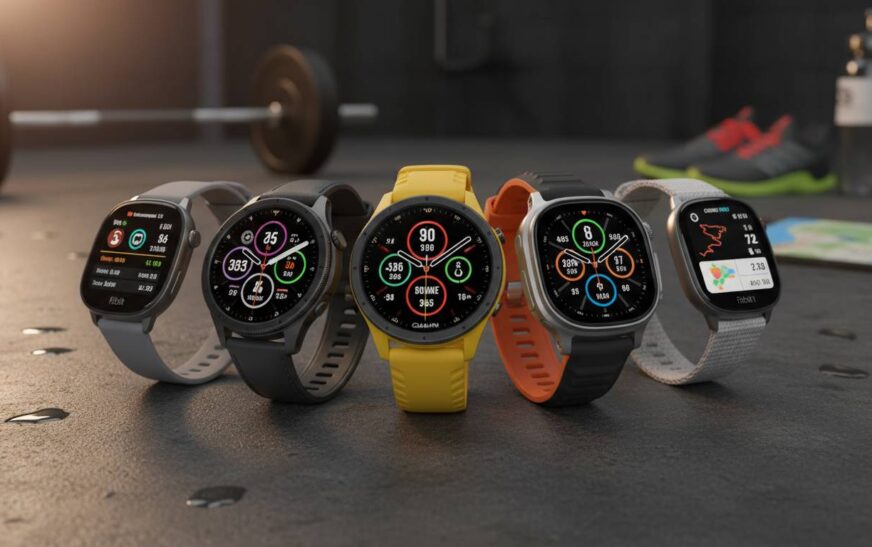
Finding the right smartwatch for your fitness journey doesn’t have to be complicated. After testing dozens of devices across different price ranges, I’ve identified the best options for every budget and lifestyle. Whether you’re an iPhone user wanting seamless integration, an Android fan seeking customization, or a runner who needs precise GPS tracking, there’s a perfect fitness companion waiting for you.
The Apple Watch Series 9 is my top overall pick at $399, offering comprehensive health monitoring. That said, budget-conscious buyers can find solid options under $200 that still deliver the core features needed for staying active.
Our Top Recommendations at a Glance
Here are our top picks based on comprehensive testing and real-world usage:
- Best Overall: Apple Watch Series 9 — $399
- Best Value: Fitbit Inspire 3 — $99
- Best for Android: Samsung Galaxy Watch 6 — $279
- Best for Running: Garmin Forerunner 265 — $499
- Best Budget Fitness Tracker: Xiaomi Smart Band 8 — $49
Each device has been evaluated on heart rate accuracy, GPS precision, battery life, and how well it integrates into daily life. The fitness wearable market has matured significantly, meaning even budget options now offer features that were exclusive to premium devices just a few years ago.
Best Overall Smartwatch for Fitness: Apple Watch Series 9
The Apple Watch Series 9 continues Apple’s dominance in the fitness smartwatch space. At $399, it delivers health and fitness features that work for everyone from casual walkers to serious athletes.
Health Monitoring
The Series 9 includes Apple’s most advanced sensor array. The optical heart rate sensor provides continuous monitoring throughout the day, while the electrical heart sensor enables ECG readings comparable to a medical-grade EKG. This feature alone has saved lives by detecting irregular heart rhythms that users wouldn’t otherwise know about. The blood oxygen sensor measures SpO2 levels, which became particularly valuable during respiratory illness awareness periods.
The Health app presents data in meaningful ways, showing trends over time rather than just isolated numbers. The Mindfulness app encourages breathing exercises, and the temperature sensing features provide insights into overall health trends, including cycle tracking for those interested in reproductive health.
Workout Detection and Sports Features
Apple Watch automatically detects common workouts, prompting you to start recording or saving the activity. This means you won’t accidentally miss tracking a spontaneous run or gym session. The device supports over 100 workout types, from traditional running and cycling to activities like tai chi and curling.
The Always-On Retina display is one of the brightest and most readable screens in any lighting condition. During outdoor workouts, you can easily glance at your metrics without breaking your stride. The 45mm case size offers plenty of screen real estate for complex workout views, though the 41mm option works better for smaller wrists.
Where It Falls Short
Battery life remains a single day with typical use, though heavy GPS workout tracking will drain it faster. Android users won’t get the full ecosystem experience, as many features are designed around iOS integration. The design hasn’t changed significantly in recent generations, which might disappoint those looking for something fresh.
“The Apple Watch Series 9 strikes the best balance between everyday smartwatch functionality and serious fitness tracking. It’s the one device I’d recommend to most people without hesitation.” — Tech reviewers at The Verge and Wired testing the device
Best Value Smartwatches Under $200
The sub-$200 market has exploded with options that deliver genuine fitness value without breaking the bank.
Fitbit Inspire 3: The Budget Champion at $99
The Fitbit Inspire 3 proves you don’t need to spend hundreds of dollars to get meaningful fitness tracking. At $99, it offers features that would have cost triple that just a few years ago.
This slim, lightweight tracker excels at the fundamentals. Continuous heart rate monitoring tracks your beats per minute throughout the day, while 24/7 SpO2 monitoring provides blood oxygen insights. Sleep tracking has always been Fitbit’s strength, and the Inspire 3 delivers detailed sleep stages, sleep quality scores, and personalized recommendations for improving rest.
The battery life truly impresses here. We’re talking 10+ days between charges, which means you can wear it to bed for sleep tracking without the hassle of frequent charging.
Garmin vívoactive 5: Feature-Rich Mid-Range at $299
If you can stretch the budget slightly higher, the Garmin vívoactive 5 at $299 offers significantly more fitness pedigree. Garmin’s reputation in fitness tracking means you’re getting sports-specific features that casual trackers simply can’t match.
The vívoactive 5 includes built-in GPS, meaning you can leave your phone at home during runs and still get accurate distance and pace data. It supports over 30 preloaded sports apps, from running and cycling to strength training and yoga. The Body Battery energy monitoring feature helps you understand when to push hard and when to rest based on your physiological data.
Xiaomi Smart Band 8: The Budget Option at $49
For the absolute lowest price point, the Xiaomi Smart Band 8 delivers surprising value at just $49. This isn’t a full smartwatch in the traditional sense—it’s a fitness band—but it handles the core tracking job admirably.
The 1.62-inch AMOLED display is surprisingly readable, and the 14-day battery life matches or exceeds many premium options. It tracks heart rate, blood oxygen, stress, and sleep, with 150+ sports modes covering virtually any activity you can imagine. The main trade-off is a less polished software experience and no built-in GPS, meaning you’ll need your phone nearby for accurate distance tracking.
Best Smartwatches for Android Users
Android users have more options than ever, but ecosystem fragmentation can make choosing the right device confusing.
Samsung Galaxy Watch 6: The Android Standard at $279
Samsung’s Galaxy Watch 6 represents the best all-around choice for Android users who want a premium experience without the Apple premium price. At $279, it undercuts the Apple Watch while offering most of the same functionality.
The rotating bezel remains a distinctive feature that Android enthusiasts appreciate for navigation without smudging the screen. Samsung Health provides comprehensive fitness tracking, and the BioActive sensor delivers heart rate, ECG, and blood pressure monitoring (blood pressure requires calibration with a traditional cuff).
The sleep tracking implementation deserves special mention. Samsung has invested heavily in this area, and the Galaxy Watch 6 provides detailed sleep analysis including sleep stages, blood oxygen during sleep, and a sleep score that helps you understand rest quality. For Android users serious about sleep improvement, this might be the deciding factor.
One consideration: while the Galaxy Watch 6 works with iPhones, the experience is significantly limited. If you ever might switch to iOS, that reality should factor into your decision.
Google Pixel Watch 2: Clean Software Experience at $349
The Pixel Watch 2, priced at $349, appeals to those who value software simplicity and integration with Google’s ecosystem. The clean Wear OS interface feels modern and intuitive, with smooth animations and logical navigation.
Fitness features include continuous heart rate tracking, GPS for outdoor activities, and Google’s Fitbit-powered health insights. The compact design makes it comfortable for all-day wear, and the stainless steel case looks more premium than some competitors. Google’s improved processor addresses the first-generation’s battery life concerns, though it still requires nightly charging for heavy users.
The main advantage here is software coherence. If you live in Google Maps, use Google Calendar, and rely on Assistant, the Pixel Watch 2 integrates seamlessly. The Fitbit premium subscription adds advanced sleep insights and daily readiness scores, though those features require a monthly fee.
Best Smartwatches for Running
Runners have specific needs that general fitness trackers might not address. Accurate GPS, pace tracking, and training metrics matter when you’re logging serious miles.
Garmin Forerunner 265: Running Excellence at $499
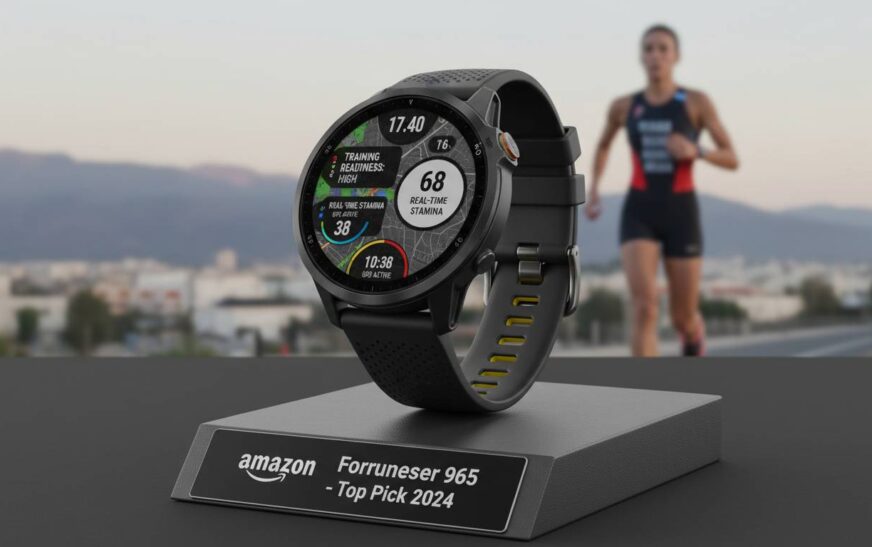
The Garmin Forerunner 265 stands as my top recommendation for runners willing to invest in a dedicated running watch. At $499, it’s not cheap, but the precision and features justify the price for anyone taking running seriously.
The multi-band GPS delivers exceptional accuracy, even in challenging environments like dense urban areas or tree cover. Garmin’s training features go far beyond simple distance and pace. The Body Battery shows your energy reserves, while training readiness scores tell you whether today is a good day for hard effort or recovery. The HRV status provides insight into your recovery from the previous day’s workout.
The bright AMOLED display makes checking metrics easy without slowing down, and the battery life extends to about 13 days in smartwatch mode or 20 hours in GPS mode. That means you can track a marathon without worrying about dying mid-race.
Apple Watch Ultra 2: Premium All-Rounder at $799
For those who want one device to rule all activities, the Apple Watch Ultra 2 at $799 delivers. This ruggedized option offers the best battery life in the Apple lineup (36 hours normal, up to 72 in low-power mode) and a design built for extreme conditions.
The precision GPS matches Garmin’s accuracy for running, while the larger display makes it easier to read metrics during activities. The action button can be customized for quick access to interval training or other frequently used features. If you’re a runner who also wants the full smartwatch experience, the Ultra 2 satisfies both needs despite the premium price tag.
Best Smartwatches for Sleep Tracking
Quality sleep affects everything from athletic performance to daily productivity. These devices excel at helping you understand and improve your rest.
Whoop 4.0: Sleep Focus at $239
Whoop built its entire reputation on recovery and sleep tracking, and the Whoop 4.0 reflects that singular focus. At $239 plus a subscription, it’s expensive but delivers insights that casual trackers miss.
The device continuously monitors heart rate variability, skin temperature, and blood oxygen to generate a comprehensive picture of recovery. The sleep coach provides personalized recommendations based on your physiology, telling you exactly how much sleep you need that night based on previous activity and recovery metrics.
The trade-off is the lack of a display—you get all data through the smartphone app. Some users appreciate this distraction-free approach, while others want instant feedback on their wrist.
Fitbit Charge 6: Accessible Sleep Insights at $159
The Fitbit Charge 6 at $159 offers sleep tracking that rivals devices costing much more. Fitbit’s years of experience in this area show in the detail and accuracy of their sleep analysis.
The daily sleep score provides an at-a-glance view of rest quality, while the sleep stage breakdown shows time in light, deep, and REM sleep. The Smart Wake feature wakes you during an optimal sleep phase within a chosen time window, helping you wake feeling more refreshed rather than groggy.
The battery lasts about seven days, making it practical for continuous sleep tracking without the inconvenience of frequent charging.
How to Choose the Right Fitness Smartwatch
Selecting the perfect fitness smartwatch requires honest self-assessment about how you’ll actually use the device. The most feature-rich option means nothing if it sits in a drawer because it’s uncomfortable or complicated.
Consider Your Primary Activities
Different activities demand different capabilities. Runners need built-in GPS for accurate distance tracking without carrying a phone. Swimmers need water resistance rated for pool or open water use. Weight training enthusiasts benefit from rep counting and rest timer features. Think about your most frequent activities and ensure any device you’re considering excels in those areas.
Ecosystem Matters More Than You Think
Apple Watch works best with iPhone. Galaxy Watch works best with Samsung phones. Pixel Watch works best with Pixel phones. While these devices function with other phones, the full feature set often requires the companion ecosystem. Consider your current phone situation and how long you plan to keep it before choosing a smartwatch that might become partially locked out of features if you switch platforms.
Battery Life Expectations
If you hate charging devices, battery life should be a primary consideration. Apple Watch and Google Pixel Watch require nightly charging. Garmin and Fitbit devices often last a week or more. This isn’t just convenience—it affects whether you can realistically track sleep, which requires wearing the device overnight.
Design and Comfort
You’ll be wearing this device constantly. If it’s uncomfortable or looks awkward in professional settings, you won’t wear it consistently. Try devices on in stores if possible, paying attention to weight, band material options, and how it feels during activities where your wrist moves significantly.
Key Fitness Features to Consider
Understanding which features matter most helps you prioritize during your search.
Heart Rate Monitoring
Optical heart rate sensors have improved dramatically but still vary in accuracy. For casual users, most modern devices provide sufficient accuracy. Athletes doing interval training or precise calorie tracking benefit from devices with better sensors, often indicated by multiple LEDs or electrical (ECG-based) heart rate reading.
GPS and Location Tracking
Built-in GPS means the smartwatch can track your route independently. This matters for outdoor activities where you don’t want to carry your phone. Some devices use multi-band GPS for improved accuracy in challenging environments—valuable for trail runners or those in urban canyons.
Water Resistance
Water resistance ratings can be confusing. “5ATM” means the device can handle pressures equivalent to 50 meters of depth—suitable for swimming but not diving. “IP68” offers dust resistance and water submersion resistance but isn’t necessarily swim-proof. Check specific ratings if water activities are planned.
Smart Features Beyond Fitness
Consider what else you want from your device. Notifications, mobile payments, music storage, and app support vary significantly between platforms. These features don’t affect fitness tracking directly but significantly impact daily enjoyment.
Conclusion
The best fitness smartwatch ultimately depends on your specific needs, budget, and ecosystem preferences. For most users, the Apple Watch Series 9 at $399 delivers the best overall balance of features, ecosystem integration, and everyday usability. Android users will find excellent value in the Samsung Galaxy Watch 6 at $279, while runners should seriously consider the Garmin Forerunner 265 at $499 for its specialized capabilities.
Budget-conscious buyers shouldn’t overlook the Fitbit Inspire 3 at $99 or the Xiaomi Smart Band 8 at $49—both deliver core fitness tracking that satisfies casual users. The fitness wearable market has matured to the point where even affordable options provide meaningful health insights that were once exclusive to premium devices.
Before purchasing, honestly assess how you’ll actually use the device. The most expensive option provides no value if it sits in a drawer because it’s uncomfortable, requires annoying charging, or offers more complexity than you need. Focus on the features that align with your actual fitness activities and lifestyle, and you’ll find the perfect companion for your health journey.
FAQs
What is the best smartwatch for fitness under $200?
The Fitbit Inspire 3 at $99 offers the best value under $200, featuring continuous heart rate monitoring, SpO2 tracking, sleep tracking, and 10-day battery life. For those wanting more features, the Xiaomi Smart Band 8 at $49 provides basic fitness tracking at the lowest price point.
Is Apple Watch worth it for fitness tracking?
Yes, the Apple Watch Series 9 is worth it for fitness tracking if you use an iPhone. It offers comprehensive health monitoring including ECG, blood oxygen, and temperature sensing, plus automatic workout detection across 100+ activity types. The main trade-off is daily battery charging.
Which smartwatch has the most accurate heart rate?
Garmin devices typically offer the most accurate heart rate monitoring for athletes, with the Forerunner series using multi-LED sensors and electrical heart rate through chest strap compatibility. Apple Watch Series 9 also provides medical-grade accuracy for most users.
How long do fitness smartwatches last?
Most fitness smartwatches last 3-5 years with proper care, though battery capacity naturally degrades over time. Software updates typically continue for 3-4 years after release. Consider the resale value if upgrading within a couple years matters to you.
Do I need GPS in my fitness smartwatch?
Built-in GPS is essential for accurate outdoor activity tracking without carrying your phone. If you primarily track indoor workouts, swim, or don’t mind bringing your phone for location, you can save money by choosing devices without built-in GPS.
Can I track sleep with any fitness smartwatch?
Most modern fitness smartwatches and trackers offer sleep tracking, but accuracy and detail vary. Fitbit and Whoop excel in this area with detailed sleep stage analysis. Apple Watch and Samsung Galaxy Watch provide solid sleep tracking but require nightly charging to maintain.