
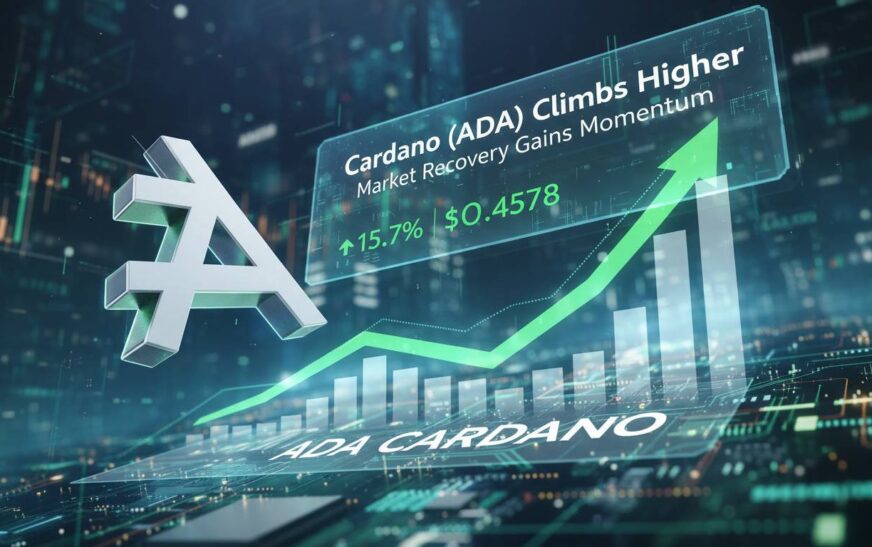
ADA is moving again. After weeks of drifting sideways, the Cardano token has broken out alongside a crypto market that’s finally showing some life. Trading volumes spiked over the past 48 hours, making ADA one of the better performers among major Layer-1 tokens.
The timing makes sense. Bitcoin has held above $60,000, Ethereum is holding steady, and traders are starting to hunt for altcoin opportunities again. That’s created a friendlier environment for protocols like Cardano that tend to follow the broader risk appetite wave.
The total crypto market cap climbed about 8% over the past week, reclaiming the $2.1 trillion level that analysts had flagged as important for keeping bullish momentum alive. A few things fed this: institutional money flowing into spot Bitcoin ETFs, some encouraging signals from the Fed on interest rates, and a couple of court decisions that went the crypto industry’s way on regulatory questions.
What stands out this time is how broad the recovery has been. Earlier rallies often concentrated gains in just a handful of tokens. Now Cardano is moving alongside Solana, Avalanche, and Polkadot—capital is spreading across the ecosystem rather than pooling in one narrative. That’s a shift from when Cardano often traded like it didn’t quite belong with the rest of the market.
Why ADA Is Climbing
A few Cardano-specific developments have helped. First, the ecosystem is actually seeing real usage growth. Multiple decentralized applications have reported higher user numbers and transaction volumes. That matters because Cardano has taken plenty of criticism for slow development—finally, the technical work is turning into something people are using.
The Chang hard fork is getting closer. This upgrade will let ADA holders vote on protocol decisions directly, something that’s been promised for years and is now almost here. Traders are factoring in that this could drive more staking and unlock new use cases beyond just holding the token as a bet.
Some interoperability projects have announced plans to integrate with Cardano, which suggests developers are taking the protocol seriously as infrastructure. The technical approach—formal verification, academic rigor—seems to be resonating with builders working on cross-chain applications.
Social media chatter has picked up too. A few analysts have floated the idea that ADA is undervalued relative to where the technology stands, and that message has found an audience among traders looking for the next move.
Technical Picture
ADA has cleared several resistance levels that had limited upside since spring. It’s now trading above its 50-day moving average for the first time in over two months—a signal technicians watch for when looking at potential trend changes. Volume has been solid, running well above the 90-day average in recent sessions.
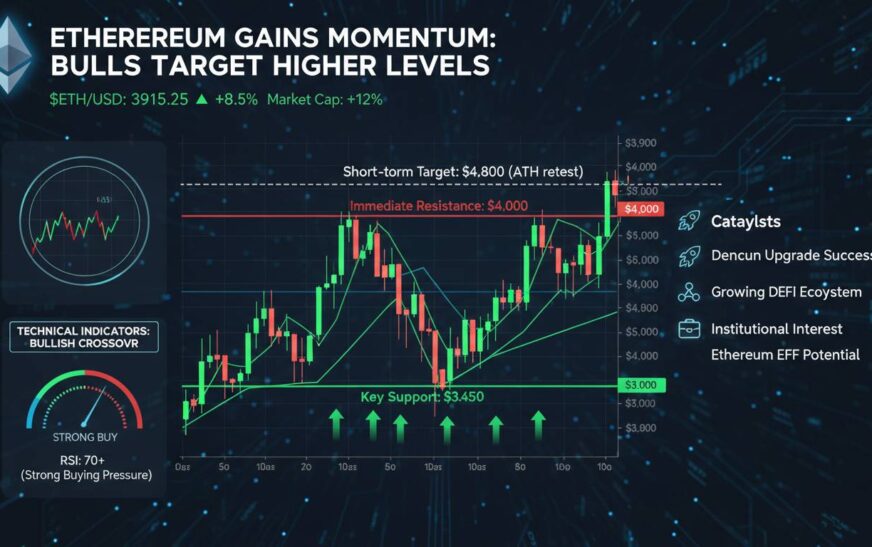
The next resistance sits around $0.45, which functioned as support during Cardano’s late 2023 run. A clean break above that opens a path to $0.50, a psychological level that’s mattered for ADA before. If the token can hold above $0.42, that’s a reasonably healthy sign. Failure there would likely mean a retest of the $0.35 zone.
One analyst noted: “ADA is showing the kind of volume confirmation that we like to see in a breakout scenario. The relative strength index has room to run before reaching overbought territory, suggesting there may be more upside ahead if momentum holds.”
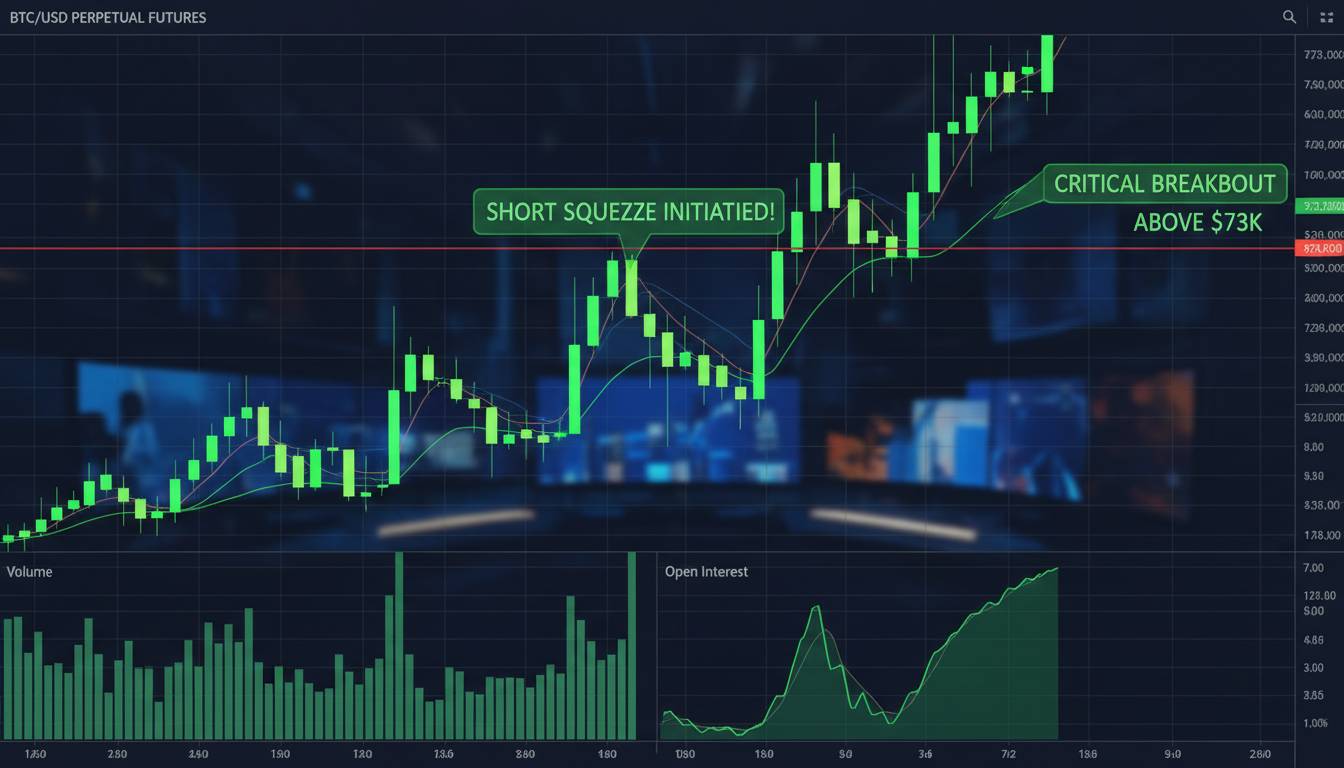
Funding rates have turned positive on major exchanges—traders are paying to maintain long positions. That’s a sharp change from the consolidation period when bears had the upper hand. Open interest is rising alongside prices, which means new money is coming in rather than just existing positions getting squeezed.
On-chain data is mixed but not bad. Some early holders are taking profits, which is normal. But new wallet addresses are accumulating faster, a pattern that shows up in healthy bull markets—new buyers stepping in while early participants monetize.
Who’s Buying
The buyer composition has shifted. Institutions are showing more interest, even without a dedicated ADA spot ETF. Asset managers with broader crypto mandates have been adding altcoin exposure as part of diversified strategies, and Cardano’s market cap and liquidity make it a natural fit. The compliance-focused, research-heavy approach appeals to institutional buyers who care about due diligence.
Retail interest has climbed from early summer lows, though it’s nowhere near the frenzy levels seen during previous all-time highs. That moderate interest might actually be healthier—extreme hype often precedes sharp pullbacks.
Staking participation remains high for Cardano, which suggests holders see their ADA as infrastructure investments rather than quick trades. That creates a structural floor during downturns since tokens stay locked in staking contracts rather than hitting exchanges.
Competition
The Layer-1 space stays crowded. Cardano’s research-first, formally verified approach gives it advantages in enterprise and government contexts where security and compliance matter. The trade-off is speed—competitors moving faster have drawn criticism for taking shortcuts, though that approach has delivered results.
Cardano’s smart contract ecosystem has grown since Plutus launched, though it still trails Ethereum in total value locked. Developer tools are improving, and some notable projects have announced plans to deploy on the network. The governance upgrade could attract developers who want community-driven decision-making.
Traders increasingly compare Cardano and Solana as alternatives to Ethereum. Solana’s recent technical troubles have prompted some reassessment of Cardano’s more conservative engineering philosophy, though the market hasn’t delivered a final verdict on which approach wins.
Regulatory and Outlook
Regulatory clarity has improved slightly after some favorable court rulings. ADA has generally been treated as a utility token rather than a security in major jurisdictions, though that distinction remains fuzzy. The upcoming governance structure adds another layer to the regulatory question.
Looking ahead, the Chang hard fork implementation is the main near-term catalyst. If it goes smoothly, it could unlock new use cases and drive demand. Macroeconomic factors—the Fed, equity markets—will continue influencing crypto sentiment.
The U.S. election introduces uncertainty. Different outcomes could mean different regulatory approaches. Traders are positioning for volatility around these events, though the specific implications for Cardano are hard to pin down. What seems certain is that long-term success depends on ecosystem development and real adoption, not price moves.
Bottom Line
ADA’s run reflects better market conditions, ecosystem progress, and renewed altcoin interest. The governance upgrade is a meaningful milestone that could change how ADA holders interact with the blockchain. Technical indicators suggest room to run, but traders should watch volume and key support levels.
The broader crypto recovery seems sustainable, with gains spreading beyond Bitcoin and Ethereum to include altcoins like Cardano. This broad participation is typical of healthy bull markets and suggests improved risk appetite. For Cardano specifically, the real test is whether adoption keeps pace with price—if it does, this rally has staying power. If not, it’s just another speculative run.
As always, do your own research and know your risk tolerance. Crypto is volatile, and past performance doesn’t predict future results. But for those tracking the intersection of development progress and market sentiment, Cardano’s current trajectory is worth watching.