

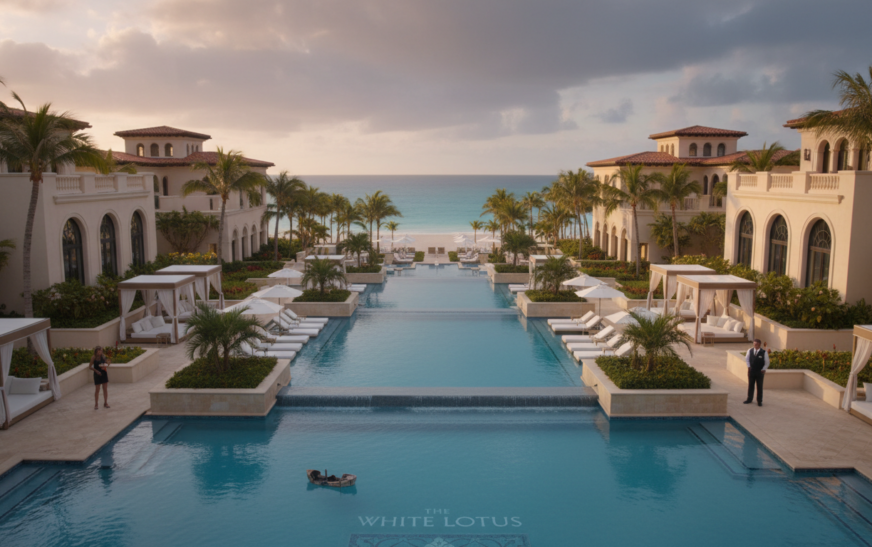
The White Lotus peels back the shimmering facade of a luxury resort to expose a world where opulence conceals greed, power plays, and moral decay. Beneath the spa treatments and wellness routines lie deception, cultural friction, and human vulnerability dressed up in designer silk and Instagram-ready settings. This article delves deep into those hidden layers, exploring how luxury becomes a mask for darker truths.
The Allure—and Rotten Core—of Luxury Resorts
Luxury resorts in The White Lotus aren’t just pretty backdrops. They serve as meticulously constructed worlds with a firm routine: beauty, forceful privilege, and a tinge of dread. The glamour masks internal rot, offering not escape but confrontation.
- The Four Seasons properties used across seasons feel mesmerizing yet isolating, a sort of “five-star gilded cage” that Tony White likens to Lord of the Flies in reverse .
- Tourists find beaches, infinity pools, and spa menus. But beneath the glow, tension simmers—social fractures spin into chaos as ease reveals cracks .
Production Realities Mirror Fiction
The making of The White Lotus intentionally harnessed real environment unpredictability—snakes, cicadas, and pranks—to heighten the surreal. This added to the authenticity, albeit at the edge of comfort .
“It’s a kind of crucible, a five‑star gilded cage. Sometimes it is absolutely fabulous, and sometimes it’s Lord of the Flies.”
Power, Privilege, and the Illusion of Escape
Guests Who Never Change
The resort environment amplifies existing flaws among the wealthy, rather than healing them. Characters float through yoga sessions, sunset cocktails, and spa days as if curated for self-realization—but growth remains conspicuously absent.
- Reddit users observe that the show consistently demonstrates the illusion of transformation: vacations promise change, but deliver exposure to unresolved personal flaws .
- The pattern echoes across seasons: characters return home with more baggage, not less.
Predator or Partner?
The wealth-draped setting doubles as a hunting ground. Season 3’s Greg (Jon Gries) stands out as a manipulative force—posing as a guest but actually orchestrating Tanya’s death to keep her fortune. He may be part of a broader scheme to exploit affluent women who escape from emotional or legal oversight .
- Some speculate on a grand conspiracy: a network of con artists masquerading within the White Lotus system .
East Meets West: Spirituality in Collision with Materialism
Cultural Missteps or Thoughtful Portrayals?
Season 3 creates a compelling contrast: Western guests expect spiritual renewal, yet bring entitlement and lack of humility. Thailand’s mysticism and Buddhist traditions clash with their materialistic impulses.
- Executive producer David Bernad emphasizes their aim to depict a richer side of Thailand, beyond clichés like nightlife or seedy tourism .
- Cultural consultants and thoughtful set design reflect selective respect, though critics note the contradictions between critique and promotion .
A Double-Edged Marketing Tool
Despite the show’s condemnation of privilege, filming at ultra-lux resorts triggers tourism surges. Four Seasons locations have seen branded activations and increased bookings, driven by set-jetting enthusiasts .
- Season 3’s production injected nearly $37 million into Thailand’s economy .
- But with popularity comes environmental risk—Koh Samui already faces water shortages and waste management strains .
The Gilded Trap: Beauty Conceals Control
Cost of Paradise
Exorbitant pricing in real resorts mirrors the show’s fictional setting. A villa at Four Seasons Koh Samui can run over $2,000 a night, while resort meals and extras come with hidden fees and insidious luxury taxes .
- On-screen characters barely notice the cost—offering commentary on detachment through wealth .
- Real-life resort dynamics, like staffing and services, are simplified for visual drama. Fans point out improbable scenarios—like managers doing everything from reservations to concierge work—as unrealistic .
Unmasking the Secrets: Narrative Tactics & Viewer Resonance
Symbolism and Foreshadowing
The show sprinkles subtle hints—orchid motifs, timestamp cues—as silent premonitions of tragedy. The finale’s ambiguity invites viewers to wrestle with moral implications, echoing real-world complexity .
- Critics have lauded this storytelling method. Variety called it a mirror held up to wealth’s isolation .
- Psychological experts confirm that audiences engage more when presented with moral ambiguity over simple good-vs-evil narratives .
Social Ripples
Fans aren’t just watching—they’re feeling the impact.
- Travelers on Reddit relate to the show’s awkward tourist behavior, prompting self-awareness and heightened sensitivity while abroad .
- Others critique how the show lacks accurate representation of resort staffing, noting that luxury hotels have more structured and professional operations than depicted .
What White Lotus Reveals About Luxury and Human Nature
- Luxury is seductive but fragile, illuminating flaws as much as it entices.
- Spirituality struggles when inserted into privilege, without introspection.
- Excessive beauty can hide decay, making critique and consumption go hand in hand.
- Narrative depth relies on complexity, ambiguity, and uncomfortable truths.
Conclusion
White Lotus: Inside the Luxury Resort’s Darkest Secrets reminds us that paradise can be perilous—blinding, isolating, and sometimes violent. But it also pushes us to look deeper: beyond the sheen of silk kaftans and infinity pools lies a human story rich with satire, sorrow, and societal insight. The show isn’t just about where people go—it’s about who they become when everything they know is taken away by opulence.
FAQs
What does The White Lotus say about wealth and self-awareness?
It shows that luxury doesn’t cleanse flaws—it amplifies them. Characters are surrounded by beauty yet remain emotionally stagnant, suggesting wealth may trap rather than transform.
Is the show promoting tourism to exotic places like Thailand?
In a twist, The White Lotus critiques luxury tourism while fueling it. Its stunning visuals spark interest in destinations, even as it exposes their hidden impacts on local communities.
Are the resort dynamics realistic?
Not entirely. Fans note that the show simplifies resort staffing, services, and operations for dramatic effect—real luxury hotels have more structure and less turmoil than portrayed.
How does the show balance cultural representation with satire?
Creators engaged cultural consultants and local collaborators to avoid stereotypes. The tension between Western privilege and Eastern tradition is central, though entirely resolved neither—narrative friction remains intact.
Why does the story often begin with a dead body?
The recurring opener isn’t shock value alone. It foreshadows that beneath luxury lies decay, setting a tone that luxury vacations aren’t safe escapes—they’re flashpoints waiting to explode.
What draws audiences so strongly to the series?
It’s the tension between aspiration and awkwardness. Viewers are drawn to its human flaws wrapped in high design—luxury feels reachable, yet real.