
Bitcoin saw another rough week as volatility picked up again. The price swung more than usual, catching traders off guard and sparking plenty of debate about where things might be heading next. Right now, BTC is stuck in a consolidation range, and everyone’s watching for a breakout in either direction.
The past several sessions showed just how tied Bitcoin still is to the broader markets—especially Fed policy and how tech stocks are doing. Lately, BTC has been moving in lockstep with NASDAQ, which is annoying for anyone who thought they’d bought an uncorrelated asset. Both retail traders and institutional players are arguing about what this means for Bitcoin’s long-term case.
BTC Market Overview: Price Action Within Key Technical Zones
Bitcoin’s price has been bouncing around inside its recent range, testing some important support and resistance levels. The mid-$60,000 zone held up pretty well when it was tested, with buyers stepping in each time price dropped toward that area. That’s a decent sign, though it also shows people are split on what happens next.
Trading volume has been higher than you’d expect for summer, which suggests big players are positioning ahead of something. Futures open interest hit levels we haven’t seen since the last big volatility spike—whenever those positions get unwound, it’s going to get interesting.
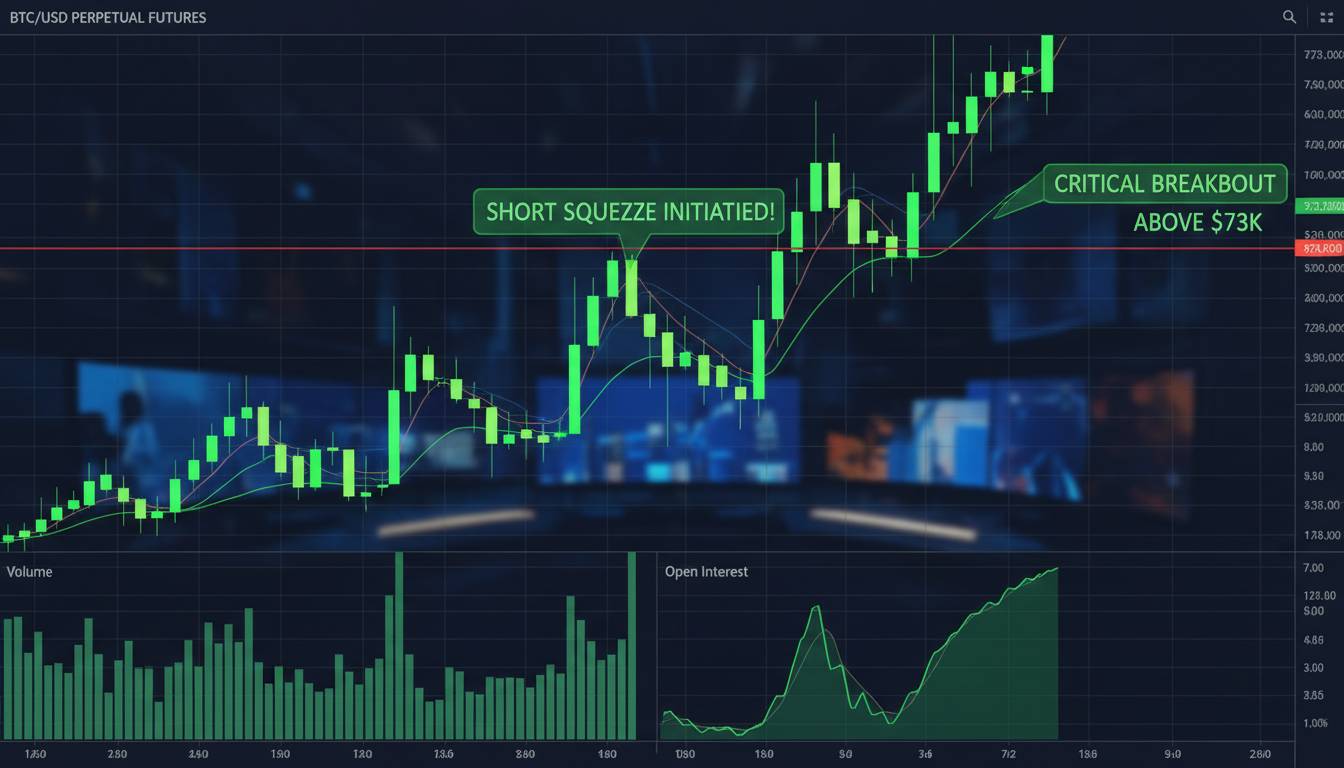
The daily chart shows a tightening pattern—lower highs, higher lows—classic consolidation. Most of the trading happened in the middle of the range, which usually means price is getting ready to make a move. Algorithms are probably tightened up right now, waiting for a trigger.
On-chain data is mixed. Some days show net inflows to exchanges, some show outflows. Hodlers and traders are both active, adjusting positions. More BTC has moved into price ranges that are currently underwater, which could mean holders are waiting for a bounce before selling.
What’s Driving Bitcoin Volatility This Week
A few things are colliding to create this mess.
Macro Economic Uncertainty
The macro picture is a mess right now. Mixed signals from the data—inflation’s still sticky but the labor market might be cooling. The Fed’s stuck, and Jerome Powell basically said “we’ll see what the numbers say.” That kind of ambiguity spooks markets.
When rate expectations shift, Bitcoin feels it. As a risk asset competing with bonds for capital, BTC is sensitive to yield changes. Tech stocks have been volatile too, and since Bitcoin’s been tracking them, crypto got dragged along.
Regulatory Developments Continue to Shape Sentiment
Regulation remains a wildcard. The SEC keeps making noise about enforcement, and Congress is still wrestling with stablecoin bills and broader crypto legislation. Some officials seem open to clearer rules; others just want to crack down. That uncertainty keeps institutional money on the sidelines.
Globally, it’s a mixed bag too. Various central banks are pushing ahead with their own digital currencies, which could change the game for Bitcoin long-term.
Network Activity and Institutional Flows
Transaction counts are stable despite the price action—people are still using the network. But the type of transactions has shifted. More stablecoin movement, more DeFi activity.
Spot Bitcoin ETF flows have been all over the place. Some days big inflows, some days outflows. Institutions are being tactical, not committing to big positions until things clarify.
“The current volatility environment reflects the tension between long-term structural bullish arguments and short-term macro uncertainties. We’re seeing experienced traders reduce position sizes while maintaining directional exposure, which is a common approach during periods of elevated uncertainty,” noted a senior market analyst at a leading cryptocurrency research firm.
Mining’s worth watching too. Some ops are holding instead of selling newly mined BTC, which takes pressure off the supply side. How much that actually matters is debatable.
Trader Sentiment: Fear and Greed Index Signals Caution
The Crypto Fear and Greed Index has been ping-ponging between neutral and fear. Nobody’s panicking, but nobody’s overly bullish either. That’s actually a pretty sane response to all this uncertainty.
Funding rates are balanced—neither longs nor shorts are paying much to hold positions. That means nobody’s super committed to a direction, which makes a sharp move more likely if something breaks.
Options activity shows an interesting split. More puts than usual at lower strikes (downside protection), but calls are still popular at higher strikes (betting on upside). Both sides are covered, which means there’s fuel for movement in either direction.
Social media sentiment is a mess—like always. Some people are diamond-handing, others are nervous. The debate is loud but inconclusive, which tracks with the price action.
Technical Analysis: Key Levels to Watch
Technically, these are the levels that matter.
Support Levels
Mid-$60,000 has been tested repeatedly and held. If it breaks, next support is around $60,000, then the big psychological level at $55,000.
The 200-day moving average is near the lower end of the range. A sustained break below that would be a bad look technically—it would trigger momentum strategies to flip bearish.
Resistance Levels
The $70,000 area keeps capping rallies. Breaking above there would be a real win for the bulls. After that, $75,000 and then the all-time high near $74,000.
That all-time high is the big psychological milestone. Whether Bitcoin can retest it depends on either clearer regulation or a macro shift that sends money flowing into risk assets.
What to Watch Next: Catalysts on the Horizon
Here’s what could spark the next move.
Economic Calendar Highlights
Upcoming CPI, employment data, and consumer sentiment numbers will shape Fed expectations. Bitcoin will react to whatever comes out, even if the news itself isn’t crypto-specific.
Fed speakers and meeting minutes will get parsed for hints about rate cuts. The central bank’s been driving sentiment lately—any shift in tone could move markets.
Regulatory Developments
Any movement on stablecoin legislation or crypto regulation could be a big deal. Congress is the wild card here.
The EU’s MiCA rules are rolling out—that could create opportunities for regulated players.
On-Chain Metrics
Keep an eye on exchange reserves, holder behavior, and institutional flows. ETF participation data will be especially telling.
Conclusion: Navigating Uncertainty in Volatile Markets
Bitcoin’s current volatility is what happens when macro uncertainty, regulatory ambiguity, and shifting market dynamics all collide. Traders are on high alert, and long-term holders are doing the math on whether to add or hold.
Technically, we’re approaching a decision point. The support and resistance levels matter, but so does the volatility itself—these squeezes often lead to big moves.
What comes next depends on the catalysts: economic data, regulatory news, and whether institutions start putting real money to work. Volatile periods create opportunities for traders who stay disciplined, but they also punish anyone who over-leverages or lets emotions drive decisions.
As always, do your own research before making moves. This market doesn’t forgive carelessness.