
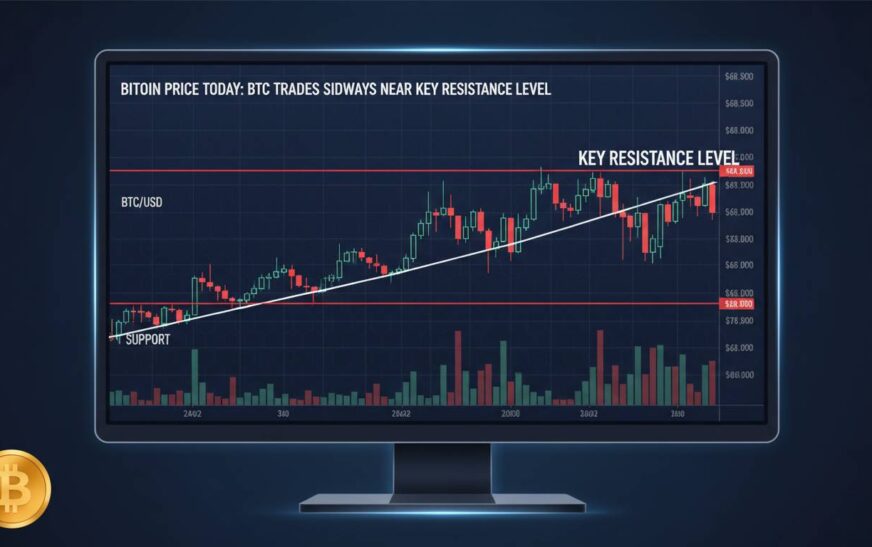
The world’s largest cryptocurrency has been bouncing between support in the mid-to-low $80,000s and resistance near $95,000 to $100,000. This compression phase has caught the attention of technical analysts, who note that such consolidation periods often precede significant moves in either direction.
Bitcoin has held above key support levels despite broader market uncertainty, trading in a relatively tight range with daily swings staying contained compared to last week’s volatility. This calmer stretch has given participants a chance to reassess positions ahead of potential moves.
Trading volume has declined during the current consolidation phase, a typical occurrence during periods of market uncertainty. This drop in activity suggests many participants are adopting a wait-and-see approach. Lower volume periods often precede significant moves, as reduced activity can mask accumulating orders that eventually trigger substantial price swings.
Institutional investors have largely maintained their positions rather than significantly expanding or reducing exposure, according to on-chain data. This stability contrasts with retail sentiment, which has shown greater variability. Wallet addresses holding between 10 and 1,000 BTC have shown minimal movement, indicating that mid-sized holders are holding steady despite short-term price fluctuations.
Social media sentiment shows a roughly even split between those anticipating a breakout higher and those expecting a pullback. This division often characterizes market turning points, as disagreement between participants creates the tension that eventually resolves into directional moves.
Fear and greed indicators have settled into neutral territory, moving away from the extremes that often signal market tops or bottoms.
Several significant resistance zones are in focus. The first major barrier sits near $92,000 to $95,000, a level that has proven sticky on multiple occasions. This zone corresponds with previous price action where significant trading volume occurred.
The 50-day and 200-day moving averages have been narrowing, with Bitcoin trading just above the shorter-term average but below the longer-term one. This positioning suggests indecision in the market. The Relative Strength Index has settled into neutral territory, neither indicating overbought nor oversold conditions.
Support has been established in the $82,000 to $85,000 range, areas where buying interest has historically intensified. These zones have been tested multiple times without breaking.
Some analysts believe the current consolidation represents a pause before Bitcoin can challenge $100,000, pointing to historical patterns where similar phases preceded bullish moves. More cautious analysts highlight macroeconomic uncertainties and regulatory concerns that could limit gains. The debate reflects broader uncertainty about where the market goes next.
Options market data shows put options have gained ground relative to call options at higher strike prices, suggesting some participants are hedging against downside scenarios. TradingView analysts have noted a symmetrical triangle pattern forming on Bitcoin’s daily chart, a technical formation that typically resolves in the direction of the preceding trend.
Traders should monitor $95,000 as a critical barrier that, if cleared with strong volume, could open the path toward $100,000. A failure to sustain momentum above this level could trigger a pullback toward support zones. Position sizing and risk management become particularly important around these inflection points.
Upcoming economic data related to inflation, interest rates, and employment could influence Bitcoin’s trajectory. Traditional market reactions often spill into cryptocurrency markets, creating opportunities and risks. The Federal Reserve’s communications have historically moved cryptocurrency markets, and shifts in policy expectations could impact risk assets broadly.
The coming days will likely determine whether BTC can break above the $95,000 to $100,000 zone or retreat toward support. Historical patterns suggest compression periods often precede explosive moves, though direction remains uncertain. The consolidation phase provides an opportunity for thoughtful position sizing and strategy refinement.
Regardless of the immediate direction, Bitcoin’s longer-term trajectory remains tied to institutional adoption, regulatory clarity, and macroeconomic forces. Short-term volatility does not necessarily alter the fundamental picture many investors believe will lead to higher prices over time.